Plizio Visual Lab
Joya de Cerén
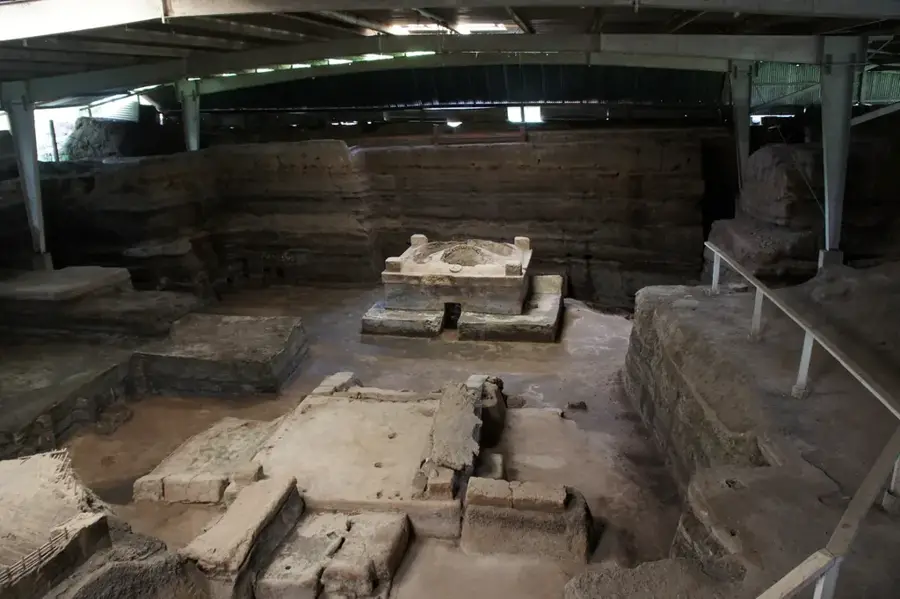
Joya de Cerén is El Salvador's most important archaeological site and is often referred to as the Pompeii of the Americas. This UNESCO World Heritage site features a globally rare insight into the daily life of a farming Maya community from approximately 1,400 years ago. Around 600 AD, the village was buried under a thick layer of hot ash by the eruption of the nearby Loma Caldera volcano, which preserved buildings, tools, and even food remains in extraordinary condition. Unlike the major Maya ceremonial centers, here one can study the actual living spaces, kitchens, and communal areas of the ordinary population. Particularly noteworthy are the well-preserved temazcales (steam baths) and the agricultural fields where impressions of maize plants are still visible today. Excavations have shown that the residents were able to leave the village in time, as no human remains were found, suggesting an organized warning system. Joya de Cerén is a significant document of social history and a must-see for any visitor to the region.
Explore on the map
How well do you know El Salvador?
Find cities, landscapes and regions in 10 varied challenges on the interactive map.
Your journey, your memory
A postcard from Joya de Cerén
Turn your own photo into a personal postcard with a local stamp. Free and no sign-up required.
Create a postcard- Location: El Salvador
- Nearby: Quezaltepeque (10 km)
📋 Practical info
History & landmarks
Classical
600
Geography
Facts
- Declared a UNESCO World Heritage Site in 1993.
- Discovered accidentally in 1976 during a silo construction project.
- Buried under 4 to 8 meters of volcanic ash from Loma Caldera.
- Approximately 70 buildings have been identified within the site.
- The eruption occurred during the evening meal, as evidenced by food containers.
- The structures were primarily made of wattle and daub (bajareque).
Explore nearby
Notable places around
Route planner — Car & Motorhome
Where do you start? We build the route here, with stops and country notes along the way.
© OpenStreetMap contributors · OpenRouteService
Sights nearby
Frequently asked questions
Why is Joya de Cerén special?
Is it a UNESCO World Heritage site?
Can you visit the site individually?
How much time should I plan?
Is there a restaurant there?
Joya de Cerén: where is it located?
Joya de Cerén: why is it worth visiting?
Nearby cities
History & landmarks
Nature
More places