Plizio Visual Lab
Ulpia Traiana Sarmizegetusa
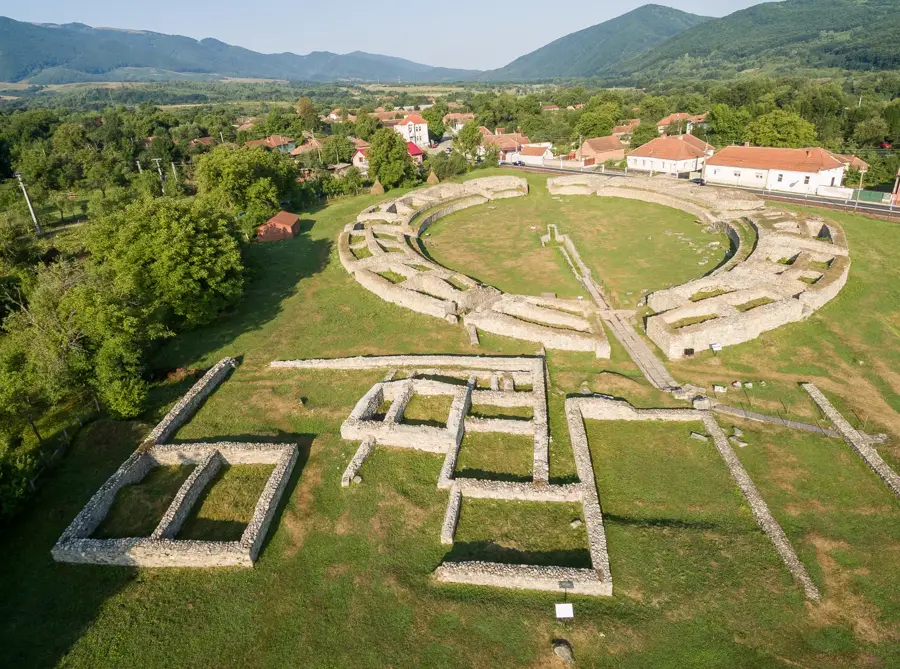
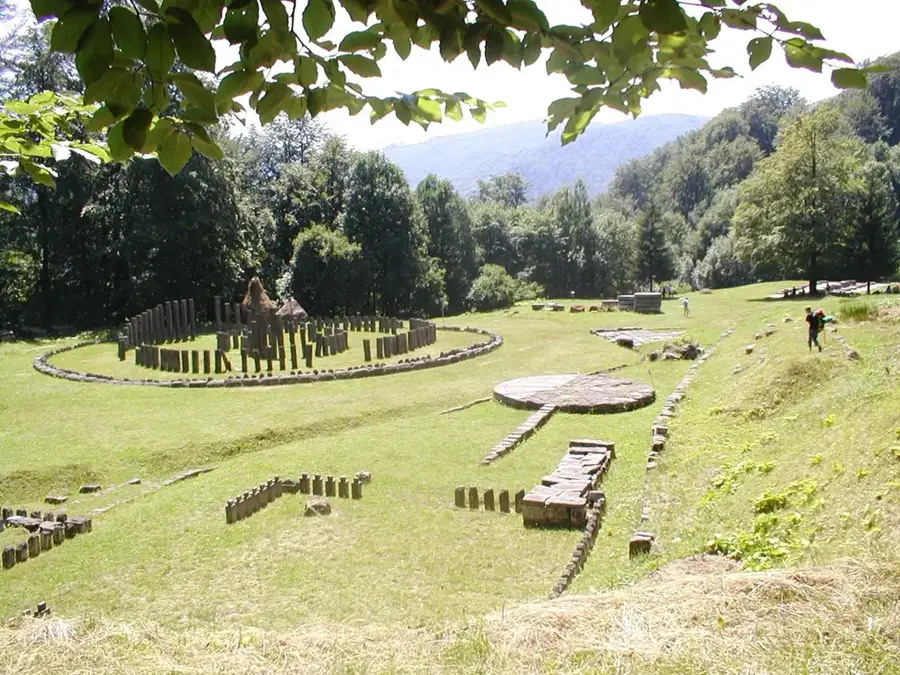
Ulpia Traiana Sarmizegetusa was established by Emperor Trajan between 108 and 110 AD as the first Roman colony in the newly conquered province of Dacia. Located in the Hațeg Basin, it functioned as the administrative and cultural heart of the province before the capital was eventually moved to Apulum. The city was meticulously planned after the model of Rome, featuring a grid-like street system and monumental public structures. Key archaeological remains include the amphitheater, which could accommodate 5,000 spectators, the forum, public baths, and several temples dedicated to Roman deities. Covering approximately 32 hectares within its defensive walls, the city was inhabited by veterans of the Dacian Wars, civil servants, and merchants. During the reign of Emperor Hadrian, the city was elevated to the status of 'Metropolis,' signifying its high standing within the Empire. By the 3rd century AD, following barbarian incursions and the Roman withdrawal from Dacia, the city was gradually abandoned. Modern excavations provide invaluable insights into Roman urbanization and daily life on the imperial frontier.
Explore on the map
How well do you know Romania?
Find cities, landscapes and regions in 10 varied challenges on the interactive map.
Your journey, your memory
A postcard from Ulpia Traiana Sarmizegetusa
Turn your own photo into a personal postcard with a local stamp. Free and no sign-up required.
Create a postcard- Location: Hunedoara, Romania
- Highlights: Sarmizegetusa Ulpia Traiana · Sarmizegetusa Archaeological Museum · Forum of Ulpia Traiana Sarmizegetusa
- Nearby: Hațeg (17 km)
Best time to visit & climate
The most pleasant time to visit is Jun–Aug.
| Jan | Feb | Mar | Apr | May | Jun | Jul | Aug | Sep | Oct | Nov | Dec | |
|---|---|---|---|---|---|---|---|---|---|---|---|---|
| Avg °C | -4 | -3 | 1 | 7 | 12 | 16 | 18 | 18 | 13 | 8 | 3 | -3 |
| Rain mm | 45 | 43 | 52 | 66 | 97 | 109 | 98 | 70 | 61 | 65 | 53 | 51 |
📋 Practical info
History & landmarks
empire
106
Geography
Facts
- The city was built approximately 40 km west of the original Dacian capital, Sarmizegetusa Regia.
- The Roman amphitheater had an estimated seating capacity of 5,000 spectators.
- The fortified area of Ulpia Traiana Sarmizegetusa covered 32 hectares.
- The colony was initially settled by veterans from the V Macedonica and XIII Gemina legions.
- Emperor Hadrian officially granted the city the prestigious title of 'Metropolis'.
- A complex underground drainage system was integrated into the city's street layout.
Explore nearby
Notable places around

Route planner — Car & Motorhome
Where do you start? We build the route here, with stops and country notes along the way.
© OpenStreetMap contributors · OpenRouteService
Sights in the town Ulpia Traiana Sarmizegetusa (4)
Sarmizegetusa Archaeological Museum🏛 museum
A museum exhibiting artifacts and finds from the ancient Roman city.
Sights nearby
Frequently asked questions
Is this the same place as Sarmizegetusa Regia?
What are the most important remains?
Is there a museum there?
Where exactly is Ulpia Traiana located?
How much time should be allocated for the visit?
Ulpia Traiana Sarmizegetusa: where is it located?
Ulpia Traiana Sarmizegetusa: what is there to see?
Ulpia Traiana Sarmizegetusa: when is the best time to visit?
Ulpia Traiana Sarmizegetusa: why is it worth visiting?

Nearby cities

History & landmarks
Nature
More places