Plizio Visual Lab
Moa South Mining

Weather…
Water temperature…
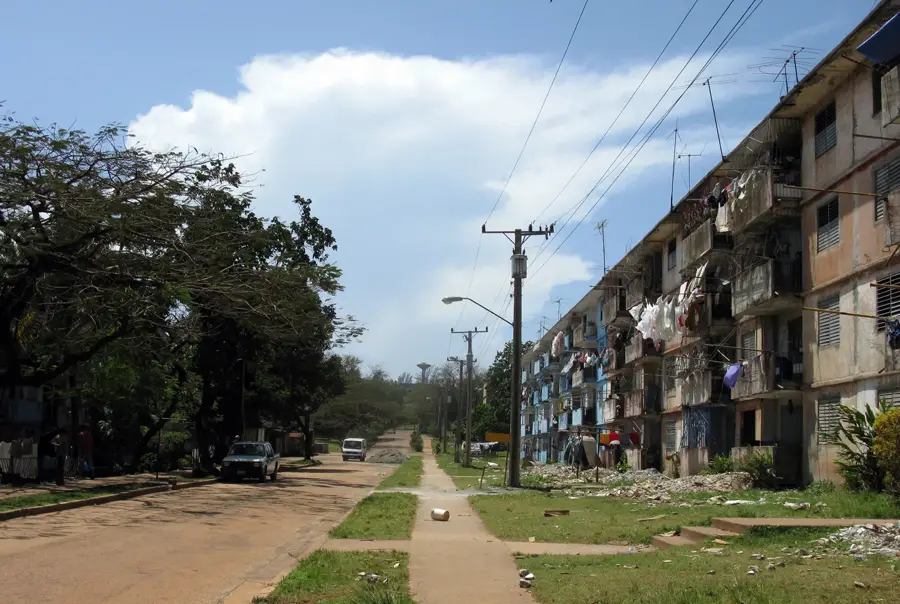
The Moa mining district in eastern Holguín province is home to one of the world's most significant nickel and cobalt production centers. The industrial facilities, most notably the Pedro Sotto Alba plant operated as a joint venture with Canada's Sherritt International, exploit the region's vast laterite ore deposits. Another key facility is the Ernesto Che Guevara plant. Extraction is conducted through open-pit mining, and the ore is processed using a complex high-pressure acid leaching (HPAL) method to extract high-purity nickel and cobalt sulfides. These metals constitute a primary export commodity for the Cuban economy, generating substantial foreign exchange. Industrial development in Moa began in the late 1950s and saw massive expansion in the post-revolutionary era. The landscape is characterized by its distinct red soil, rich in iron oxides. Despite its economic importance, the industry faces ongoing challenges regarding environmental management and the protection of local terrestrial and marine ecosystems.
Explore on the map
How well do you know Cuba?
Find cities, landscapes and regions in 10 varied challenges on the interactive map.
Your journey, your memory
A postcard from Moa South Mining
Turn your own photo into a personal postcard with a local stamp. Free and no sign-up required.
Create a postcard- Location: Cuba
- Nearby: Cayo Saetía (14 km)
Best time to visit & climate
The most pleasant time to visit is Jan, Feb, Dec.
| Jan | Feb | Mar | Apr | May | Jun | Jul | Aug | Sep | Oct | Nov | Dec | |
|---|---|---|---|---|---|---|---|---|---|---|---|---|
| Avg °C | 24 | 24 | 25 | 26 | 27 | 28 | 28 | 28 | 28 | 27 | 25 | 24 |
| Rain mm | 18 | 15 | 17 | 32 | 64 | 57 | 37 | 45 | 57 | 102 | 51 | 26 |
📋 Practical info
Geography
Facts
- Moa holds one of the largest nickel reserves in the world
- Pedro Sotto Alba plant is a joint venture with Sherritt
- Uses high-pressure acid leaching (HPAL) technology
- Nickel and cobalt are top export products for Cuba
- Open-pit mining is used to extract the laterite ores
- The industrial zone is located in eastern Holguín province
Explore nearby
Notable places around
Route planner — Car & Motorhome
Where do you start? We build the route here, with stops and country notes along the way.
© OpenStreetMap contributors · OpenRouteService
Sights nearby
Frequently asked questions
What is mined in Moa South?
Why is the soil red here?
Can the mines be visited?
How is the road quality in Moa?
Are there nature reserves nearby?
Moa South Mining: where is it located?
Moa South Mining: when is the best time to visit?
Moa South Mining: why is it worth visiting?

Nearby cities
History & landmarks
More places