Plizio Visual Lab
Kellerwald-Edersee
Weather…
Water temperature…
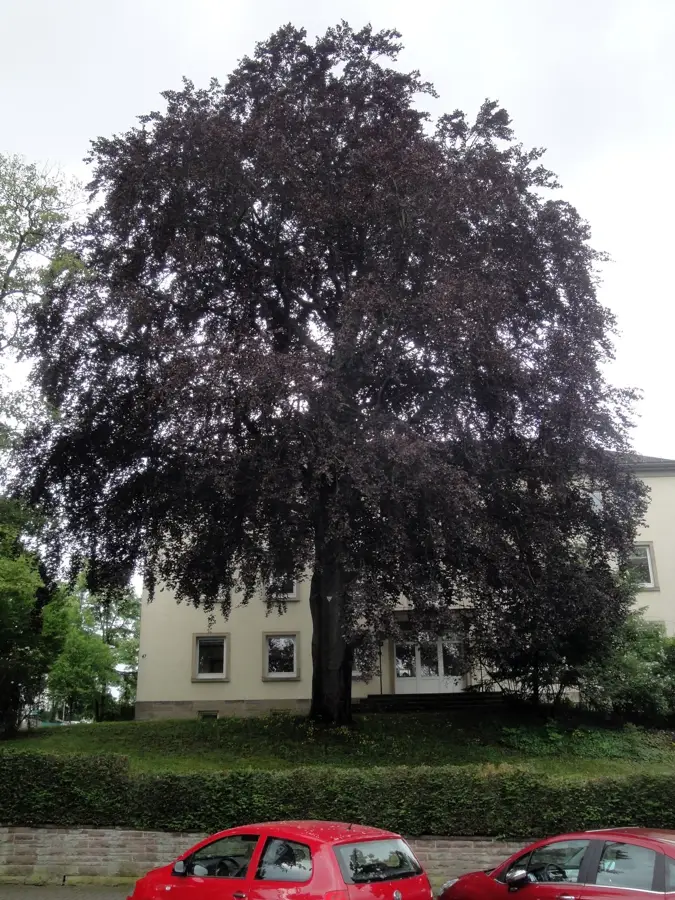
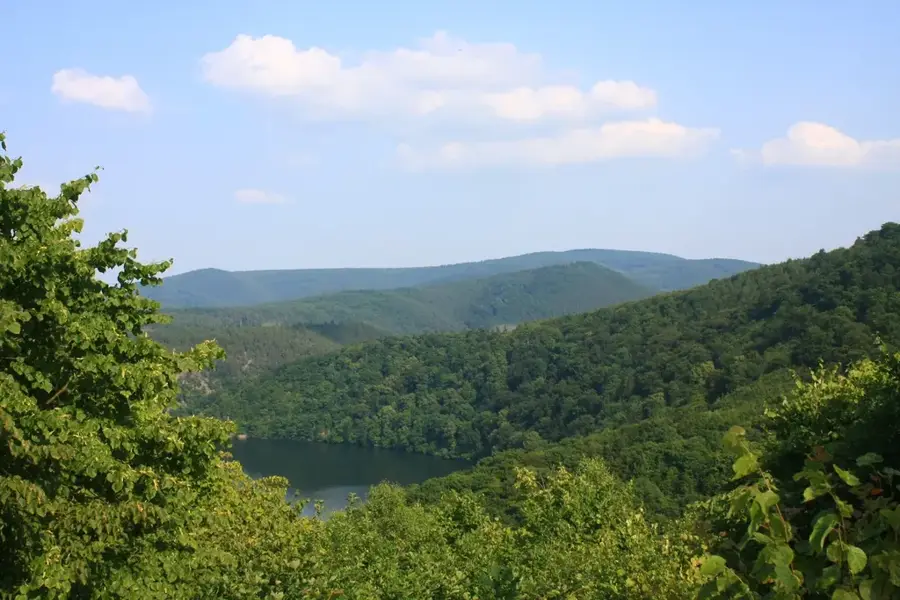
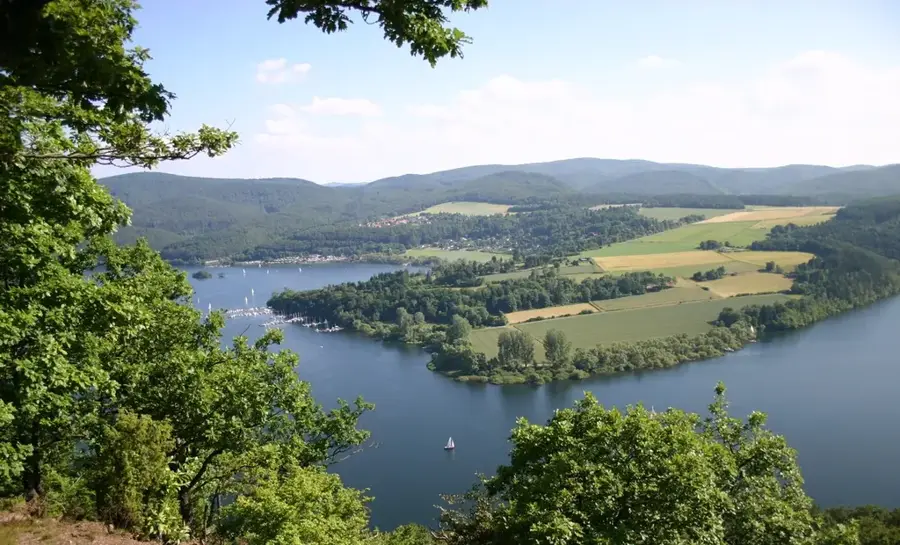
The Kellerwald-Edersee National Park in northern Hesse was established in 2004 and covers an area of approximately 57 square kilometers south of Lake Edersee. Since 2011, parts of the park have been designated as a UNESCO World Natural Heritage site under the title 'Ancient and Primeval Beech Forests of the Carpathians and Other Regions of Europe.' The landscape is characterized by one of Central Europe's largest unfragmented beech forest areas, predominantly composed of European beech. Topographically, the park spans the ridges of the Kellerwald mountains, with Lake Edersee forming a visually dominant artificial northern boundary. Within the park's core zones, forestry operations have ceased, allowing the ecosystem to evolve into a 'wilderness of tomorrow.' The region serves as a sanctuary for rare species such as the black stork, red kite, and various bat species that find well-suited living conditions in the ancient tree stands. For visitors, the park provides an extensive trail network providing information on ecological features and the geological history of the Variscan mountain range.
Explore on the map
How well do you know Germany?
Find cities, landscapes and regions in 10 varied challenges on the interactive map.
Your journey, your memory
A postcard from Kellerwald-Edersee
Turn your own photo into a personal postcard with a local stamp. Free and no sign-up required.
Create a postcard- Location: Hesse, Germany
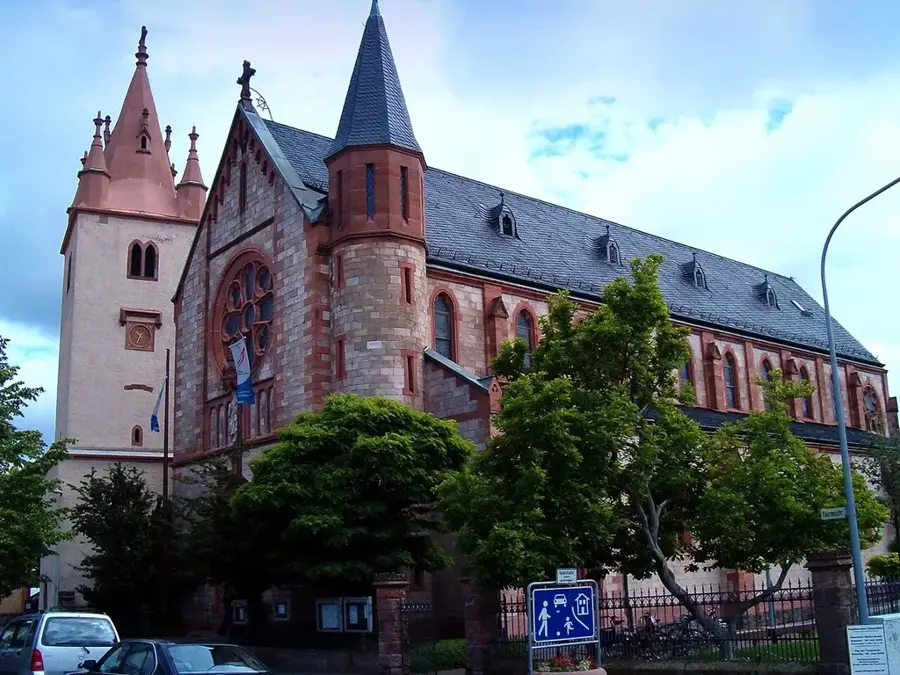
- Highlights: Dürrenberg · Kirche Gellershausen · Wartberg
- Nearby: Bad Wildungen (8 km)
Best time to visit & climate
The most pleasant time to visit is Jun–Aug.
| Jan | Feb | Mar | Apr | May | Jun | Jul | Aug | Sep | Oct | Nov | Dec | |
|---|---|---|---|---|---|---|---|---|---|---|---|---|
| Avg °C | -1 | 0 | 3 | 8 | 12 | 16 | 18 | 18 | 13 | 9 | 4 | 0 |
| Rain mm | 69 | 52 | 54 | 47 | 74 | 70 | 82 | 74 | 60 | 59 | 66 | 72 |
📋 Practical info
Geography
Facts
- Kellerwald-Edersee National Park was officially designated on January 1, 2004.
- The park has been a UNESCO World Heritage site since June 25, 2011.
- About 70 percent of the park area is covered by ancient European beech stands.
- More than 500 different beetle species live in the park's deadwood habitats.
- The Kellerwald is part of the Rhenish Massif and consists partly of greywacke.
- The park features a hiking trail network totaling 156 kilometers in length.
Explore nearby
Notable places around
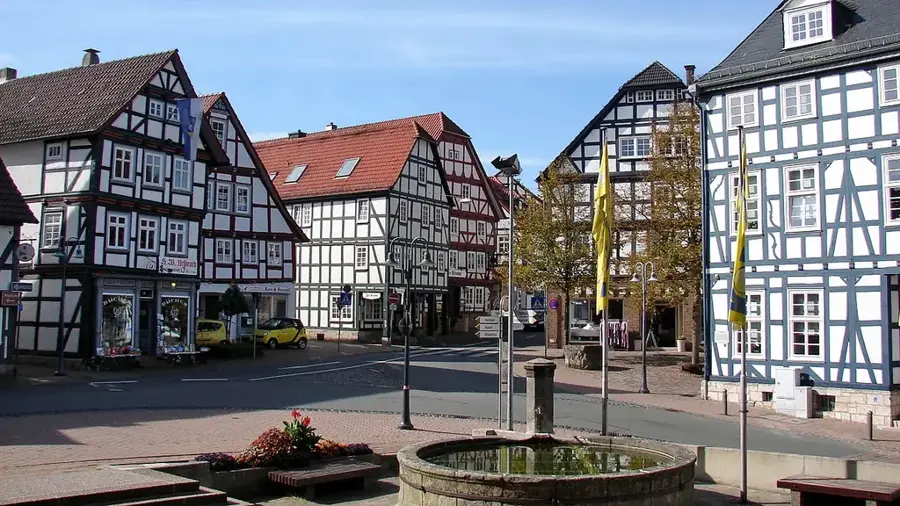
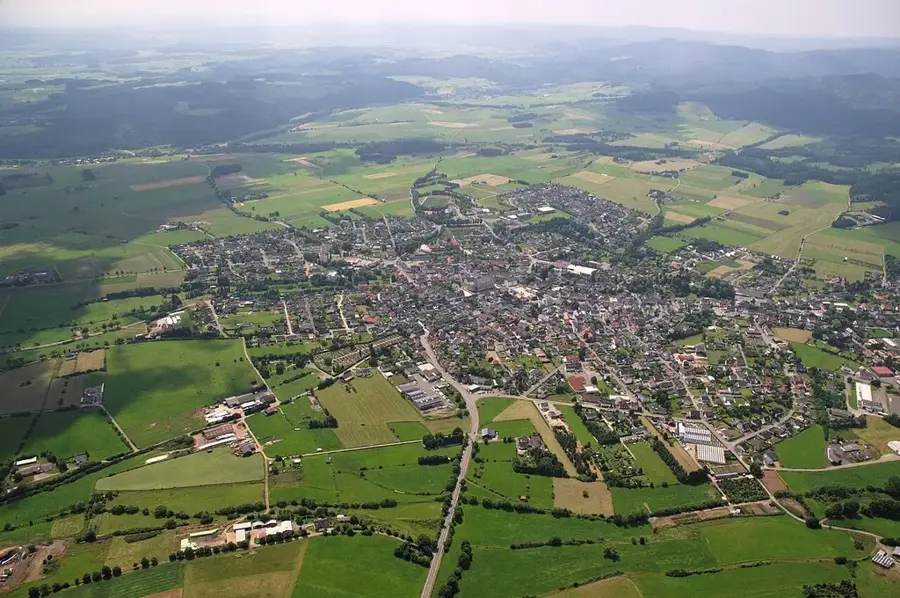
Route planner — Car & Motorhome
Where do you start? We build the route here, with stops and country notes along the way.
© OpenStreetMap contributors · OpenRouteService
Sights in the town Kellerwald-Edersee (6)
Batten-Berg
Hill in Hesse, Germany. Located in the Kellerwald-Edersee nature park.
Wolfsgrube
Archaeological site in the Kellerwald. Evidence of historical hunting methods.
Paradies bei Gellershausen
Old pasture woodland. Protected area with old trees and special biodiversity.
Sights nearby
Frequently asked questions
What is special about the Kellerwald?
Is there an entry fee for the national park?
Are there guided tours with rangers?
Are dogs allowed in the forest?
Where is the national park center located?
Kellerwald-Edersee: where is it located?
Kellerwald-Edersee: what is there to see?
Kellerwald-Edersee: when is the best time to visit?
Kellerwald-Edersee: why is it worth visiting?
Nearby cities