Plizio Visual Lab
Canadian Boreal Forest
Weather…
Water temperature…
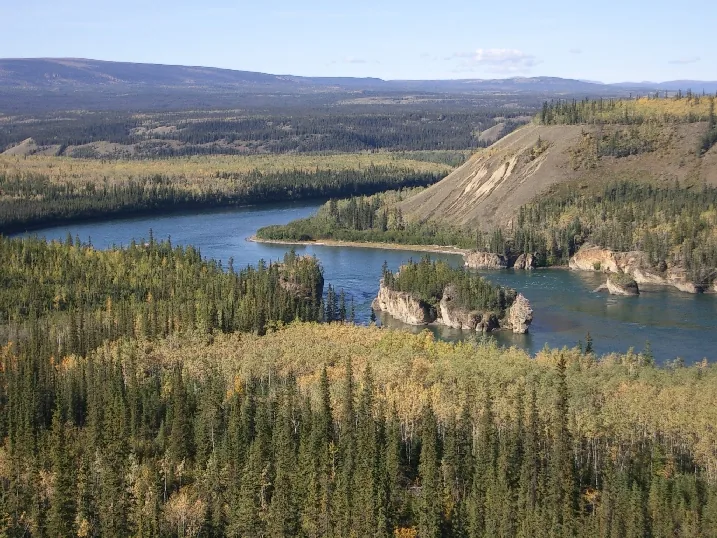
The Canadian boreal forest is one of the world's largest contiguous forest regions, stretching across approximately 270 million hectares from Yukon in the west to Newfoundland in the east. It covers about 55 percent of Canada's landmass and forms a critical component of the global taiga belt. The ecosystem is dominated by cold-hardy conifers such as spruce, fir, and pine, interspersed with millions of lakes, rivers, and extensive peatlands. These peatlands play a fundamental role in global climate regulation, as they store enormous quantities of carbon, significantly more per unit area than tropical rainforests. The forest provides vital nesting grounds for billions of migratory birds and supports threatened large mammals, including the woodland caribou and the grizzly bear. Historically, the boreal forest has been home to numerous Indigenous peoples whose cultures and ways of life remain deeply rooted in this landscape to this day. Economically, the region is utilized for forestry and mining, though these activities increasingly present challenges for environmental conservation. Today, protecting this 'green crown' is central to international efforts aimed at preserving global biodiversity.
Explore on the map
How well do you know Canada?
Find cities, landscapes and regions in 10 varied challenges on the interactive map.
Your journey, your memory
A postcard from Canadian Boreal Forest
Turn your own photo into a personal postcard with a local stamp. Free and no sign-up required.
Create a postcardBest time to visit & climate
The most pleasant time to visit is Jun–Aug.
| Jan | Feb | Mar | Apr | May | Jun | Jul | Aug | Sep | Oct | Nov | Dec | |
|---|---|---|---|---|---|---|---|---|---|---|---|---|
| Avg °C | -21 | -19 | -12 | -3 | 7 | 13 | 17 | 15 | 10 | 2 | -7 | -17 |
| Rain mm | 29 | 23 | 34 | 47 | 82 | 101 | 104 | 96 | 104 | 80 | 53 | 37 |
📋 Practical info
Geography
Facts
- The forest covers approximately 55% of Canada's total land area.
- It spans an area of roughly 2.7 million square kilometers.
- Boreal peatlands store approximately 300 billion tonnes of carbon.
- Over 3 billion migratory birds breed in this forest every year.
- The forest is home to the world's largest population of woodland caribou.
- Forestry operations generate billions for Canada's GDP annually.
Route planner — Car & Motorhome
Where do you start? We build the route here, with stops and country notes along the way.
© OpenStreetMap contributors · OpenRouteService
Sights nearby
Frequently asked questions
What is the boreal forest?
What animals live in the boreal forest?
How important is the forest for the climate?
Can you go camping there?
Are there many mosquitoes?
Canadian Boreal Forest: where is it located?
Canadian Boreal Forest: when is the best time to visit?
Canadian Boreal Forest: why is it worth visiting?
Nearby cities