Hildesheim Christmas Market
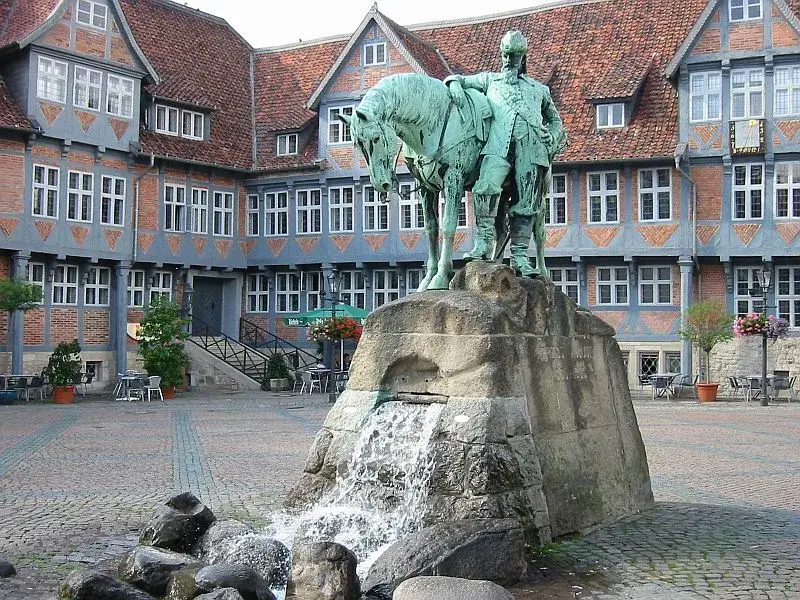
During Advent around 60 festively decorated stalls stand on the historic market square in front of the famous Knochenhauer-Amtshaus.
Plizio Visual Lab
Not dark bread, but a local sweet almond biscuit-find it in traditional bakeries.
Try hearty regional dishes like Grünkohl in winter at restaurants around the historic Marktplatz.
Enjoy a freshly tapped local or Lower Saxon craft beer in a rustic pub near the Andreas-Passage.
The main pedestrian streets offering a great mix of fashion chains and local boutiques.
Visit the farmers' market for fresh regional produce and a lively local atmosphere.
A beautifully restored Baroque garden famous for its historic rose collections and peaceful paths.
A lovely lake area just south of the city center, great for a relaxing walk or a summer swim.
A quiet, central green space with ancient trees, built on a former historic cemetery.
Water temperature…
During Advent around 60 festively decorated stalls stand on the historic market square in front of the famous Knochenhauer-Amtshaus.
The autumn festival brings market stalls, regional traders, participatory activities and Sunday shopping to central Hildesheim.
The Pflasterzauber festival turns the city centre into an open stage for two days of circus, theatre, dance and international street art.
At An der Lilie square, the food and wine days combine local gastronomy, selected wines and daily music entertainment with free admission.
At Hildesheim airfield, the international gothic scene gathers for two days of concerts, costumes and a mix of dark wave, industrial, medieval rock and synth-pop.
In summer the Pflasterzauber street performers festival transforms Hildesheim's city centre with acrobatics, music and walking acts.
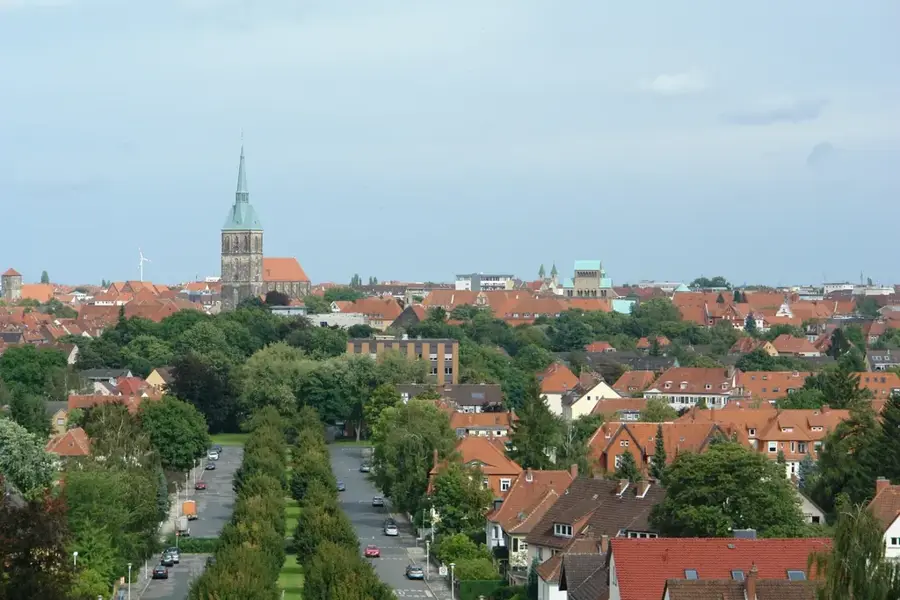
Hildesheim is a historic episcopal city in Lower Saxony, globally renowned primarily for its outstanding monuments of Ottonian architecture. St. Mary's Cathedral and St. Michael's Church were added to the UNESCO World Heritage list in 1985, impressively representing the golden age of the early Middle Ages. The 1,000-year-old rosebush, growing on the cathedral's apse, is a famous living symbol of the city's endurance. The Bernward Doors and the Christ Column inside the cathedral are masterpieces of 11th-century bronze casting and possess inestimable value. The historic Market Square was faithfully reconstructed in the 1980s after nearly total destruction during World War II, with the Knochenhaueramtshaus regarded as one of the world's finest half-timbered buildings. Hildesheim is also a significant educational hub, home to several colleges and a university. Its geographic location at the transition between the Harz foothills and the North German Plain favored its development as a trade center for centuries.
Explore on the map
Find cities, landscapes and regions in 10 varied challenges on the interactive map.
Your journey, your memory
Turn your own photo into a personal postcard with a local stamp. Free and no sign-up required.
Create a postcardThe most pleasant time to visit is Jun–Aug.
| Jan | Feb | Mar | Apr | May | Jun | Jul | Aug | Sep | Oct | Nov | Dec | |
|---|---|---|---|---|---|---|---|---|---|---|---|---|
| Avg °C | 0 | 1 | 4 | 9 | 13 | 16 | 19 | 18 | 14 | 9 | 5 | 1 |
| Rain mm | 71 | 49 | 52 | 39 | 66 | 63 | 84 | 67 | 58 | 58 | 64 | 70 |
See what it looks like near Hildesheim right now.
Hildesheim › West · 0.2 km · Open webcam on Windy · Webcams provided by Windy.com
Notable places around
Where do you start? We build the route here, with stops and country notes along the way.
© OpenStreetMap contributors · OpenRouteService
Explore Hildesheim on foot, starting with its UNESCO World Heritage sites. The morning is dedicated to the architecture of St. Michael's and the tranquility of Magdalenengarten. After diving into Egyptian history at the museum, head to the Cathedral and its legendary rose bush. The day ends grandly at the Market Square, surrounded by historic half-timbered architecture.
Experience Hildesheim on two wheels. This route connects the cultural highlights in the center with a relaxing ride to Hohnsensee lake. From St. Michael's Hill to the Cathedral and the Kehrwieder Tower, you'll discover the city's history efficiently and actively. The finish at the lake offers pure nature right at the city's doorstep.
Use your car to conveniently reach Hildesheim's various historic clusters. Start in the center (Market Square/Cathedral), then drive to St. Michael's Hill and on to the Godehardi quarter. By parking at strategic points, you minimize walking between districts while still enjoying the atmosphere of the UNESCO sites on foot.
A forest museum located in the Steinberg forest, featuring exhibitions on local flora, fauna, and forestry.
A significant Romanesque basilica in Hildesheim, part of the UNESCO World Heritage list.