Plizio Visual Lab
Zugspitze
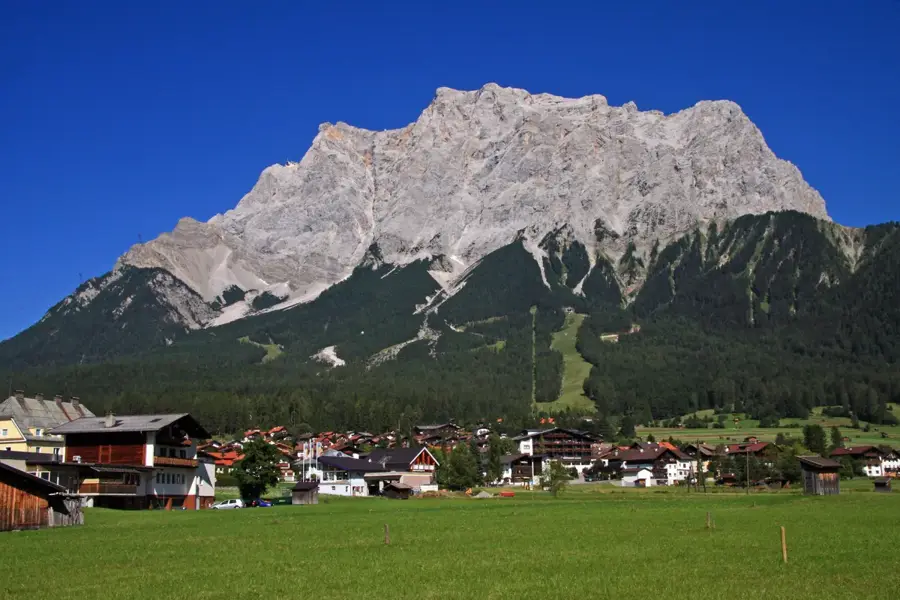
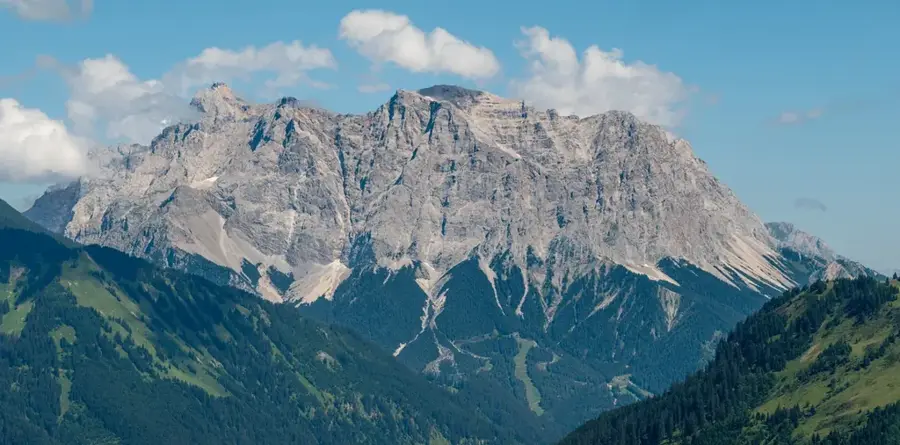
The Zugspitze, standing at 2,962 meters above sea level, is Germany's highest mountain and part of the Wetterstein massif in the Bavarian Alps. It marks the border between Germany and Austria and is accessible from both Garmisch-Partenkirchen and the Austrian village of Ehrwald. The summit plateau once hosted three glaciers, though today only remnants of the Northern Schneeferner and the Höllentalferner remain due to climate change. Mountaineers can choose from various routes to the summit, including the path through the Reintal valley or the spectacular Höllental gorge with its via ferrata. Tourists can comfortably reach the top via the Bavarian Zugspitze Railway, a rack railway, or the modern Zugspitze cable car. In addition to the striking view of over 400 Alpine peaks, the mountain houses Germany's highest research station and a meteorological observatory run by the German Weather Service.
Explore on the map
How well do you know Germany?
Find cities, landscapes and regions in 10 varied challenges on the interactive map.
Your journey, your memory
A postcard from Zugspitze
Turn your own photo into a personal postcard with a local stamp. Free and no sign-up required.
Create a postcard- Location: Bavaria, Germany
- Highlights: Zugspitze · Großer Waxenstein · Badestelle Eibsee
- Nearby: Garmisch-Partenkirchen (10 km)
Best time to visit & climate
The most pleasant time to visit is Jul–Sep.
| Jan | Feb | Mar | Apr | May | Jun | Jul | Aug | Sep | Oct | Nov | Dec | |
|---|---|---|---|---|---|---|---|---|---|---|---|---|
| Avg °C | -4 | -3 | 1 | 6 | 10 | 14 | 15 | 15 | 11 | 7 | 2 | -3 |
| Rain mm | 83 | 65 | 81 | 84 | 149 | 175 | 172 | 185 | 119 | 91 | 70 | 74 |
📋 Practical info
Geography
Facts
- The first recorded ascent was on August 27, 1820, by Josef Naus.
- A prominent 4.88-meter-high gilded summit cross marks the mountain's highest point.
- The Zugspitze cable car holds the world record for the largest vertical height difference in one section (1,945 meters).
- The mountain hosts Germany's only environmental research station (UFS) at nearly 2,700 meters.
- The igloo village on the Zugspitzplatt offers ice accommodations during the winter months.
- On clear days, the view from the Zugspitze extends as far as the television towers in Munich.
Explore nearby
Notable places around
Route planner — Car & Motorhome
Where do you start? We build the route here, with stops and country notes along the way.
© OpenStreetMap contributors · OpenRouteService
Sights in the town Zugspitze (3)
Sights nearby
Frequently asked questions
How high is the Zugspitze?
How do you get to the Zugspitze?
Can you ski on the Zugspitze?
How many countries can you see from the summit?
Is there snow on the Zugspitze all year round?
Zugspitze: where is it located?
Zugspitze: what is there to see?
Zugspitze: when is the best time to visit?
Zugspitze: why is it worth visiting?

Nearby cities