Plizio Visual Lab
Schloss Neuschwanstein
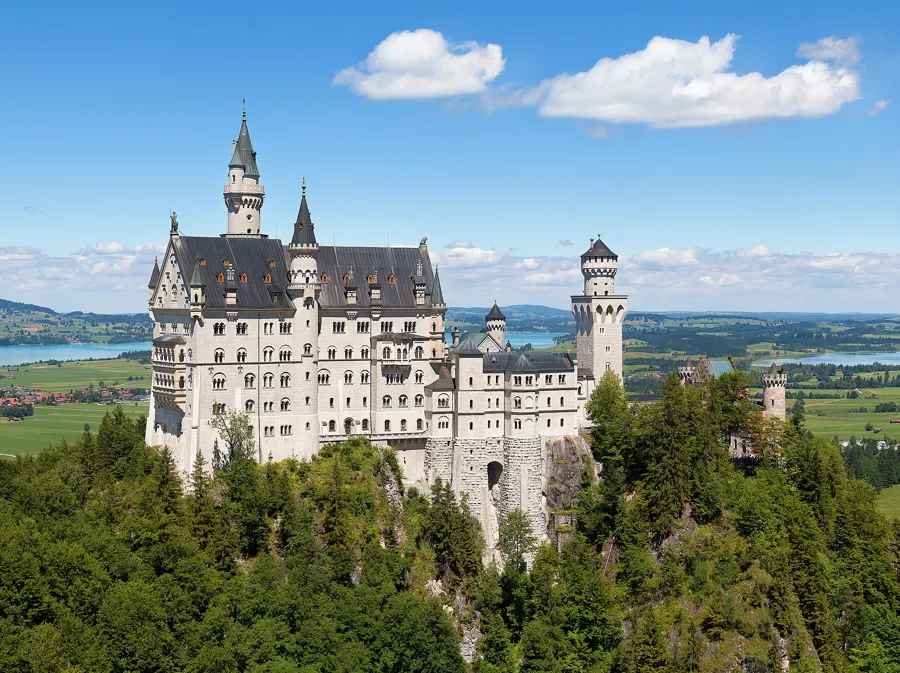
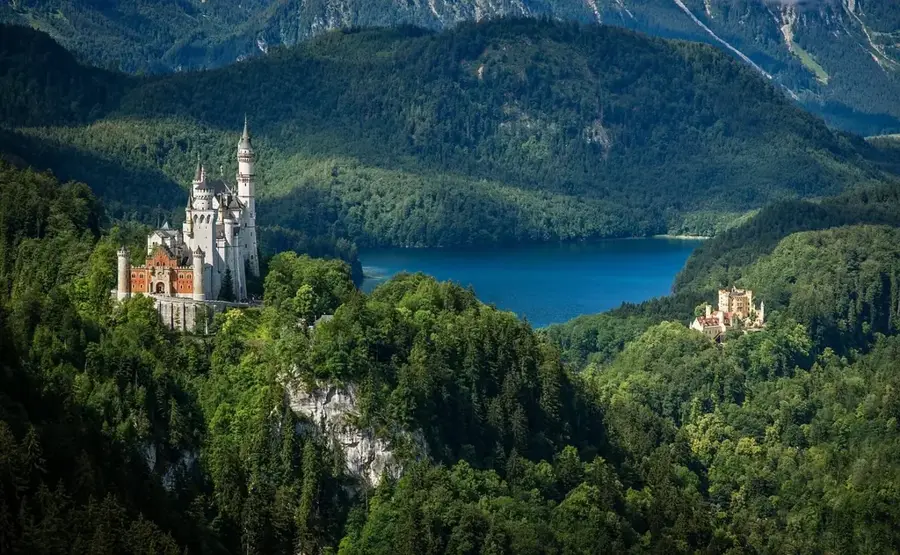
Neuschwanstein Castle, commissioned by King Ludwig II of Bavaria in 1869, is globally recognized as a premier example of 19th-century historicism. The architectural design was inspired by the idealized concept of a medieval knight's castle, yet it incorporated advanced technology of the time, including central heating and running water. Following the King's mysterious death in 1886, the ambitious project remained unfinished, with only a fraction of the planned rooms completed. The opulent interiors, most notably the Throne Hall and the Singers' Hall, are adorned with elaborate murals depicting scenes from Richard Wagner's operatic works. Every year, over 1.3 million people visit the castle, which is spectacularly perched on a rugged cliff above the Pöllat Gorge near Füssen. Despite its medieval aesthetic, the structure was a highly modern monument of royal self-representation and romantic escapism.
Explore on the map
How well do you know Germany?
Find cities, landscapes and regions in 10 varied challenges on the interactive map.
Your journey, your memory
A postcard from Schloss Neuschwanstein
Turn your own photo into a personal postcard with a local stamp. Free and no sign-up required.
Create a postcard- Location: Bavaria, Germany
- Nearby: Oberammergau (24 km)
Best time to visit & climate
The most pleasant time to visit is Jun–Aug.
| Jan | Feb | Mar | Apr | May | Jun | Jul | Aug | Sep | Oct | Nov | Dec | |
|---|---|---|---|---|---|---|---|---|---|---|---|---|
| Avg °C | -4 | -4 | 0 | 5 | 10 | 14 | 15 | 15 | 11 | 7 | 2 | -3 |
| Rain mm | 92 | 71 | 87 | 85 | 148 | 170 | 167 | 180 | 119 | 92 | 76 | 85 |
📋 Practical info
Geography
Facts
- The foundation stone of the castle was laid on September 5, 1869.
- King Ludwig II spent only a total of 172 days in his unfinished castle.
- The Throne Hall was designed in Byzantine style and features a 4-meter tall chandelier.
- The castle was among the first buildings in Bavaria to have an electric signal system.
- The Marienbrücke over the Pöllat Gorge was updated to a steel structure in 1866.
- Seven weeks after the death of Ludwig II in 1886, the castle was opened to the public.
Explore nearby
Notable places around
Route planner — Car & Motorhome
Where do you start? We build the route here, with stops and country notes along the way.
© OpenStreetMap contributors · OpenRouteService
Sights in the town Schloss Neuschwanstein (1)
Sights nearby
Frequently asked questions
Do I need to book tickets for Neuschwanstein in advance?
How do you get from the ticket center up to the castle?
Is photography allowed inside the castle?
Where do you get the best view of the castle?
Can you visit the castle without a guided tour?
Schloss Neuschwanstein: where is it located?
Schloss Neuschwanstein: when is the best time to visit?
Schloss Neuschwanstein: why is it worth visiting?
Nearby cities