Plizio Visual Lab
Bonga Forest
Weather…
Water temperature…
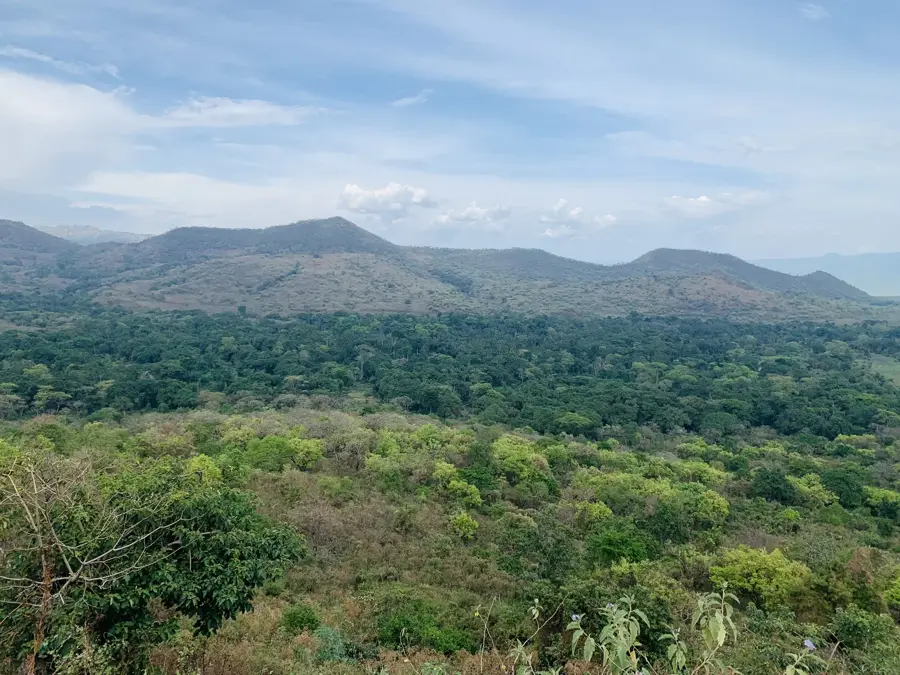
The Bonga Forest is located in southwestern Ethiopia within the Kaffa region and is considered one of the country's most precious subtropical rainforests. It is part of the UNESCO Kaffa Biosphere Reserve and is globally famous as the genetic birthplace of Arabica coffee, which still grows wild here beneath the canopy of ancient trees. The forest's topography is characterized by deep gorges, thundering waterfalls, and dense, evergreen vegetation that provides sanctuary for numerous endangered animal species. In addition to coffee, the forest is a vital source of spices, medicinal plants, and forest honey, forming the backbone of the local population's livelihood. High rainfall levels and dense cloud forests ensure constant humidity, fostering the lush growth of ferns, orchids, and mosses. Geologically, the forest rests on fertile volcanic soils formed over millions of years by tectonic activities in the East African Rift. The protection of this ecosystem is of international significance to ensure the genetic diversity of coffee and the survival of rare primates. Visitors cherish the Bonga Forest for its pristine nature and the deep insights it provides into traditional Ethiopian forestry.
Explore on the map
How well do you know Ethiopia?
Find cities, landscapes and regions in 10 varied challenges on the interactive map.
Your journey, your memory
A postcard from Bonga Forest
Turn your own photo into a personal postcard with a local stamp. Free and no sign-up required.
Create a postcard- Location: Ethiopia
- Nearby: Mizan Teferi (76 km)
Best time to visit & climate
The most pleasant time to visit is Jan, Feb, Dec.
| Jan | Feb | Mar | Apr | May | Jun | Jul | Aug | Sep | Oct | Nov | Dec | |
|---|---|---|---|---|---|---|---|---|---|---|---|---|
| Avg °C | 18 | 19 | 20 | 19 | 18 | 17 | 16 | 16 | 17 | 17 | 17 | 17 |
| Rain mm | 31 | 50 | 114 | 231 | 304 | 265 | 229 | 246 | 235 | 192 | 107 | 52 |
📋 Practical info
Geography
Facts
- Part of Ethiopia's first UNESCO Biosphere Reserve (Kaffa).
- Genetic home to over 5,000 varieties of wild coffee.
- Average annual rainfall of approximately 1,700 mm.
- Inhabited by rare primates like the guereza colobus monkey.
- A major source of black cardamom and long pepper.
- The forest is situated at an elevation between 1,600 and 2,500 meters.
Explore nearby
Notable places around

Route planner — Car & Motorhome
Where do you start? We build the route here, with stops and country notes along the way.
© OpenStreetMap contributors · OpenRouteService
Sights nearby
Frequently asked questions
Is the Bonga Forest the birthplace of coffee?
Are there waterfalls in the Bonga Forest?
How difficult are the trails?
Are there many insects there?
What is the Kaffa Biosphere Reserve?
Bonga Forest: where is it located?
Bonga Forest: when is the best time to visit?
Bonga Forest: why is it worth visiting?
Nearby cities
History & landmarks
Nature
More places