Plizio Visual Lab
Lake Superior
Weather…
Water temperature…
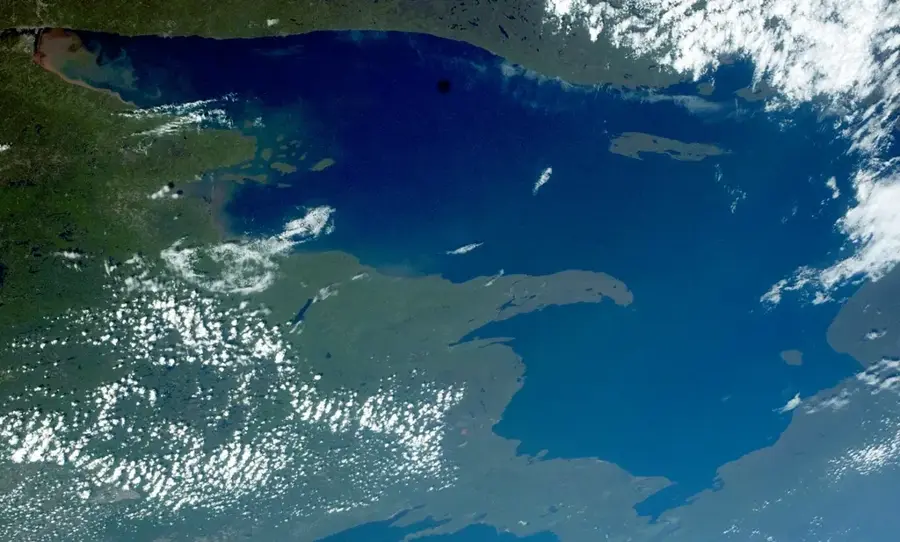
Lake Superior is the world's largest freshwater lake by surface area and the northernmost of North America's five Great Lakes. Covering approximately 82,103 square kilometers, it is bordered by the Canadian province of Ontario and the U.S. states of Minnesota, Wisconsin, and Michigan. The lake contains about ten percent of the Earth's surface liquid freshwater and reaches a maximum depth of 406 meters. Geologically, the lake is situated within the Canadian Shield, with its current basin shaped by the massive ice sheets of the last glacial period. The climate around the lake is maritime-influenced, often resulting in sudden storms and dense fog, which have historically claimed numerous shipwrecks. The shoreline is characterized by rugged cliffs, sandy beaches, and dense forests that provide habitat for a wide range of wildlife. For the region's economic development, the lake has been of critical importance as a primary shipping route for iron ore and grain. Today, it stands as a center for nature conservation and recreation, prized for its exceptional water clarity and ecological diversity.
Explore on the map
How well do you know Canada?
Find cities, landscapes and regions in 10 varied challenges on the interactive map.
Your journey, your memory
A postcard from Lake Superior
Turn your own photo into a personal postcard with a local stamp. Free and no sign-up required.
Create a postcardBest time to visit & climate
The most pleasant time to visit is Jul–Sep.
| Jan | Feb | Mar | Apr | May | Jun | Jul | Aug | Sep | Oct | Nov | Dec | |
|---|---|---|---|---|---|---|---|---|---|---|---|---|
| Avg °C | -4 | -5 | -2 | 2 | 4 | 7 | 11 | 15 | 13 | 8 | 3 | -1 |
| Rain mm | 52 | 38 | 46 | 58 | 71 | 77 | 70 | 62 | 79 | 82 | 61 | 61 |
📋 Practical info
Geography
Facts
- The total surface area is approximately 82,103 square kilometers.
- The lake's water volume totals 12,100 cubic kilometers.
- The maximum depth of the lake is 406 meters.
- It contains 10% of the Earth's surface liquid freshwater.
- The lake is fed by more than 200 individual rivers.
- Underwater visibility exceeds 20 meters in many locations.
Route planner — Car & Motorhome
Where do you start? We build the route here, with stops and country notes along the way.
© OpenStreetMap contributors · OpenRouteService
Sights nearby
Frequently asked questions
How large is Lake Superior?
Can you swim in the lake?
Which city is on the Canadian shore?
Is there shipping on the lake?
What is Pukaskwa National Park?
Lake Superior: where is it located?
Lake Superior: when is the best time to visit?
Lake Superior: why is it worth visiting?
Nearby cities