Plizio Visual Lab
Living Fire
Weather…
Water temperature…
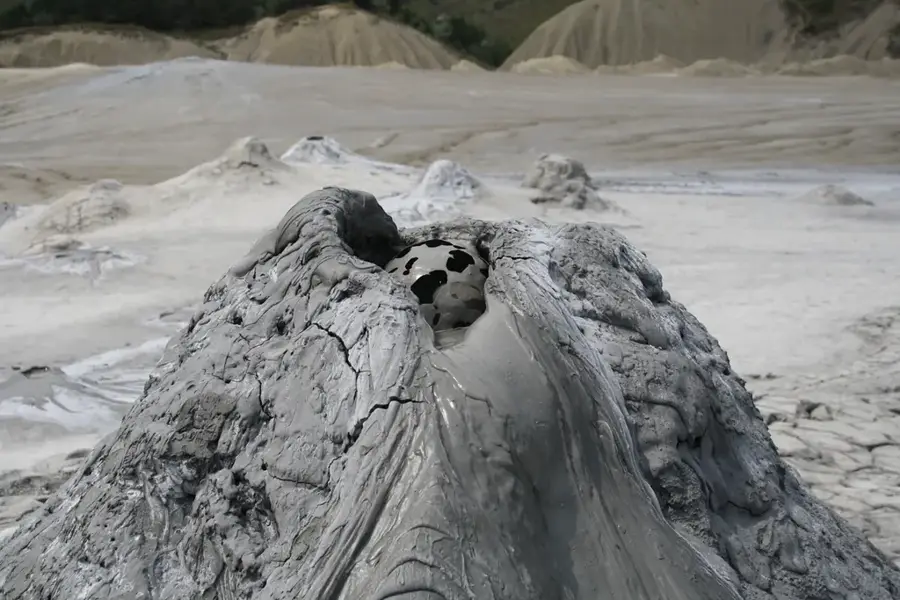
The Living Fire (Focul Viu) near the village of Terca in Lopătari is a rare and captivating natural phenomenon located in the Buzău Mountains. It is caused by the natural emission of hydrocarbons, primarily methane, which escapes through cracks in the Earth's crust and ignites spontaneously due to solar radiation or friction, creating permanent flames. These flames can reach heights of up to 50 centimeters and are particularly spectacular when viewed at dusk or during the night. Situated at an altitude of approximately 1,030 meters, the site is an integral part of the UNESCO Global Geopark 'Buzău Land'. The intensity of the fire fluctuates depending on atmospheric pressure and weather conditions; while heavy rain might temporarily extinguish the flames, the continuous gas flow eventually reignites them. Local folklore is rich with myths about dragons and mystical guardians protecting these eternal fires, adding a layer of cultural significance to this remarkable geological feature.
Explore on the map
How well do you know Romania?
Find cities, landscapes and regions in 10 varied challenges on the interactive map.
Your journey, your memory
A postcard from Living Fire
Turn your own photo into a personal postcard with a local stamp. Free and no sign-up required.
Create a postcard- Location: Buzău, Romania
- Highlights: Focul Viu Terca · Focul Viu · Sfinxul de la Buștea
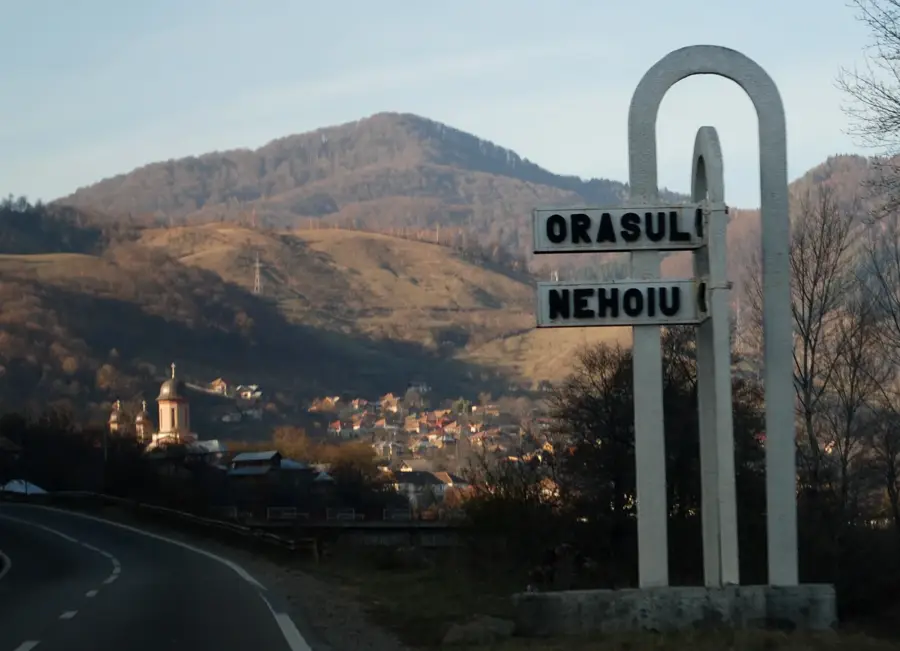
- Nearby: Nehoiu (23 km)
Best time to visit & climate
The most pleasant time to visit is Jun–Aug.
| Jan | Feb | Mar | Apr | May | Jun | Jul | Aug | Sep | Oct | Nov | Dec | |
|---|---|---|---|---|---|---|---|---|---|---|---|---|
| Avg °C | -4 | -3 | 2 | 7 | 13 | 17 | 19 | 20 | 14 | 8 | 3 | -2 |
| Rain mm | 39 | 36 | 43 | 54 | 81 | 105 | 92 | 65 | 54 | 57 | 41 | 44 |
📋 Practical info
Geography
Facts
- The natural fire covers an area of about 25 square meters.
- The phenomenon is located at an elevation of 1,030 meters.
- Methane is the primary gas fueling the continuous flames.
- The flames can reach heights of up to 50 centimeters.
- The site is part of the UNESCO Global Geopark 'Buzău Land'.
- It is one of only a few such naturally occurring fires in Europe.
Explore nearby
Notable places around
Route planner — Car & Motorhome
Where do you start? We build the route here, with stops and country notes along the way.
© OpenStreetMap contributors · OpenRouteService
Sights in the town Living Fire (3)
Sights nearby
Frequently asked questions
What exactly is the 'Living Fire' phenomenon?
How do you get to the Living Fire in Lopătari?
Are the flames visible at all times?
Is the trail to the flames difficult?
Are there tourist facilities (WC, restaurants) on site?
Living Fire: where is it located?
Living Fire: what is there to see?
Living Fire: when is the best time to visit?
Living Fire: why is it worth visiting?

Nearby cities
History & landmarks
Nature
More places