Plizio Visual Lab
Iquitos
ℹ️Practical info — Iquitos
▾
🌤 Weather — 5 days
📍 Nearby
Sights nearby
💡 Tips
- Since the city is not accessible by road, plan your arrival carefully by airplane or riverboat.
- Always negotiate the fare with the mototaxi driver before getting into the vehicle.
- Constantly apply insect repellent, particularly around dusk when near the rivers.
- Keep a lightweight rain poncho handy, as heavy tropical showers can start without warning.
🍽 Food
Rice, chicken, and olives traditionally cooked wrapped in a bijao leaf, an absolute must-try.
A local Amazonian take on ceviche featuring the gigantic river fish, the paiche.
For the adventurous: Grilled edible palm grubs on skewers, commonly found in the Belén market.
🛍 Shopping · 🧘 Quiet spots
A famous alley within the Belén market selling traditional Amazonian medicinal plants and potions.
The best place to find authentic textiles and crafts made by the indigenous Shipibo people.
A pretty riverside promenade that is first-rate for a quiet stroll during sunset.
A tourist complex featuring a relaxed man-made sandy beach on a calm lagoon just outside the city.
A peaceful butterfly farm and animal orphanage that you can reach via a short boat ride.
Water temperature…
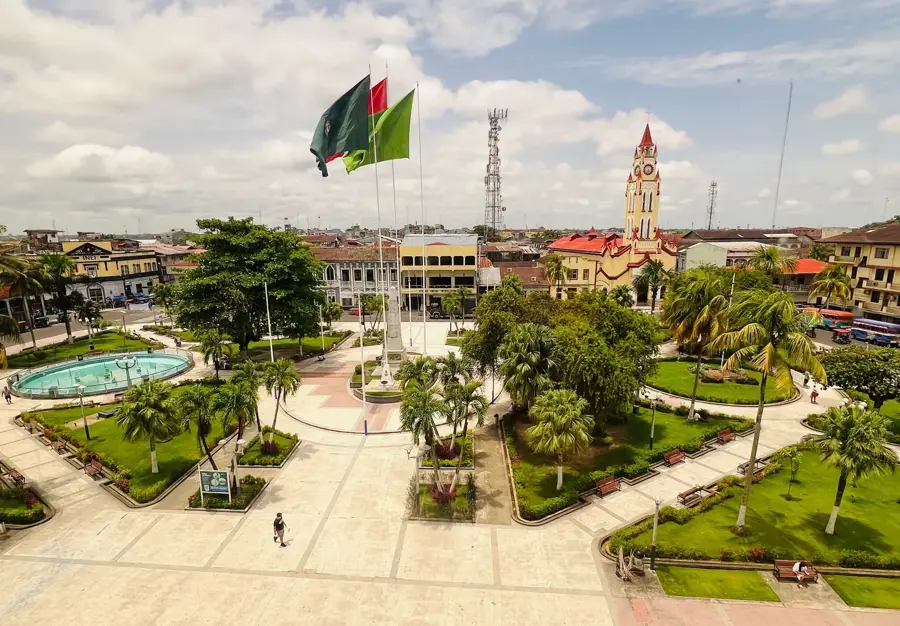
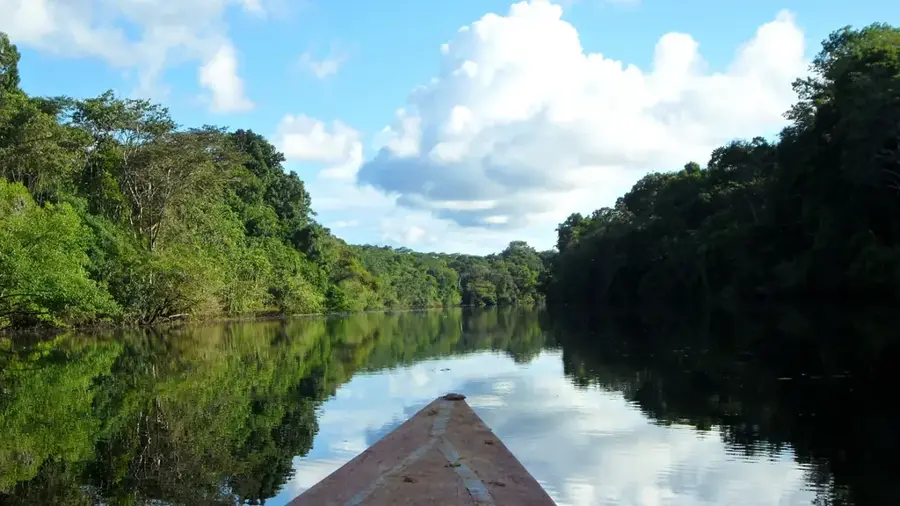
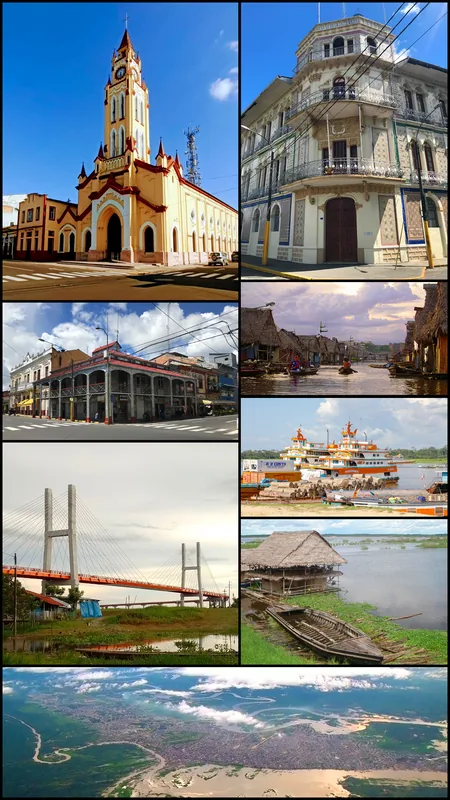
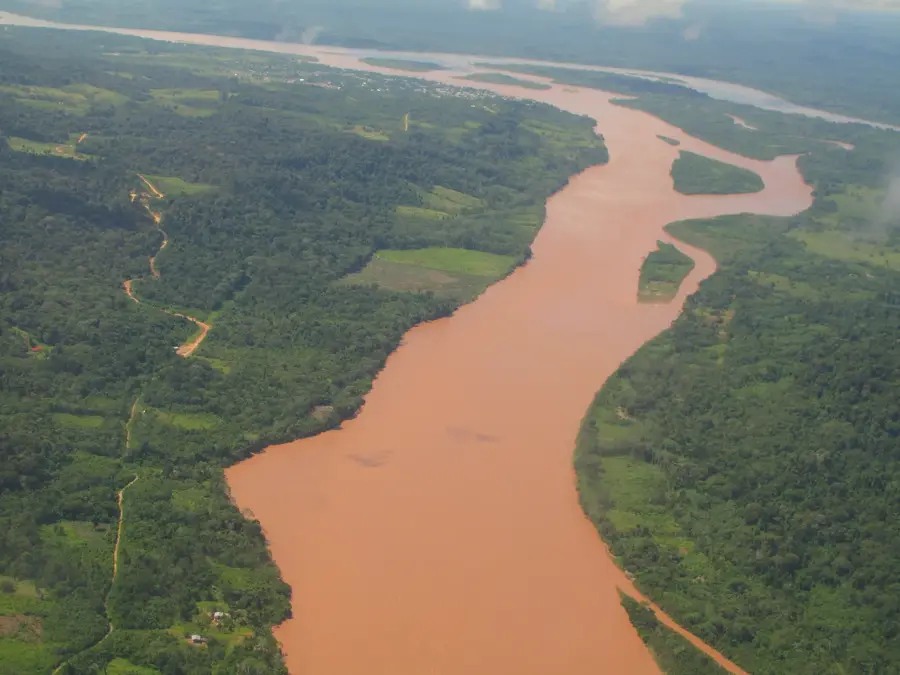
Iquitos, the capital of the Loreto region in the Peruvian Amazon, is the world's largest city not accessible by land. Situated on the banks of the Amazon River, it is reachable only by plane or boat, giving it a unique isolation and atmosphere. The city experienced a heyday in the late 19th century during the rubber boom, which is still reflected today in the grand, tile-decorated mansions along the Malecón. One of the most famous buildings is the Iron House (Casa de Fierro), allegedly designed by Gustave Eiffel. Iquitos is the gateway to the Amazon rainforest and the starting point for expeditions into the Pacaya-Samiria National Reserve. The floating district of Belén, also called the 'Venice of the Amazon,' shows river life in its most original form. The city's culture is deeply rooted in indigenous traditions, as seen in the Belén market through the offering of exotic fruits and medicinal plants. Today, Iquitos is a hub for ecotourism and scientific research into the biodiversity of the Amazon basin.
Explore on the map
How well do you know Peru?
Find cities, landscapes and regions in 10 varied challenges on the interactive map.
Your journey, your memory
A postcard from Iquitos
Turn your own photo into a personal postcard with a local stamp. Free and no sign-up required.
Create a postcard- Location: Peru
- Highlights: Parroquia Nuestra Señora del Amazonas · Parroquia San Martín de Porres · La Iglesia de Jesucristo de los Santos de los Últimos Días
- Population: ~377.609 (2026)
Best time to visit & climate
The most pleasant time to visit is Jul–Sep.
| Jan | Feb | Mar | Apr | May | Jun | Jul | Aug | Sep | Oct | Nov | Dec | |
|---|---|---|---|---|---|---|---|---|---|---|---|---|
| Avg °C | 26 | 26 | 25 | 25 | 25 | 25 | 25 | 25 | 26 | 26 | 26 | 26 |
| Rain mm | 293 | 244 | 362 | 301 | 273 | 220 | 168 | 156 | 185 | 279 | 285 | 291 |
Geography
Facts
- Iquitos is the largest city in the world without a road connecting it to the outside.
- The rubber boom of the late 19th century funded the city's ornate architecture.
- The Casa de Fierro (Iron House) was prefabricated in France.
- The city is located roughly 3,700 kilometers from the Atlantic Ocean.
- Belén market is famous for selling Ayahuasca and Amazonian medicinal herbs.
- Iquitos is the capital of Loreto, Peru's largest and northernmost department.
Explore nearby
Notable places around
Route planner — Car & Motorhome
Where do you start? We build the route here, with stops and country notes along the way.
© OpenStreetMap contributors · OpenRouteService
Sights in the town Iquitos (5)
Frequently asked questions
How many days should I plan for Iquitos?
When is the best time to visit Iquitos?
What is the best way to get to Iquitos?
What local specialty should I try?
Is Iquitos a family-friendly destination?
Iquitos: where is it located?
Iquitos: what is there to see?
Iquitos: when is the best time to visit?
Iquitos: why is it worth visiting?
Nature
More places