Plizio Visual Lab

Borobudur Temple
Plizio editorial teamData Sources
historical-site
—°15
Borobudur Temple (Indonesia)

Weather…

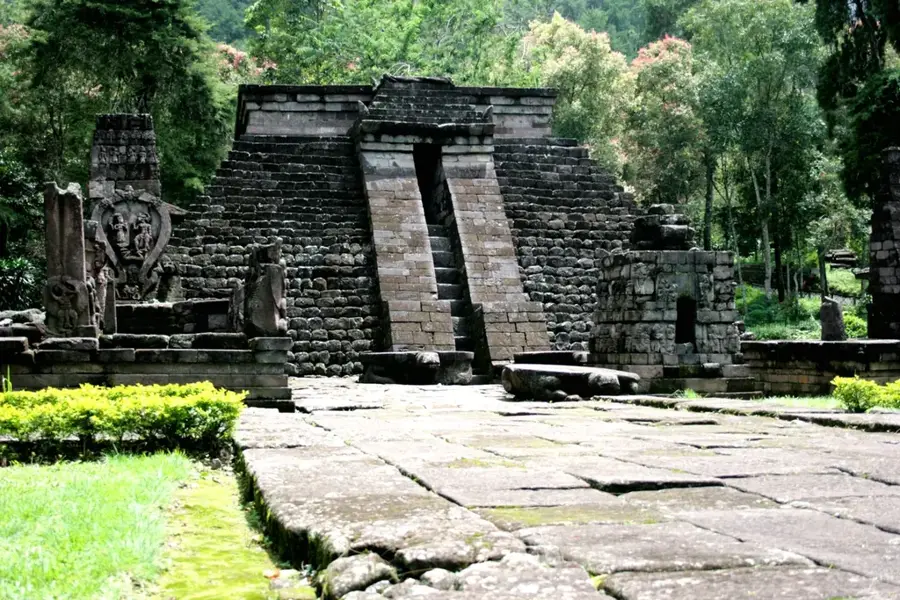
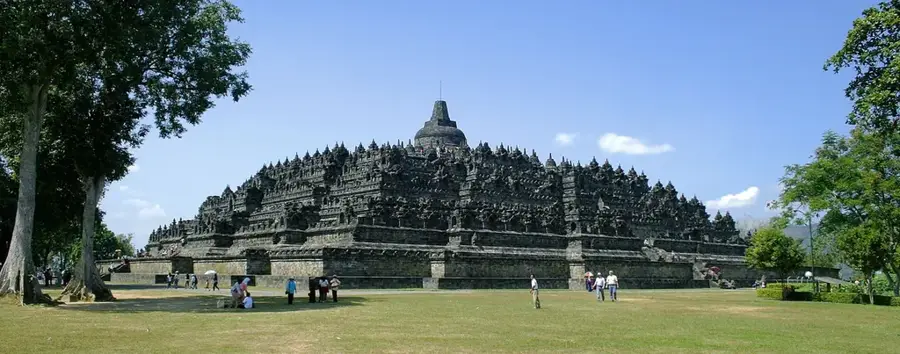
Borobudur is the world's largest Buddhist temple, located near Magelang in Central Java. Constructed during the 8th and 9th centuries under the Sailendra Dynasty, the monument is designed as a massive stepped pyramid resembling a tantric mandala. Its architectural layout represents Buddhist cosmology, guiding devotees from the realm of desires at the base to the state of nirvana at the summit. The structure consists of nine stacked platforms decorated with 2,672 relief panels and 504 Buddha statues. Following centuries of burial beneath volcanic ash and jungle growth, the site was rediscovered in 1814 during the British administration. A monumental restoration project led by UNESCO in the 1970s stabilized the foundations and preserved its intricate carvings. Today, Borobudur is a UNESCO World Heritage site and remains a primary center for Buddhist pilgrimage, especially during the annual Vesak festival.

Best time to visit & climate

The most pleasant time to visit is Jul–Sep.

JanFebMarAprMayJunJulAugSepOctNovDec
Avg °C232323242322222223242423
Rain mm340340231203175113723680165262313

📋 Practical info

🚪
Visiting
The temple complex is fully accessible for visitors; you can walk the entire circuit of nine terraces. Climbing the steps is allowed, but respectful behavior is expected.
🕒
Typical hours
The site is usually open daily from 6:00 to 17:00. Sunrise visits are popular; check for seasonal changes.
📷
Photography
Photography for personal use is permitted. Drones are not allowed without special permits.
⏱️
Time needed
Allow at least 2-3 hours to explore the nine platforms. A full tour including the museum can take half a day.
Combine with
Combine with nearby Mendut Temple and Pawon Temple, which are part of the same Buddhist axis. Also visit the local villages for batik workshops.
🧭
Getting there
The site is located about 40 km northwest of Yogyakarta. Public buses and organized tours are common; hire a driver for flexibility.
💡
Insider tip
Arrive at sunrise to avoid crowds and see the stupas glow. Wear comfortable shoes and bring water as there is little shade.

Geography

Coordinates
-7.60790, 110.20380

Facts

  • The temple's construction was completed around 825 AD.
  • An estimated 55,000 cubic meters of andesite stone were used for its build.
  • The foundation of the monument measures approximately 123 by 123 meters.
  • The upper circular platforms host 72 perforated bell-shaped stupas.
  • The major UNESCO restoration project spanned from 1975 to 1982.
  • The total length of the narrative reliefs is approximately 5 kilometers.

Explore nearby

Notable places around
Route planner — Car & Motorhome

Where do you start? We build the route here, with stops and country notes along the way.

Vehicle
Only stops with (optional):

© OpenStreetMap contributors · OpenRouteService

Sights in the town Borobudur Temple (15)

Museum Kapal Samudraraksa🏛 museum

This museum houses a life-size 8th-century ship replica based on temple reliefs.

Museum Borobudur🏛 museum

A museum preserving the original series of Karmawibhangga reliefs and significant Buddha statues from Borobudur.

Giant Chicken Church⛪ religious

A unique prayer house shaped like a giant bird, situated in the forested hills above the plain.

Borobudur Temple📍 landmark

The world's largest Buddhist temple, famous for its 72 stone stupas and intricate reliefs.

Pawon Temple📍 landmark

A small Buddhist temple located on a direct ritual line between Mendut and Borobudur.

Mendut Temple📍 landmark

A 9th-century temple housing a massive three-meter-tall seated Buddha statue inside.

Galeri Unik dan Seni Borobudur🏛 museum

A gallery showcasing a collection of curious artworks and local craftsmanship from around the temple.

Cagar Budaya Plengkung Pitu🏺 historical

An archaeological site known for its seven historic gateway arches that were once part of a larger structure.

Soekarno-Hatta🏺 historical

A monument honoring the founding fathers of Indonesia, commemorating their contribution to national unity.

Candi Ngawen🏺 historical

This 8th-century Buddhist temple complex consists of five small shrines set in a rural landscape.

Masjid⛪ religious

A local mosque serving as the religious center for the surrounding village community.

PONDOK PESANTREN AL-FALLAH⛪ religious

A traditional Islamic boarding school and mosque forming a hub for religious education.

Pasar Mungkid🎭 culture

A lively marketplace in Mungkid selling fresh local produce and handicrafts.

Pasar Japuan🎭 culture

A traditional morning market in Japuan known for its authentic local street food.

Pasar Japunan Magelang🎭 culture

A busy trading spot in Magelang offering clothing and household goods for the region.

Sights nearby

Frequently asked questions

When does Borobudur Temple open?
Usually from 06:30 AM to 04:30 PM; special sunrise tours often start earlier.
How much is the entry fee?
Around 25 USD for foreigners; combined tickets with Prambanan are also available.
Are you allowed to climb the temple?
Access to the upper levels is limited and often requires a special reservation.
How long does a visit take?
Plan for at least 2 to 3 hours to admire the reliefs and architecture.
Is there a dress code?
Yes, shoulders and knees must be covered; sarongs are often provided at the entrance.
Borobudur Temple: where is it located?
Borobudur Temple is located in Indonesia.
Borobudur Temple: what is there to see?
Highlights include Museum Kapal Samudraraksa, Museum Borobudur, Giant Chicken Church.
Borobudur Temple: when is the best time to visit?
The most pleasant time to visit is Jul, Sep.
Borobudur Temple: why is it worth visiting?
Borobudur is the world's largest Buddhist temple, located near Magelang in Central Java.
View on map → The Top 50 Attractions → OpenStreetMap →
Asia
Explore with Plizio Discover more places in Asia
More places in Indonesia →

Nearby cities

History & landmarks
More places