Plizio Visual Lab
Jasmund National Park (Chalk Cliffs)
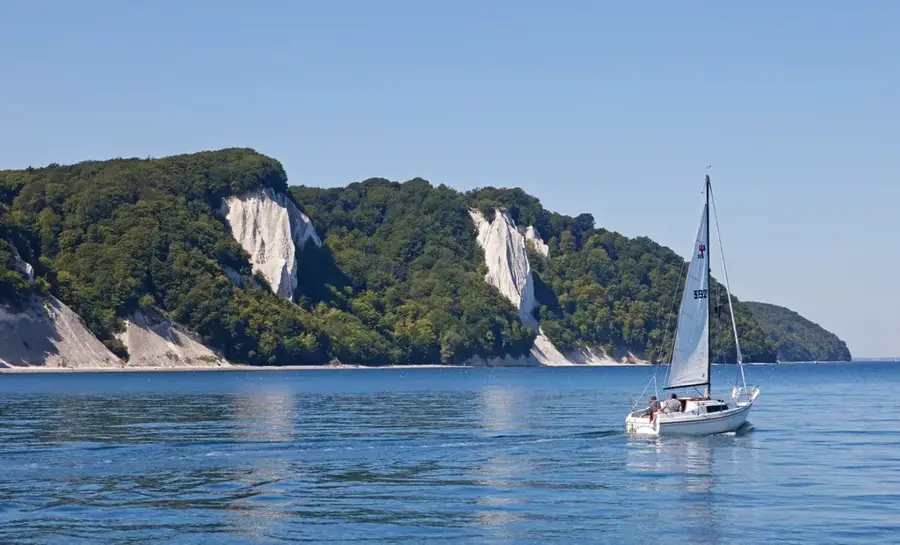
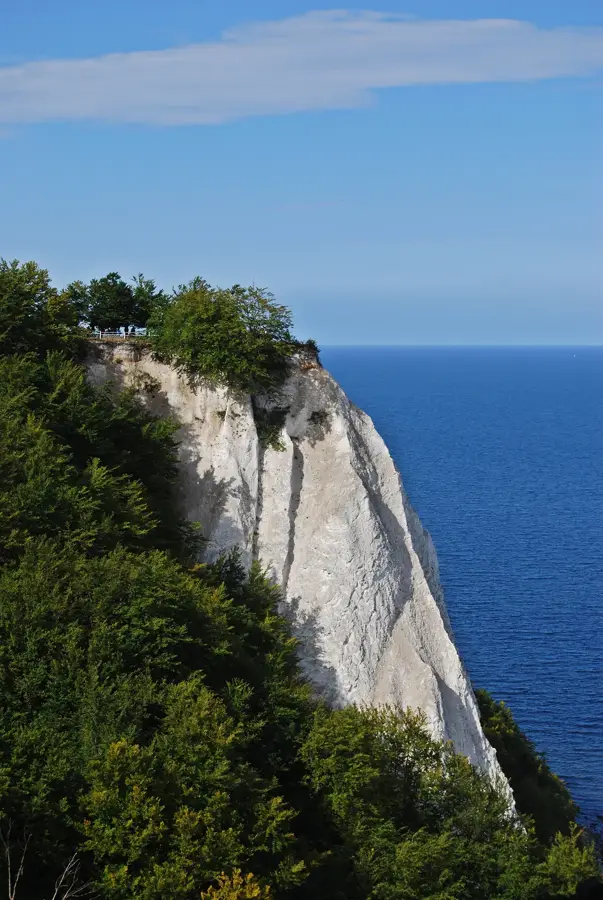
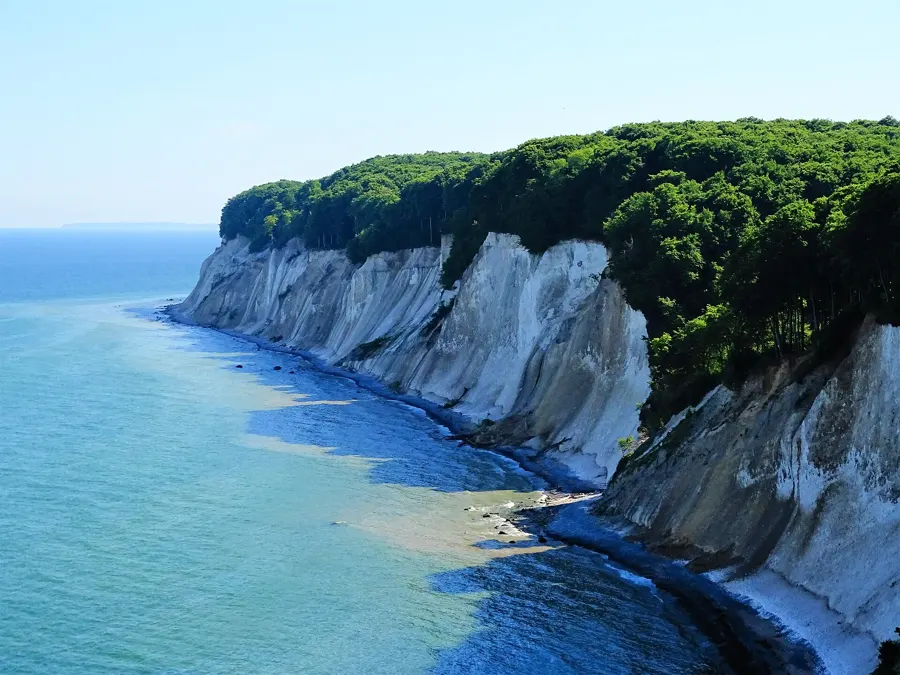
The Jasmund National Park on the island of Rügen is Germany's smallest national park, covering just 3,003 hectares, yet it hosts some of the country's most spectacular natural scenery. It is most famous for its brilliant white chalk cliffs, which stretch for 15 kilometers along the Baltic coast. The most prominent feature is the 118-meter-high Königsstuhl, which inspired the renowned painter Caspar David Friedrich to create his famous works. Behind the coastline lie extensive ancient beech forests, which have been part of the UNESCO World Natural Heritage since 2011. These undisturbed forests provide a habitat for rare plants such as orchids and protected animal species like the white-tailed eagle. Hiking trails lead visitors through the shaded forests and along the high cliff paths, offering panoramic views of the deep blue sea and the rugged chalk formations.
Explore on the map
How well do you know Germany?
Find cities, landscapes and regions in 10 varied challenges on the interactive map.
Your journey, your memory
A postcard from Jasmund National Park (Chalk Cliffs)
Turn your own photo into a personal postcard with a local stamp. Free and no sign-up required.
Create a postcard- Location: Mecklenburg-Western Pomerania, Germany
- Highlights: Herthaburg · Herthabuche · Großsteingrab Hagen-Stubnitz 1
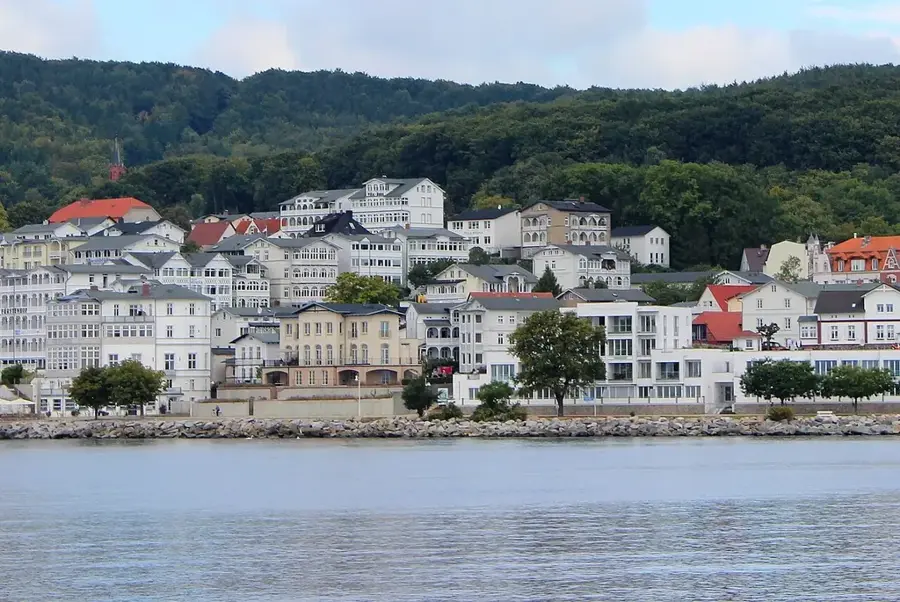
- Nearby: Sassnitz (6 km)
Best time to visit & climate
The most pleasant time to visit is Jun–Aug.
| Jan | Feb | Mar | Apr | May | Jun | Jul | Aug | Sep | Oct | Nov | Dec | |
|---|---|---|---|---|---|---|---|---|---|---|---|---|
| Avg °C | 2 | 2 | 3 | 7 | 11 | 15 | 18 | 19 | 16 | 11 | 7 | 4 |
| Rain mm | 64 | 48 | 44 | 34 | 47 | 57 | 77 | 73 | 61 | 67 | 61 | 64 |
📋 Practical info
Geography
Facts
- The national park was officially established on September 12, 1990.
- The chalk cliffs are composed of the remains of microorganisms from the Cretaceous period.
- The Königsstuhl is the highest point of the chalk coast at 118 meters.
- The park's beech forests are part of the UNESCO 'Ancient Beech Forests of Germany' site.
- Approximately 80% of the park's area is forest, with the remainder being water and open land.
- Since 2023, the 'Skywalk' observation platform has extended over the Königsstuhl.
Explore nearby
Notable places around
Route planner — Car & Motorhome
Where do you start? We build the route here, with stops and country notes along the way.
© OpenStreetMap contributors · OpenRouteService
Sights in the town Jasmund National Park (Chalk Cliffs) (10)
Königsstuhl
Famous chalk rock formation on Rügen's coast, popular viewpoint.
Victoria-Sicht
Viewpoint overlooking the chalk coast and the Baltic Sea.
UNESCO-Weltnaturerbe ,,Alte Buchenwalder Deutschlands" - Teilgebiet Jasmund
Ancient beech forest in Jasmund National Park, a UNESCO World Heritage site.
Ehemaliges Leuchtfeuer Ranzow
Former lighthouse site, dismantled in 2002 and relocated to Cape Arkona in 2004.
Großsteingrab Nipmerow 5
Group of Neolithic burial structures on the island of Rügen.
Grabhügel Magelowberg
Prehistoric burial mound, now a viewpoint within the national park.
Sights nearby
Frequently asked questions
Where is the best view of the chalk cliffs?
How do I get to the National Park Center?
Are dogs allowed in Jasmund National Park?
How difficult is the hike along the coast?
Is there an entrance fee for the National Park?
Jasmund National Park (Chalk Cliffs): where is it located?
Jasmund National Park (Chalk Cliffs): what is there to see?
Jasmund National Park (Chalk Cliffs): when is the best time to visit?
Jasmund National Park (Chalk Cliffs): why is it worth visiting?
Nearby cities