Schloss Lichtenstein
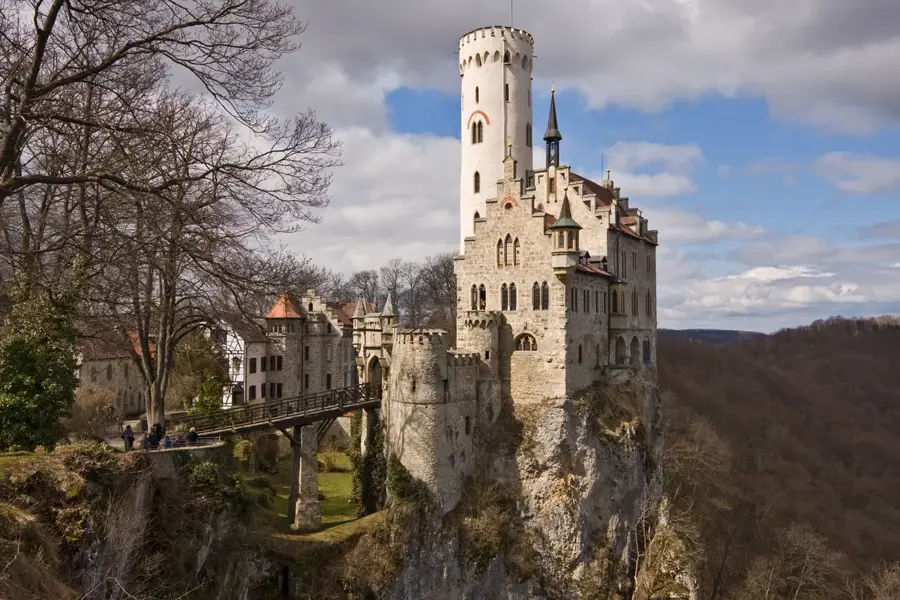
Château in Württemberg, built in the 19th century on a rocky outcrop.
🌐 schloss-lichtenstein.de🕒 Mo-Su 09:00-17:30
Plizio Visual Lab
Lichtenstein Castle, often referred to as the fairytale castle of Württemberg, rises spectacularly on a steep cliff on the edge of the Swabian Jura. The current structure was built between 1840 and 1842 at the behest of Count Wilhelm of Württemberg, who was inspired by Wilhelm Hauff's historical novel 'Lichtenstein.' Architect Carl Alexander Heideloff designed the castle in the Neo-Gothic style on the foundations of a 14th-century medieval fortress. Despite its relatively small size, the complex is captivating due to its exposed location above the Echaz Valley and its detailed furnishings. The castle houses a significant collection of historical weapons and armor, as well as valuable stained glass and paintings. It remains in the possession of the Dukes of Urach to this day and is considered one of the most prominent examples of Romantic Historicism in southern Germany, embodying the 19th-century longing for a chivalric past.
Explore on the map
Find cities, landscapes and regions in 10 varied challenges on the interactive map.
Your journey, your memory
Turn your own photo into a personal postcard with a local stamp. Free and no sign-up required.
Create a postcardThe most pleasant time to visit is Jun–Aug.
| Jan | Feb | Mar | Apr | May | Jun | Jul | Aug | Sep | Oct | Nov | Dec | |
|---|---|---|---|---|---|---|---|---|---|---|---|---|
| Avg °C | -1 | 0 | 4 | 8 | 13 | 17 | 19 | 18 | 14 | 9 | 4 | 0 |
| Rain mm | 65 | 49 | 58 | 56 | 96 | 88 | 98 | 93 | 62 | 68 | 62 | 68 |
Notable places around
Where do you start? We build the route here, with stops and country notes along the way.
© OpenStreetMap contributors · OpenRouteService
Château in Württemberg, built in the 19th century on a rocky outcrop.
Spring near Lichtenstein Castle.
Cave in Baden-Württemberg, Germany, located in the Echaz valley.
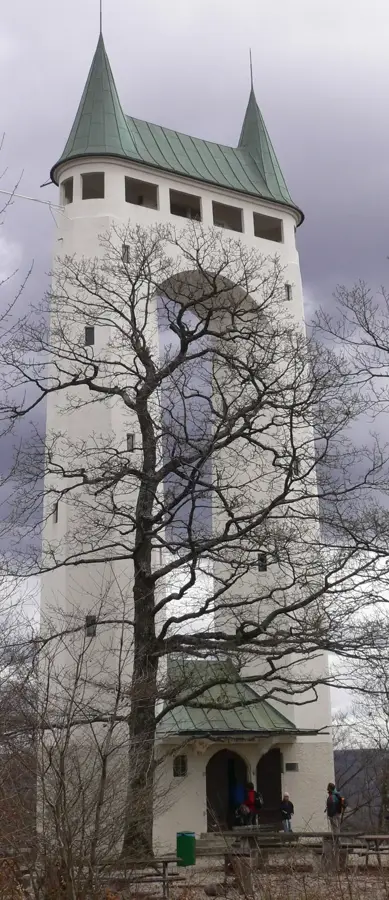
Viewpoint overlooking the Echaz valley and the Swabian Alb.
Spring of the Echaz river in Honau, Germany.
Church in Honau, dedicated to Saint Gallus.
Peak on the Swabian Alb.