Plizio Visual Lab
Gros Morne
Weather…
Water temperature…
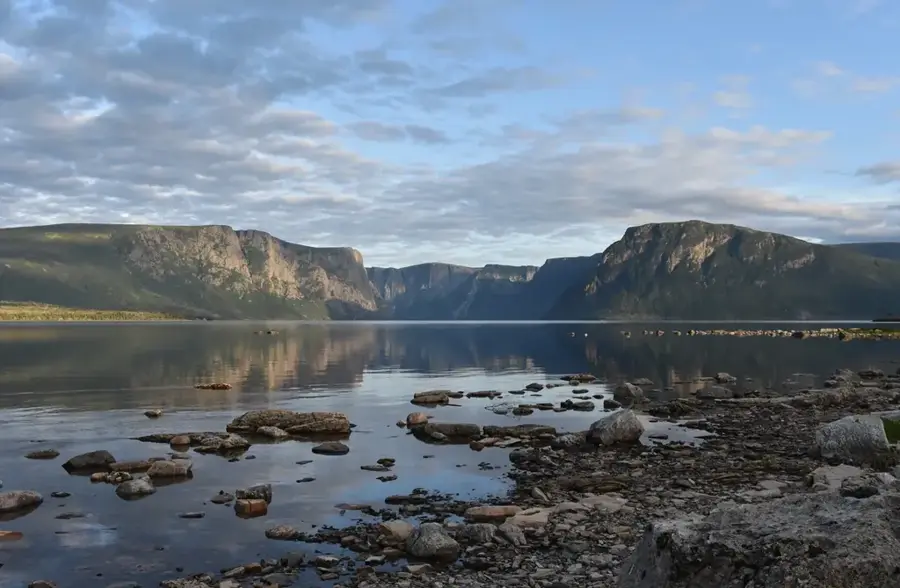
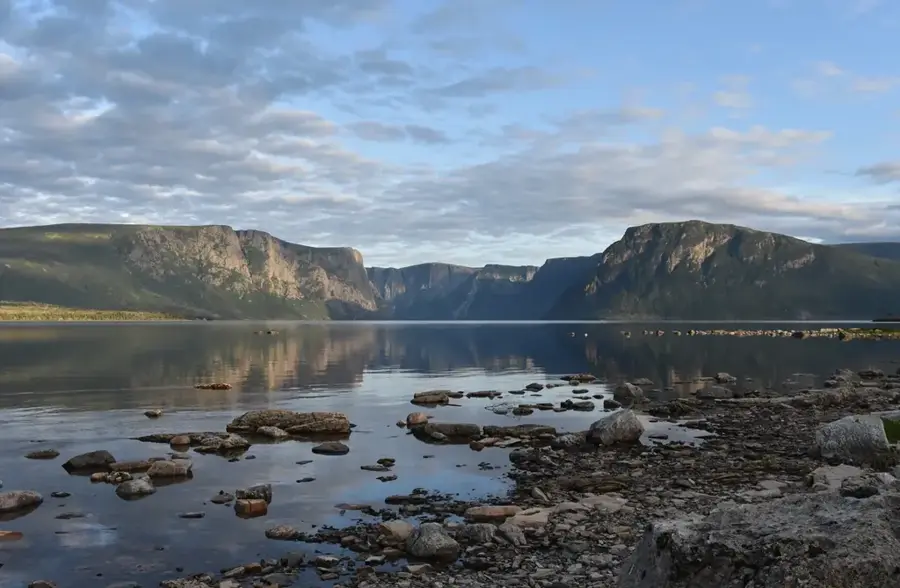
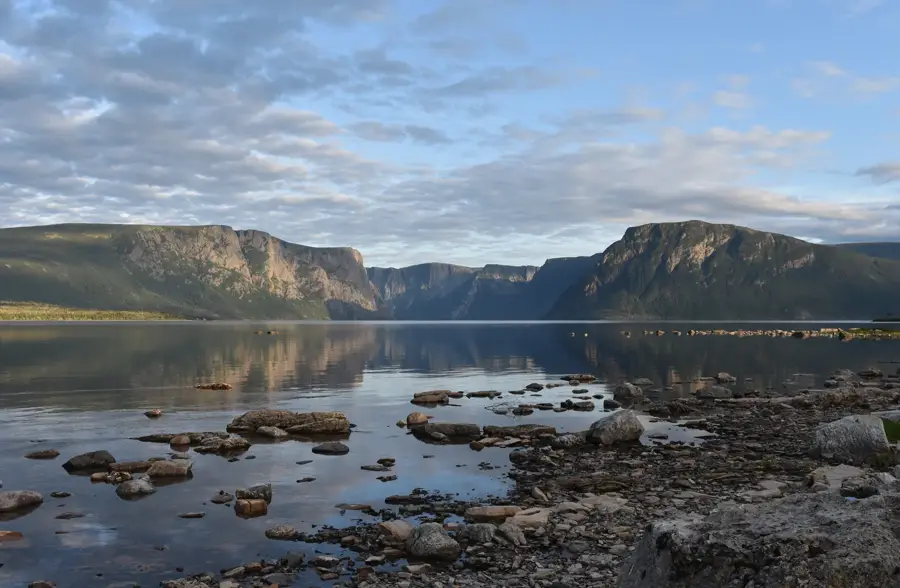
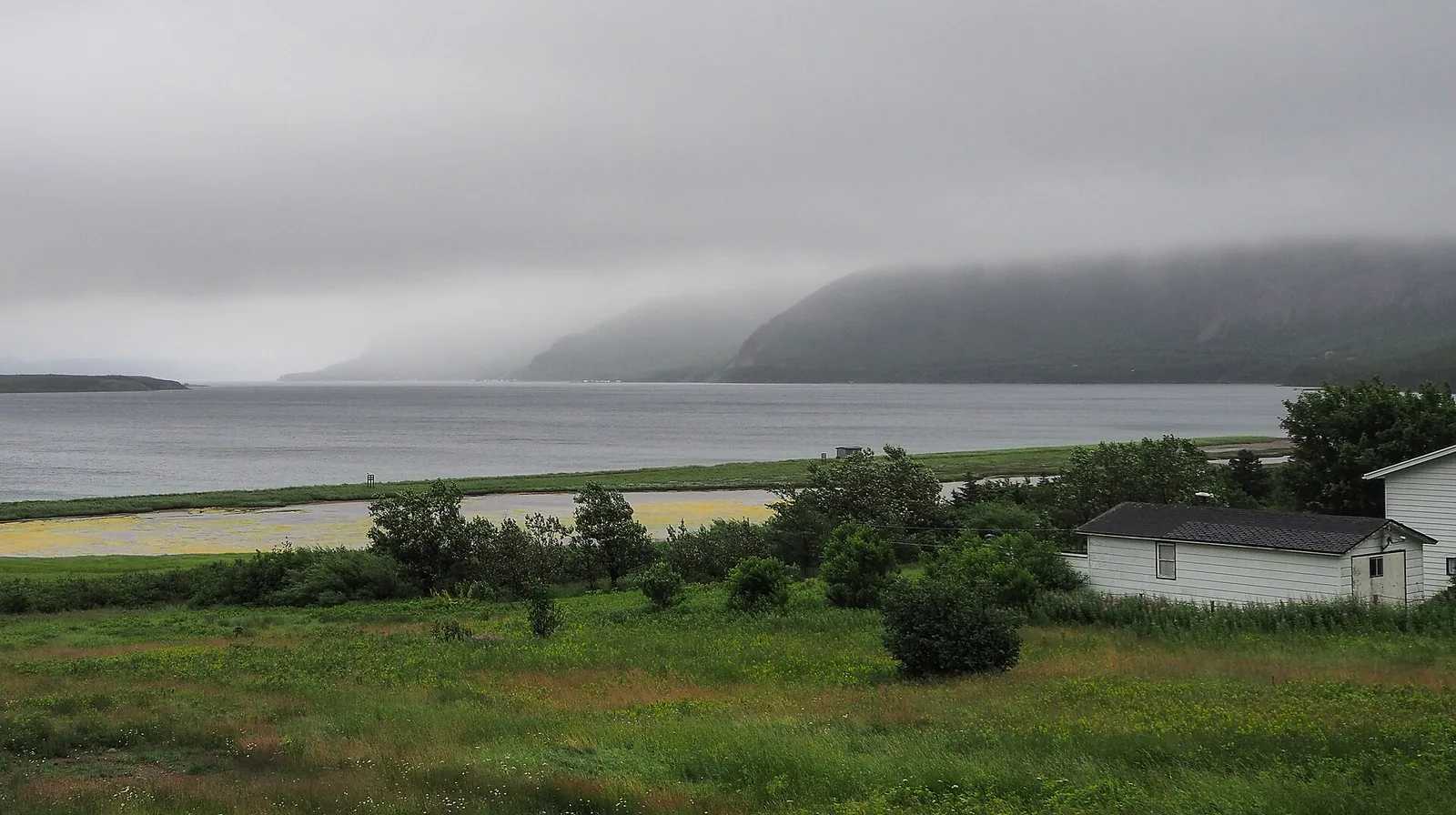
Gros Morne National Park, located on the western coast of Newfoundland, is a world-renowned geological site and a UNESCO World Heritage site since 1987. It provides a rare illustration of the process of plate tectonics, most notably in the Tablelands area, where a portion of the Earth's mantle was thrust to the surface during a continental collision millions of years ago. This barren, ochre-colored peridotite plateau lacks the nutrients necessary for typical plant life, creating a lunar-like landscape that stands in stark contrast to the surrounding greenery. The park is named after the Gros Morne mountain, which rises 806 meters as part of the Long Range Mountains, an ancient northern outlier of the Appalachians. Another iconic feature is Western Brook Pond, a freshwater fjord carved by glaciers during the last Ice Age, surrounded by sheer granite cliffs reaching heights of 600 meters. The park's diverse ecosystems range from coastal bogs and forests to alpine tundra, providing habitat for moose, caribou, and arctic hares. Its significance lies not only in its wide-open scenery but also in its role as a key piece of the geological puzzle that explains the formation of our planet's crust.
Explore on the map
How well do you know Canada?
Find cities, landscapes and regions in 10 varied challenges on the interactive map.
Your journey, your memory
A postcard from Gros Morne
Turn your own photo into a personal postcard with a local stamp. Free and no sign-up required.
Create a postcard- Location: Canada
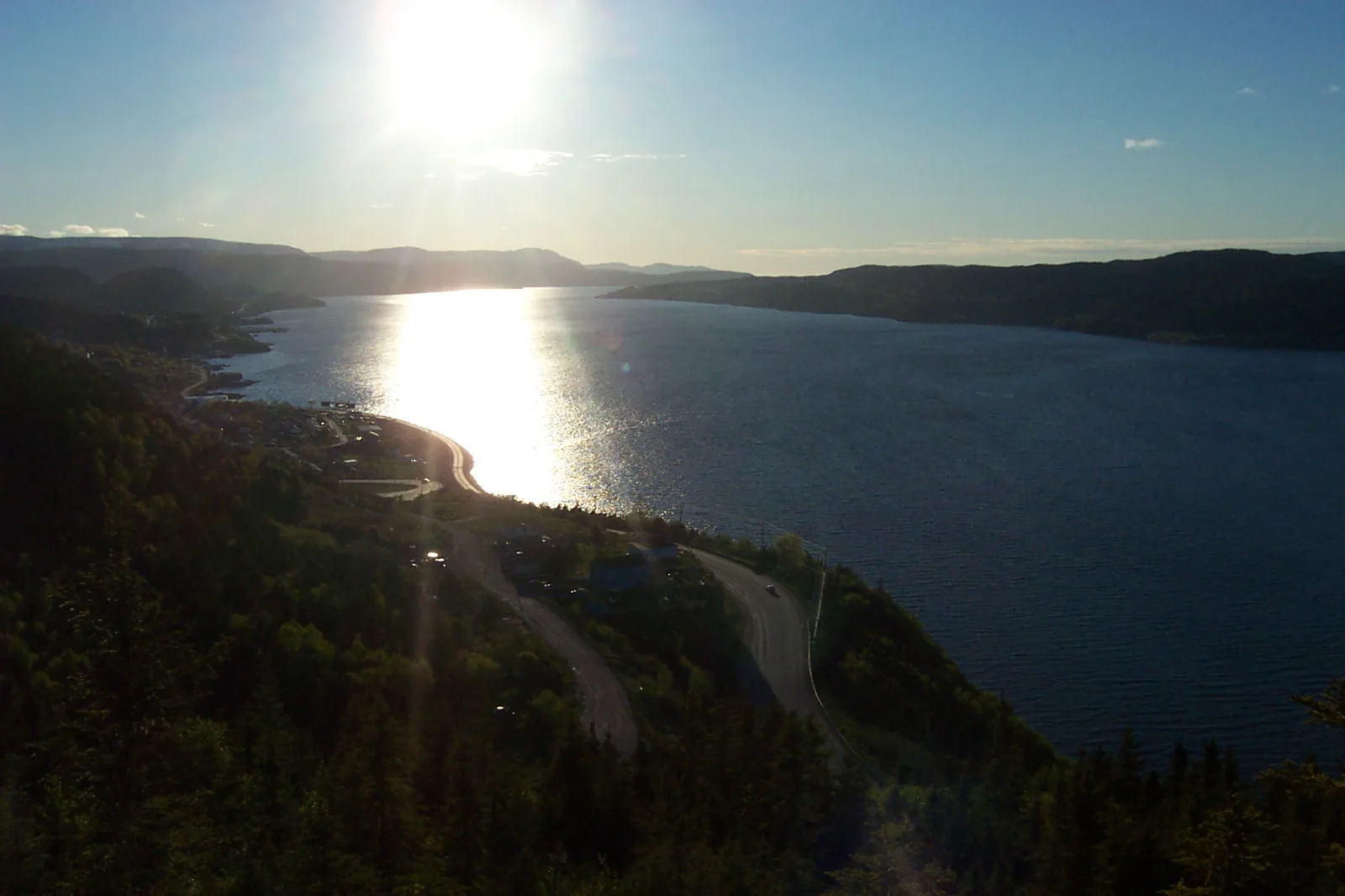
- Highlights: Bakeapple Pond Viewpoint · Ten Mile Pond Lookout · Gros Morne National Park
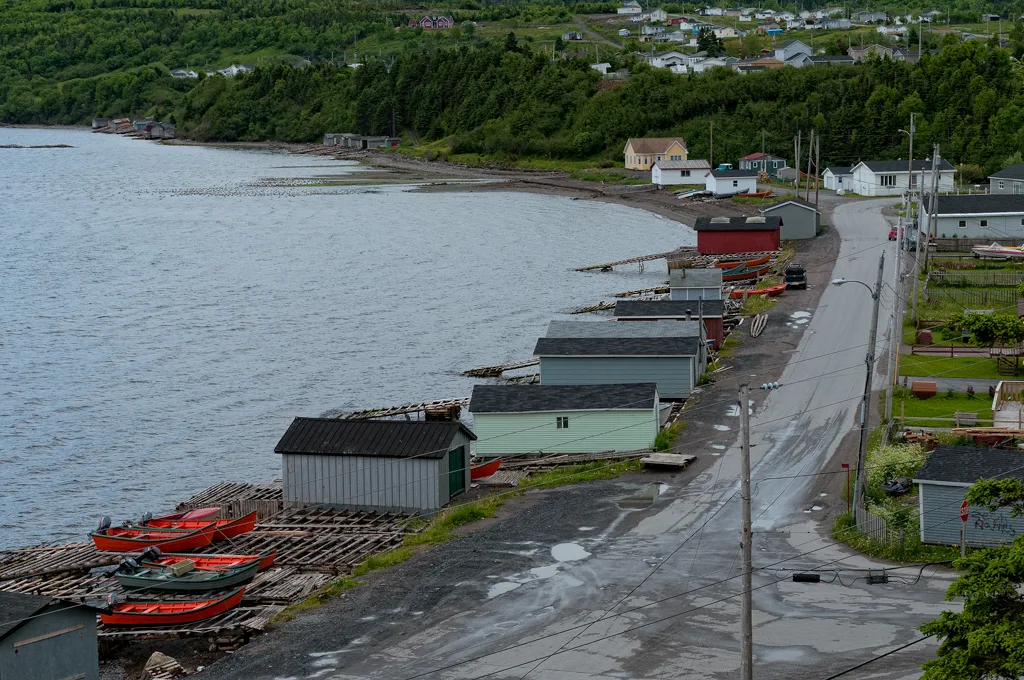
- Nearby: Rocky Harbour (Gros Morne) (10 km)
Best time to visit & climate
The most pleasant time to visit is Jun–Aug.
| Jan | Feb | Mar | Apr | May | Jun | Jul | Aug | Sep | Oct | Nov | Dec | |
|---|---|---|---|---|---|---|---|---|---|---|---|---|
| Avg °C | -6 | -7 | -5 | 0 | 5 | 10 | 15 | 16 | 12 | 7 | 2 | -3 |
| Rain mm | 128 | 113 | 93 | 88 | 95 | 94 | 110 | 118 | 134 | 125 | 134 | 133 |
📋 Practical info
History & landmarks
1973
Geography
Facts
- Area: 1,805 square kilometers (697 sq miles)
- Established: Officially became a National Park in 1973
- UNESCO: Designated a World Heritage site in 1987
- Highest elevation: Gros Morne Mountain at 806 meters
- Western Brook Pond: Freshwater fjord with 600m cliffs
- Geology: One of the few places with visible Earth mantle
Explore nearby
Notable places around
Route planner — Car & Motorhome
Where do you start? We build the route here, with stops and country notes along the way.
© OpenStreetMap contributors · OpenRouteService
Sights in the town Gros Morne (4)
Sights nearby
Frequently asked questions
Why is Gros Morne a UNESCO World Heritage site?
What are the Tablelands?
What does Western Brook Pond look like?
Can you go hiking in the park?
Are there boat tours?
Gros Morne: where is it located?
Gros Morne: what is there to see?
Gros Morne: when is the best time to visit?
Gros Morne: why is it worth visiting?
History & landmarks

Nature
More places