Plizio Visual Lab
Tsévié Cassava Fields
Weather…
Water temperature…
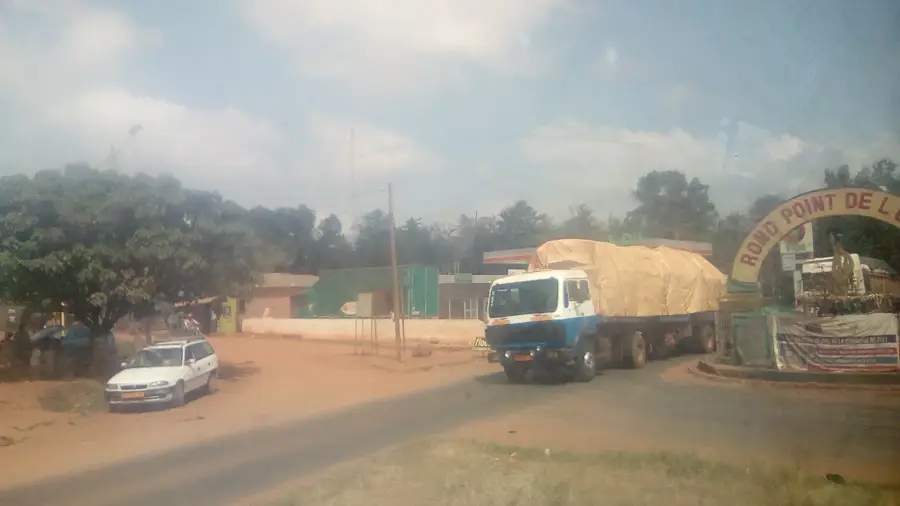
The cassava fields surrounding Tsévié in the Maritime Region are a vital component of Togo's agricultural economy. Cassava (Manihot esculenta) is an indispensable staple crop in this coastal area due to its remarkable resilience against drought and poor soil conditions. Tsévié has developed a specialized processing industry that transforms the starchy roots into essential products such as gari (fermented cassava flour) and tapioca. These goods are not only consumed locally but are also traded in large volumes in the markets of the nearby capital, Lomé. Cultivation is primarily carried out on small-scale farms, with harvesting possible year-round since cassava does not have a fixed maturity period. The labor-intensive process of producing gari is often a communal activity led by women, providing them with a significant measure of economic independence. These fields define the flat coastal hinterland and demonstrate the adaptability of local farming to the regional environment. Research institutes in the area continually work to introduce new, high-yield varieties to enhance local productivity.
Explore on the map
How well do you know Togo?
Find cities, landscapes and regions in 10 varied challenges on the interactive map.
Your journey, your memory
A postcard from Tsévié Cassava Fields
Turn your own photo into a personal postcard with a local stamp. Free and no sign-up required.
Create a postcard- Location: Togo
- Highlights: Association Solidarité Humaine pour le Développement Durable au Togo · Adjif Art
- Nearby: Lake Togo (29 km)
Best time to visit & climate
The most pleasant time to visit is Jan, Nov, Dec.
| Jan | Feb | Mar | Apr | May | Jun | Jul | Aug | Sep | Oct | Nov | Dec | |
|---|---|---|---|---|---|---|---|---|---|---|---|---|
| Avg °C | 27 | 29 | 28 | 28 | 27 | 26 | 25 | 25 | 25 | 26 | 27 | 27 |
| Rain mm | 14 | 31 | 77 | 105 | 148 | 172 | 144 | 95 | 168 | 138 | 35 | 15 |
📋 Practical info
Geography
Facts
- Cassava provides nearly 20 percent of the daily calorie intake in southern Togo.
- The area around Tsévié is the nation's primary hub for gari production.
- Cassava plants can be left in the ground for up to two years before harvest.
- Gari is a popular trade commodity due to its exceptionally long shelf life.
- Tsévié is strategically located on the main highway connecting Lomé to the north.
- Togo produces more than one million tons of cassava on an annual basis.
Explore nearby
Notable places around
Route planner — Car & Motorhome
Where do you start? We build the route here, with stops and country notes along the way.
© OpenStreetMap contributors · OpenRouteService
Sights in the town Tsévié Cassava Fields (2)
Sights nearby
Frequently asked questions
What is cassava used for?
Are the fields easy to visit?
Is a guided tour worth it?
When should one visit Tsévié?
Are the fields publicly accessible?
Tsévié Cassava Fields: where is it located?
Tsévié Cassava Fields: what is there to see?
Tsévié Cassava Fields: when is the best time to visit?
Tsévié Cassava Fields: why is it worth visiting?
Nearby cities
History & landmarks

Nature
More places