Plizio Visual Lab
Western Capercaillie
Weather…
Water temperature…
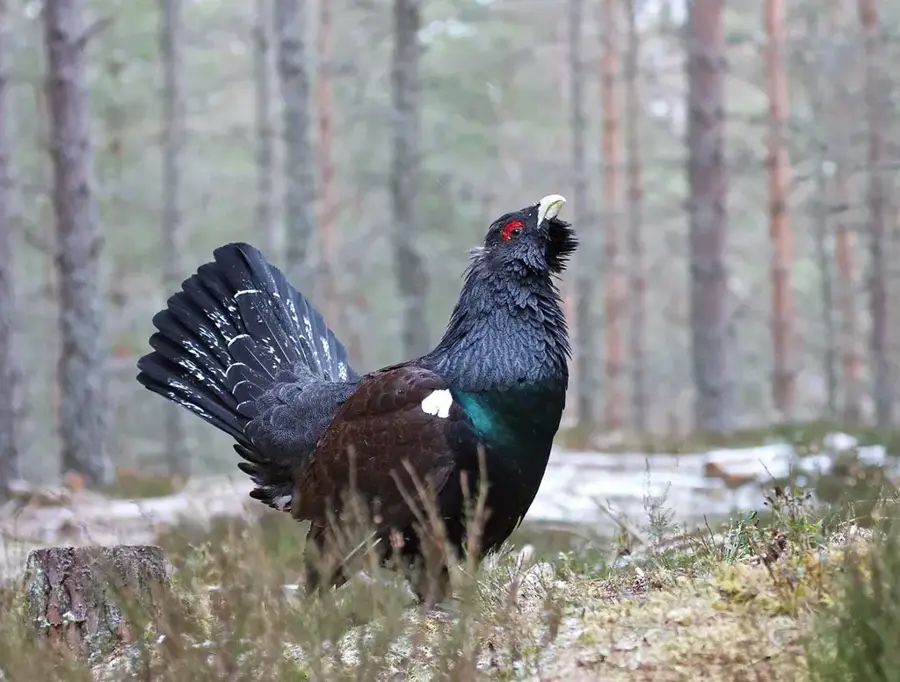
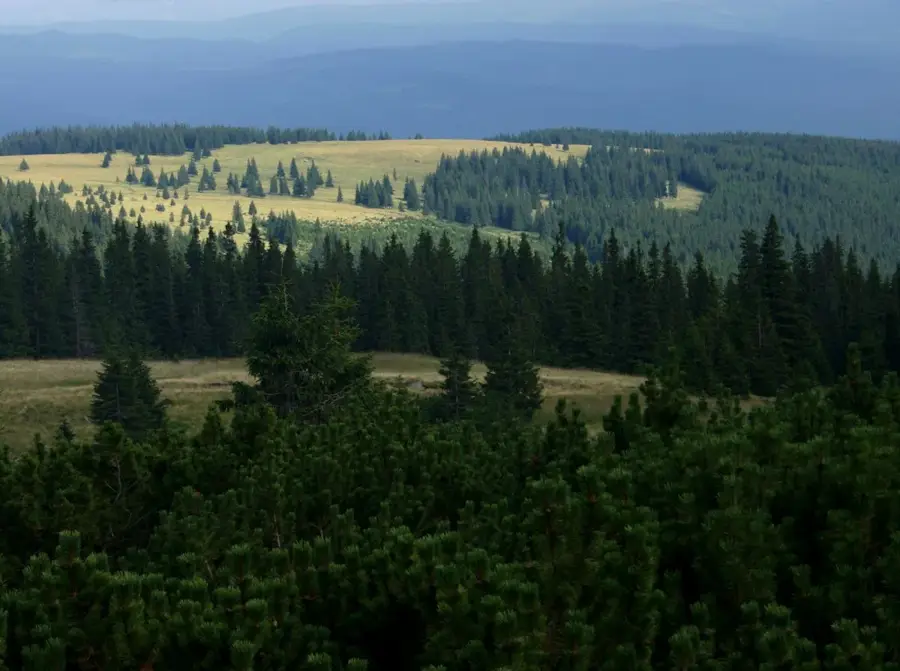
The Western capercaillie (Tetrao urogallus), the largest member of the grouse family, is a reclusive inhabitant of old-growth coniferous forests in the Carpathians. It thrives in undisturbed areas with a rich understory of blueberries, which provide both sustenance and cover. The male is famous for its spectacular lekking display during the spring mating season, where it fans its tail, arches its neck, and emits a series of rhythmic clicks and wheezes. During the final phase of its song, the bird becomes momentarily deaf, hence its Romanian name 'cocoșul de munte' (mountain rooster) and its reputation for being 'deaf' during display. Its diet shifts significantly with the seasons, consisting of berries and insects in summer, while relying almost entirely on conifer needles during winter. Estimations place the Romanian population at around 10,000 to 15,000 birds. As a sensitive bioindicator, its presence signifies a high-quality, healthy forest ecosystem.
Explore on the map
How well do you know Romania?
Find cities, landscapes and regions in 10 varied challenges on the interactive map.
Your journey, your memory
A postcard from Western Capercaillie
Turn your own photo into a personal postcard with a local stamp. Free and no sign-up required.
Create a postcard- Location: Suceava, Romania
- Nearby: Vatra Dornei (11 km)
Best time to visit & climate
The most pleasant time to visit is Jul–Sep.
| Jan | Feb | Mar | Apr | May | Jun | Jul | Aug | Sep | Oct | Nov | Dec | |
|---|---|---|---|---|---|---|---|---|---|---|---|---|
| Avg °C | -6 | -4 | 0 | 7 | 12 | 16 | 18 | 18 | 13 | 7 | 2 | -4 |
| Rain mm | 30 | 34 | 44 | 57 | 93 | 120 | 107 | 78 | 56 | 55 | 35 | 35 |
📋 Practical info
Geography
Facts
- Adult males can weigh up to 5 kg (11 lbs), while females are half that size.
- The bird becomes deaf for 2-3 seconds during the peak of its mating call.
- Their winter diet consists almost exclusively of spruce and pine needles.
- They swallow small stones (gastroliths) to help grind tough food in their gizzard.
- Capercaillies are very sensitive to noise and human presence in their habitat.
- The Romanian population is estimated at 10,000 to 15,000 individuals.
Explore nearby
Notable places around
Route planner — Car & Motorhome
Where do you start? We build the route here, with stops and country notes along the way.
© OpenStreetMap contributors · OpenRouteService
Sights nearby
Frequently asked questions
Where does the western capercaillie live in Romania?
When is the mating season of the capercaillie?
Is the western capercaillie endangered?
What does the capercaillie eat in winter?
Is hunting of capercaillie allowed?
Western Capercaillie: where is it located?
Western Capercaillie: when is the best time to visit?
Western Capercaillie: why is it worth visiting?

Nearby cities




History & landmarks
Nature
More places