Plizio Visual Lab
Porolissum Roman Camp
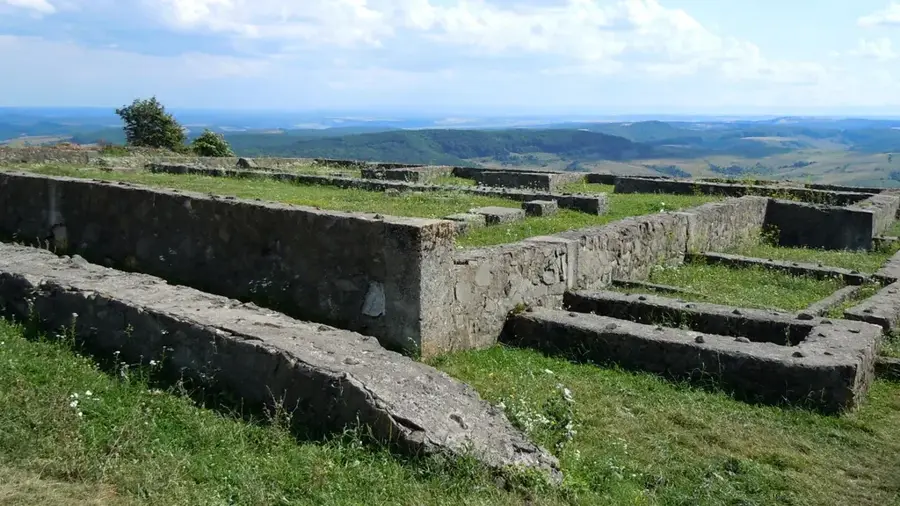
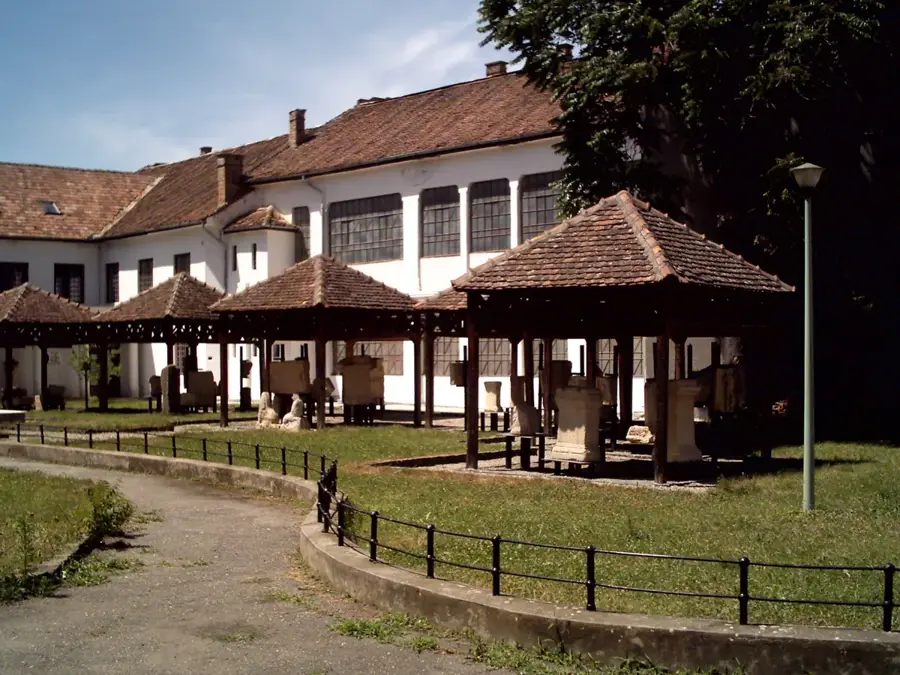
Porolissum was one of the largest and most strategically important Roman military and urban centers in the province of Dacia, located near Moigrad in Sălaj County. Established in 106 AD by Emperor Trajan during the Dacian Wars, it functioned as the principal defensive stronghold on the northwestern frontier of the Roman Empire. In 124 AD, under Emperor Hadrian, it was designated as the capital of the newly formed province of Dacia Porolissensis, eventually housing a population of over 20,000 residents. The extensive archaeological site covers more than 500 hectares and includes remarkably preserved features such as the reconstructed Praetorian Gate, a vast amphitheater, and several temples dedicated to Roman and local deities. The amphitheater, rebuilt in stone in 157 AD, could accommodate up to 5,500 spectators, serving as a hub for public entertainment and social life. Positioned on the Pomet Hill, the site controlled key trade routes passing through the Carpathian passes, acting as a vital customs point between the Empire and the territories of the Free Dacians. Ongoing research continues to uncover significant artifacts, including coins, pottery, and inscriptions that provide deep insights into the multicultural fabric of this ancient border city.
Explore on the map
How well do you know Romania?
Find cities, landscapes and regions in 10 varied challenges on the interactive map.
Your journey, your memory
A postcard from Porolissum Roman Camp
Turn your own photo into a personal postcard with a local stamp. Free and no sign-up required.
Create a postcard- Location: Sălaj, Romania
- Highlights: Castrul Roman Porolissum · Roman Amphitheatre
- Nearby: Zalău (8 km)
Best time to visit & climate
The most pleasant time to visit is Jun–Aug.
| Jan | Feb | Mar | Apr | May | Jun | Jul | Aug | Sep | Oct | Nov | Dec | |
|---|---|---|---|---|---|---|---|---|---|---|---|---|
| Avg °C | -3 | -1 | 4 | 10 | 15 | 19 | 21 | 21 | 16 | 10 | 5 | -1 |
| Rain mm | 35 | 36 | 44 | 52 | 80 | 95 | 92 | 63 | 55 | 53 | 42 | 42 |
📋 Practical info
Geography
Facts
- Porolissum was established in 106 AD as a strategic military outpost by Trajan.
- It became the provincial capital of Dacia Porolissensis in 124 AD.
- The stone amphitheater was completed in 157 AD during the reign of Antoninus Pius.
- The site features two distinct Roman forts located on the Pomet and Citera hills.
- The amphitheater could hold 5,500 people, making it the largest in Roman Dacia.
- Archaeological evidence points to a continuous habitation for centuries after the Roman retreat.
Explore nearby
Notable places around
Route planner — Car & Motorhome
Where do you start? We build the route here, with stops and country notes along the way.
© OpenStreetMap contributors · OpenRouteService
Sights in the town Porolissum Roman Camp (2)
Sights nearby
Frequently asked questions
What was Porolissum in ancient times?
What can you see on site today?
How much is the entrance fee?
Are there guided tours?
When is the best time to visit?
Porolissum Roman Camp: where is it located?
Porolissum Roman Camp: what is there to see?
Porolissum Roman Camp: when is the best time to visit?
Porolissum Roman Camp: why is it worth visiting?

Nearby cities
History & landmarks


Nature
More places