Plizio Visual Lab
Coiba Island hills
Weather…
Water temperature…
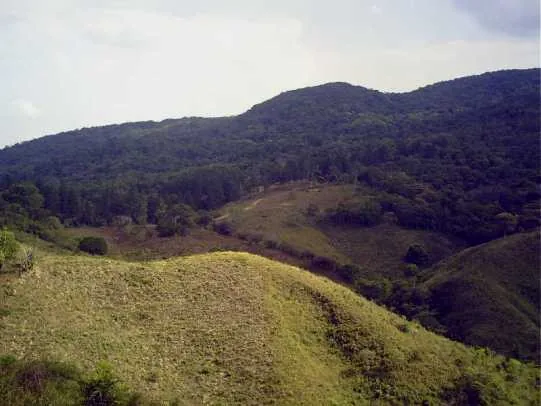
Coiba Island, the largest island in Panama and Central America, is known for its hilly terrain. These hills, though not reaching the height of mountains, define the island's landscape and ecosystem. The hilly region is a remnant of the island's ancient volcanic origin. The highest point, Cerro Yeguas, rises to about 490 meters above sea level. The hills are covered by a dense, untouched tropical rainforest, which hosts a unique biodiversity due to the island's isolation. Coiba Island and the surrounding Coiba National Park are a UNESCO World Heritage site. For decades, the island was home to a notorious penal colony, which prevented development and contributed to the preservation of nature. The rivers and streams running down the hills feed the island's freshwater systems.
Explore on the map
How well do you know Panama?
Find cities, landscapes and regions in 10 varied challenges on the interactive map.
Your journey, your memory
A postcard from Coiba Island hills
Turn your own photo into a personal postcard with a local stamp. Free and no sign-up required.
Create a postcard- Location: Panama
- Nearby: Santa Catalina (55 km)
Best time to visit & climate
The most pleasant time to visit is Jan–Mar.
| Jan | Feb | Mar | Apr | May | Jun | Jul | Aug | Sep | Oct | Nov | Dec | |
|---|---|---|---|---|---|---|---|---|---|---|---|---|
| Avg °C | 27 | 28 | 29 | 29 | 28 | 27 | 27 | 27 | 27 | 27 | 27 | 27 |
| Rain mm | 26 | 12 | 20 | 116 | 276 | 258 | 308 | 303 | 310 | 303 | 312 | 117 |
📋 Practical info
Geography
Facts
- The terrain of Central America's largest island.
- Remnants of the island's volcanic origin.
- Its highest point is Cerro Yeguas (approx. 490 m).
- The hills are covered by untouched rainforest.
- Coiba National Park is a UNESCO World Heritage site.
- A former penal colony helped preserve nature.
- The island's freshwater sources originate from the hills.
Explore nearby
Notable places around
Route planner — Car & Motorhome
Where do you start? We build the route here, with stops and country notes along the way.
© OpenStreetMap contributors · OpenRouteService
Sights nearby
Frequently asked questions
How do you get to Coiba?
Is diving good there?
Is there accommodation on the island?
Do you need a park entrance fee?
When is the best time to visit?
Coiba Island hills: where is it located?
Coiba Island hills: when is the best time to visit?
Coiba Island hills: why is it worth visiting?
Nearby cities
Nature
More places