Plizio Visual Lab

Pacific Rim National Park Forest
Plizio editorial teamData Sources
Forest
—°9
Pacific Rim National Park Forest (Canada)

Weather…

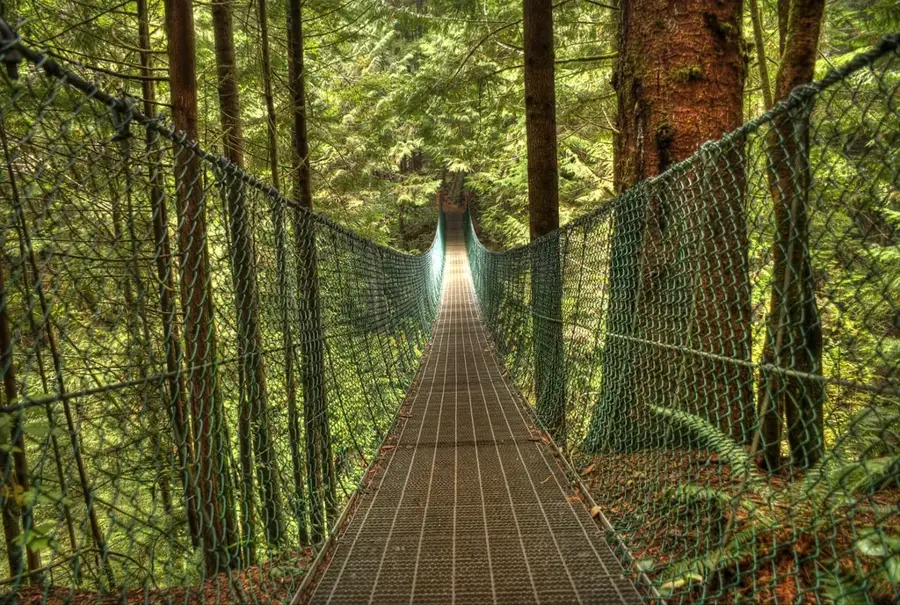
The forest of Pacific Rim National Park Reserve, located on the west coast of Vancouver Island, is a prime example of North America's temperate rainforest. It is dominated by massive Western Red Cedars, Sitka Spruce, and Douglas Firs, many of which are several centuries old. High humidity and heavy rainfall foster a lush growth of mosses, ferns, and epiphytes that blanket the tree trunks and forest floor. The forest extends directly to the edge of the Pacific Ocean, where rugged rocky shores meet vast sandy stretches like Long Beach. Ecologically, this forest is intricately linked to the sea; ocean nutrients, often transported inland by spawning salmon, sustain the entire ecosystem's productivity. Trails such as the Rainforest Trail allow visitors to explore this complex wilderness on raised boardwalks to prevent damage to the sensitive ground layer. The area serves as a critical sanctuary for rare wildlife, including the Marbled Murrelet and various unique amphibians.

Best time to visit & climate

The most pleasant time to visit is Jun–Aug.

JanFebMarAprMayJunJulAugSepOctNovDec
Avg °C878911131415141298
Rain mm31817021315580745161115210324286

📋 Practical info

🧭
Getting there
This wide-open area is accessible primarily by purposefully driving the incredibly scenic Highway 4 all the way across Vancouver Island towards the famous Tofino or Ucluelet municipalities, which directly border the national park limits.
📅
Best season
The summer season reliably provides the mildest and dependably driest hiking conditions for exploring, while the harsh winter season is widely famous for spectacular, dramatic storm-watching activities conducted from the absolute safety of the rugged shore.
⛰️
Terrain & paths
The protected area features a remarkably vast, interconnected network of well-maintained wooden boardwalk paths threading intimately through deeply towering, ancient old-growth rainforest trees and exceptionally fragile, unique coastal peat bogs.
🎒
What to bring
Extremely sturdy, completely waterproof high-ankle hiking boots and easily layered, highly wind-and-waterproof outer clothing are absolutely essential gear, even during mid-summer, due to the famously unpredictable, fast-changing coastal weather systems.
🅿️
Parking
Formally paved, paid national park parking lots are strategically situated immediately near all the major scenic trailheads, but visitors must know they can frequently fill up very quickly during the extremely busy, peak summer tourist months.
⚠️
Safety
It is an absolute requirement to stay firmly on the designated raised boardwalks to critically protect the incredibly fragile forest ecosystem, and hikers must purposefully carry bear spray deterrent at all times, as large wildlife encounters are undeniably common.
⏱️
Time needed
The overwhelming majority of international and domestic visitors deliberately dedicate at least two to four full days to comprehensively explore the various deep forest trails, respectfully visit the expansive beaches, and slowly soak in the pristine, ancient nature.

Geography

Coordinates
49.03330, -125.76670

Facts

  • The park was established in 1970 as the first national park on Vancouver Island.
  • Some of the Western Red Cedars in the forest are over 800 years old.
  • The region receives an average annual precipitation of over 3,000 mm.
  • The West Coast Trail within the park is a world-renowned 75 km hiking route.
  • The park is home to elusive wildlife, including coastal wolves and cougars.
  • The park's intertidal zone hosts one of Canada's richest displays of marine life.

Explore nearby

Notable places around
Route planner — Car & Motorhome

Where do you start? We build the route here, with stops and country notes along the way.

Vehicle
Only stops with (optional):

© OpenStreetMap contributors · OpenRouteService

Sights in the town Pacific Rim National Park Forest (9)

Canso Bomber Crash Site📍 landmark

The crash site of a Canso bomber in Pacific Rim National Park.

Old Radio Building📍 landmark

A historic radio building landmark within Rim National Park Forest.

Radar Hill🌿 nature

A hill that once held a radar station in Pacific Rim National Park Reserve.

Vargas Cone🌿 nature

A volcanic cone in Pacific Rim National Park Reserve.

Kwisitis Beach🎡 recreation

A recreational beach on the coast of Rim National Park Forest.

Wickaninnish Beach🎡 recreation

A sandy beach on the west coast of Vancouver Island in Pacific Rim National Park Reserve.

South Beach🎡 recreation

South Beach, a sandy recreational beach in Rim National Park Forest.

Grice Bay📍 landmark

A bay in Pacific Rim National Park Reserve.

Pacific Rim National Park Reserve - Long Beach Unit🌿 nature

The Long Beach Unit of Pacific Rim National Park Reserve, featuring expansive sandy shores.

Sights nearby

Frequently asked questions

What is special about the rainforest here?
It is a temperate rainforest with giant Sitka spruce and moss-covered floors.
Do I need a national park pass?
Yes, a valid park pass is required for staying in the Pacific Rim National Park Reserve.
Can you hike in the forest?
Yes, there are well-maintained boardwalks like the Rainforest Trail leading through the forest.
What animals can you see?
Bald eagles, deer, and occasionally black bears or wolves are commonly seen.
Is the forest accessible?
Some parts of the Rainforest Trail are not fully wheelchair accessible due to stairs.
Pacific Rim National Park Forest: where is it located?
Pacific Rim National Park Forest is located in Canada.
Pacific Rim National Park Forest: what is there to see?
Highlights include Canso Bomber Crash Site, Old Radio Building, Radar Hill.
Pacific Rim National Park Forest: when is the best time to visit?
The most pleasant time to visit is Jun, Aug.
Pacific Rim National Park Forest: why is it worth visiting?

The forest of Pacific Rim National Park Reserve, located on the west coast of Vancouver Island, is a prime example of North America's temperate rainforest.
View on map → The Top 50 Attractions → OpenStreetMap →
North America
Explore with Plizio Discover more places in North America
More places in Canada →

Nearby cities