Plizio Visual Lab
Griffin's Bunker Ruin
Weather…
Water temperature…
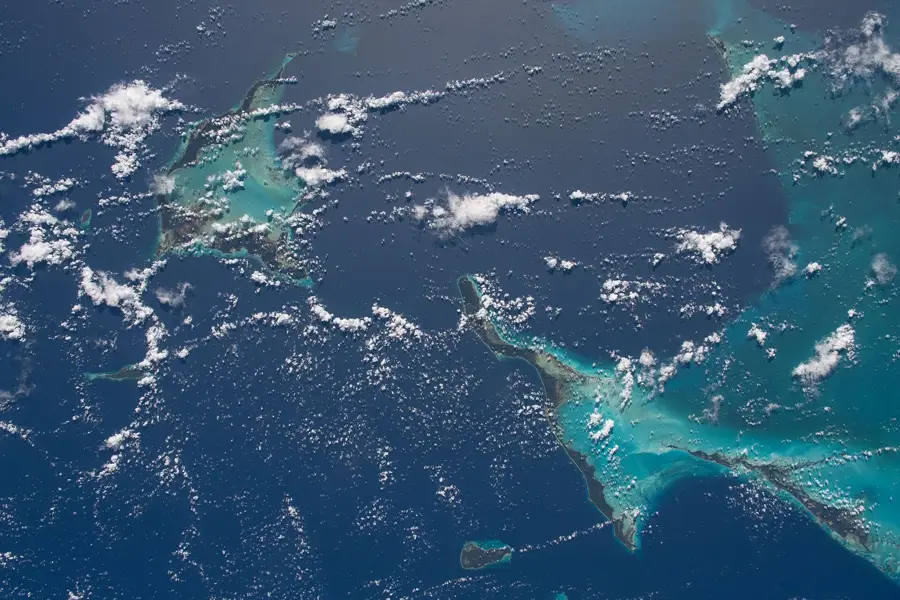
Griffin's Bunker Ruin in the Bahamas stands as a testament to military operations during World War II. During this era, the Bahamas occupied a strategically vital role in Atlantic surveillance and the protection of shipping lanes from German U-boat threats. These bunkers were typically constructed from thick reinforced concrete and positioned on exposed coastal stretches to provide early detection of hostile movements. Named after a local figure or officer associated with the post, Griffin's Bunker reflects the wartime mobilization of the archipelago. Today, the structure shows significant weathering from the corrosive saline air, yet its core remains remarkably intact. Such military relics are relatively rare on the islands and underscore the global significance of the Bahamas during 20th-century conflicts. For historians, the site provides essential insights into Allied defense strategies in the Caribbean and the wartime cooperation between the United States and the British Commonwealth.
Explore on the map
How well do you know Bahamas?
Find cities, landscapes and regions in 10 varied challenges on the interactive map.
Your journey, your memory
A postcard from Griffin's Bunker Ruin
Turn your own photo into a personal postcard with a local stamp. Free and no sign-up required.
Create a postcard- Location: Bahamas
- Nearby: Current (10 km)
Best time to visit & climate
The most pleasant time to visit is Jan–Mar.
| Jan | Feb | Mar | Apr | May | Jun | Jul | Aug | Sep | Oct | Nov | Dec | |
|---|---|---|---|---|---|---|---|---|---|---|---|---|
| Avg °C | 23 | 23 | 23 | 24 | 25 | 27 | 28 | 29 | 28 | 27 | 25 | 24 |
| Rain mm | 38 | 33 | 40 | 56 | 114 | 131 | 107 | 122 | 145 | 113 | 66 | 38 |
📋 Practical info
Geography
Facts
- The bunker was constructed during the Second World War (1939-1945).
- Reinforced concrete was the primary material used for these defenses.
- The Bahamas served as a training ground for Allied air and sea forces.
- German U-boats were active in Caribbean waters until 1944.
- The structure housed surveillance equipment and military personnel.
- The ruin is strategically positioned near major deep-water shipping lanes.
Explore nearby
Notable places around
Route planner — Car & Motorhome
Where do you start? We build the route here, with stops and country notes along the way.
© OpenStreetMap contributors · OpenRouteService
Sights nearby
Frequently asked questions
What was the Griffin Bunker?
Are the interiors accessible?
Where are these ruins located?
What should you bring?
Are there guided tours available?
Griffin's Bunker Ruin: where is it located?
Griffin's Bunker Ruin: when is the best time to visit?
Griffin's Bunker Ruin: why is it worth visiting?

Nearby cities




History & landmarks


More places