Plizio Visual Lab
Dar Chaabane
ℹ️Practical info — Dar Chaabane
▾
🌤 Weather — 5 days
📍 Nearby
Sights nearby
💡 Tips
- Combine your visit with neighboring Nabeul; the two towns blend into each other almost seamlessly.
- Watch the local stonemasons along the main roads as they work on their intricate stone sculptures.
- Use 'louages' (shared taxis) from Tunis; they are the fastest and cheapest travel option to get here.
- Visit in the morning before the summer heat on the Cap Bon peninsula becomes too intense.
🍽 Food
Try fresh local fish powerfully seasoned with the Cap Bon peninsula's famous harissa paste.
Eat this crispy, deep-fried pastry typically filled with egg and tuna at small snack shops.
Order traditional Tunisian couscous, which is heavily favored with fresh fish along this coast.
🛍 Shopping · 🧘 Quiet spots
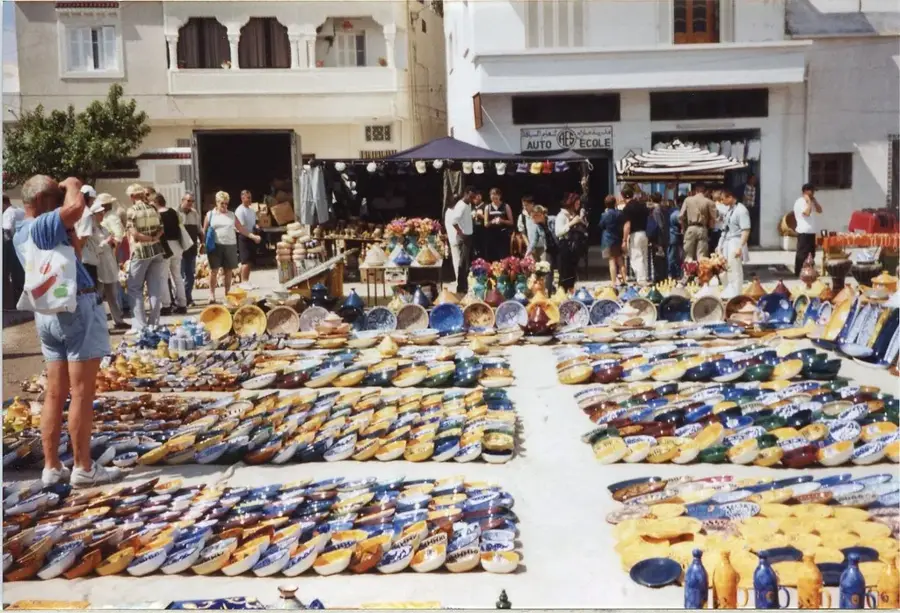
Buy ornately decorated stone plates and Arabic calligraphy directly from the artisan workshops.
Purchase fresh oranges or distilled orange blossom water from local grocers.
Take a relaxing walk through the quiet olive groves scattered around the town's outskirts.
Stroll along the calmer sections of the coastal road leading down towards Nabeul.
Water temperature…
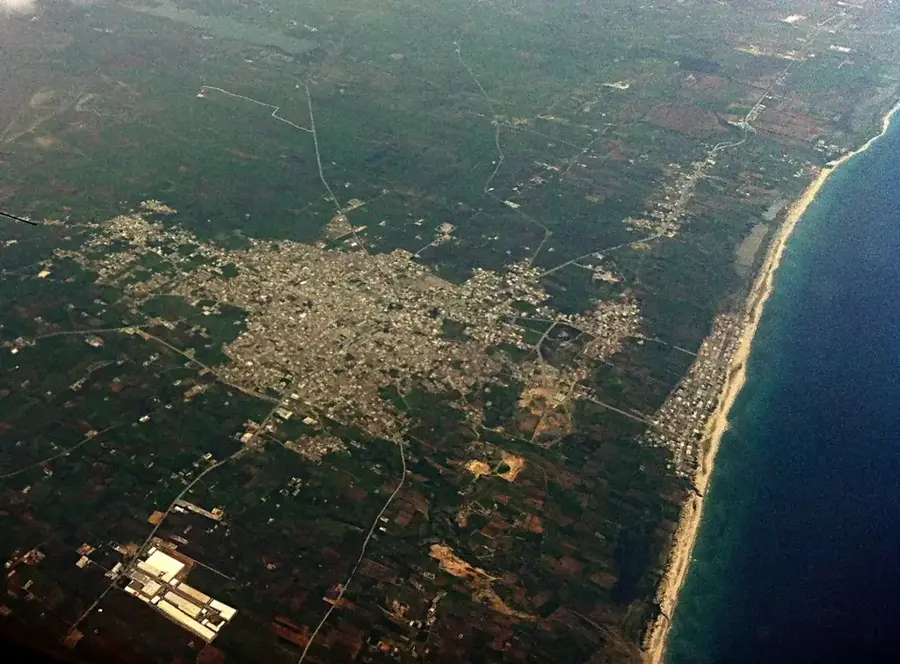
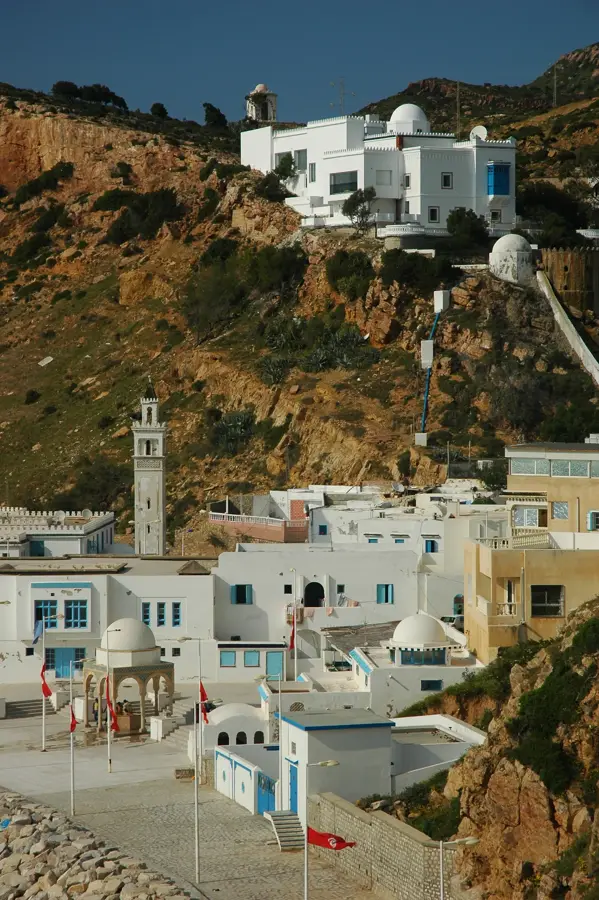
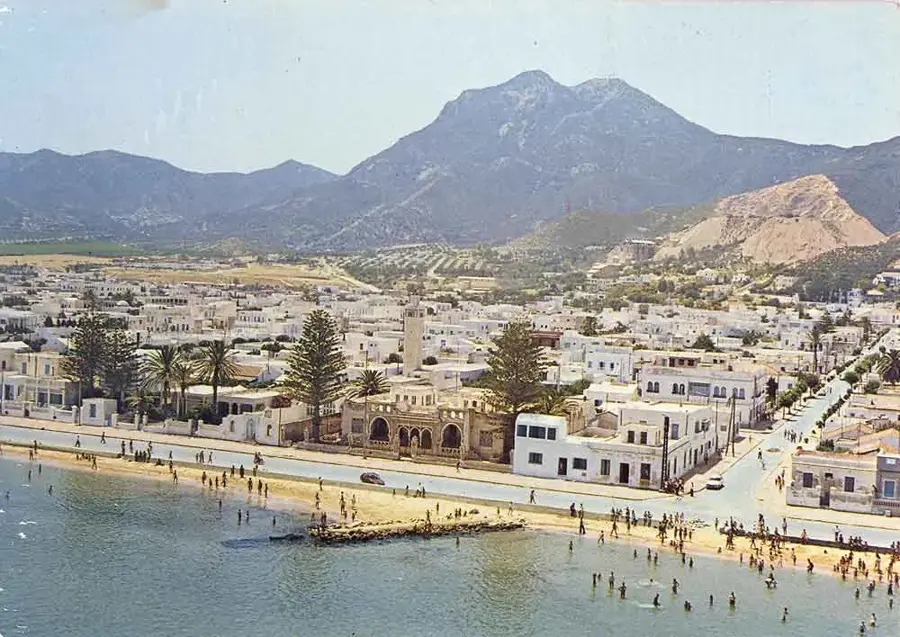
Dar Chaabane, formally known as Dar Chaabane El Fehri, is a significant town in the Nabeul Governorate on the Cap Bon peninsula. The town is internationally renowned for its centuries-old tradition of stone masonry and carving, specifically the intricate patterns sculpted into the local limestone known as Dar Chaabane stone. This artisan craftsmanship adorns countless palaces, mosques, and villas across Tunisia and abroad. Founded in the 7th century by Chaabane El Fehri, a companion of the conqueror Uqba ibn Nafi, the town possesses a deep historical lineage. Beyond its masonry, Dar Chaabane is a major agricultural hub, utilizing the fertile soils of Cap Bon for the production of citrus fruits, spices, and flowers for the perfume industry. Situated directly adjacent to the city of Nabeul, the two towns form a continuous urban area, yet Dar Chaabane retains its distinct reputation as the primary center for traditional Tunisian architectural arts.
Explore on the map
How well do you know Tunisia?
Find cities, landscapes and regions in 10 varied challenges on the interactive map.
Your journey, your memory
A postcard from Dar Chaabane
Turn your own photo into a personal postcard with a local stamp. Free and no sign-up required.
Create a postcard- Location: Tunisia
- Nearby: Hammamet (14 km)
- Population: ~42.140 (2022)
Best time to visit & climate
The most pleasant time to visit is May, Jun, Oct.
| Jan | Feb | Mar | Apr | May | Jun | Jul | Aug | Sep | Oct | Nov | Dec | |
|---|---|---|---|---|---|---|---|---|---|---|---|---|
| Avg °C | 12 | 12 | 14 | 16 | 20 | 24 | 27 | 28 | 25 | 21 | 17 | 13 |
| Rain mm | 44 | 35 | 51 | 37 | 25 | 16 | 5 | 22 | 67 | 63 | 44 | 52 |
Geography
Facts
- The town was founded in the 7th century by Chaabane El Fehri.
- Dar Chaabane stone is a soft limestone perfect for detailed carving.
- It is directly adjacent to the northeast of the city of Nabeul.
- The region is famous for growing bitter oranges used in perfumes.
- Stone masonry from this town is featured in many Tunisian landmarks.
- Located in the Nabeul Governorate, a key economic zone of Cap Bon.
Explore nearby
Notable places around
Route planner — Car & Motorhome
Where do you start? We build the route here, with stops and country notes along the way.
© OpenStreetMap contributors · OpenRouteService
Sights in the town Dar Chaabane (1)
Frequently asked questions
What is Dar Chaabane known for?
Can you see the craftsmen at work?
Is it a suitable place for souvenirs?
How do you reach Dar Chaabane?
What is the best time of day for a visit?
Dar Chaabane: where is it located?
Dar Chaabane: when is the best time to visit?
Dar Chaabane: why is it worth visiting?

Nearby cities
History & landmarks
More places