Plizio Visual Lab
Casamance mango farming
Weather…
Water temperature…
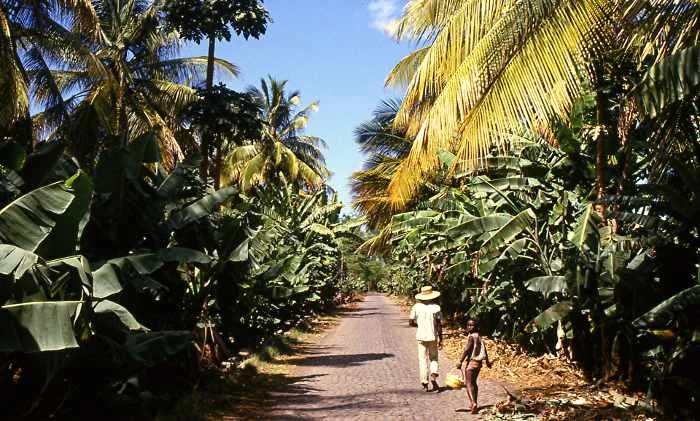
Mango cultivation in Casamance forms the economic backbone of southern Senegal, benefiting from the region's humid, tropical climate. Casamance is considered the 'orchard of Senegal', where varieties such as Kent, Keitt, and Amélie are grown for both local consumption and export to Europe. The harvest season between May and August shapes the lives of local communities and mobilizes thousands of workers. In recent years, cooperatives have been increasingly established to improve storage and processing, such as through the production of dried mangoes or juices. Despite logistical challenges in transport to the north, the mango remains a symbol of the agricultural wealth and potential of Casamance.
Explore on the map
How well do you know Senegal?
Find cities, landscapes and regions in 10 varied challenges on the interactive map.
Your journey, your memory
A postcard from Casamance mango farming
Turn your own photo into a personal postcard with a local stamp. Free and no sign-up required.
Create a postcard- Location: Senegal
- Nearby: Cap Skirring (74 km)
Best time to visit & climate
The most pleasant time to visit is Jan, Feb, Dec.
| Jan | Feb | Mar | Apr | May | Jun | Jul | Aug | Sep | Oct | Nov | Dec | |
|---|---|---|---|---|---|---|---|---|---|---|---|---|
| Avg °C | 23 | 26 | 28 | 29 | 30 | 29 | 27 | 26 | 26 | 27 | 26 | 23 |
| Rain mm | 1 | 0 | 15 | 2 | 7 | 98 | 247 | 368 | 266 | 89 | 5 | 0 |
📋 Practical info
Geography
Facts
- Casamance produces approximately 60% of all mangoes in Senegal.
- The main harvest period coincides with the rainy season from May to August.
- Varieties like 'Kent' are highly sought after for their low fiber content.
- Mangoes are one of the most important sources of foreign exchange for the region.
- Improved logistics via the port of Ziguinchor facilitates export.
- Mango trees in the region can live for over 100 years.
Explore nearby
Notable places around
Route planner — Car & Motorhome
Where do you start? We build the route here, with stops and country notes along the way.
© OpenStreetMap contributors · OpenRouteService
Sights in the town Casamance mango farming (1)
Sights nearby
Frequently asked questions
When is mango season?
Can the plantations be visited?
Are the fruits locally available?
How is the climate in Casamance?
Is it a dangerous area?
Casamance mango farming: where is it located?
Casamance mango farming: when is the best time to visit?
Casamance mango farming: why is it worth visiting?

Nearby cities
History & landmarks
Nature
More places