Plizio Visual Lab
Cuernavaca

ℹ️Practical info — Cuernavaca
▾
🌤 Weather — 5 days
📍 Nearby
Sights nearby
💡 Tips
- Avoid arriving on Friday afternoon or leaving on Sunday to escape the heavy traffic from Mexico City.
- The sidewalks in the center are often uneven; wear comfortable, flat shoes.
- Although it's the 'City of Eternal Spring', evenings can get chilly, bring a sweater.
- Use the local minibuses (rutas) for cheap trips, but taxis are often more hassle-free for tourists.
🍽 Food
A local specialty: a taco with a double tortilla, rice, and various fillings (guisados).
A hearty green corn soup with meat, found in the city's traditional fondas.
Salted and dried beef, very popular here and often served with cream and cheese.
🛍 Shopping · 🧘 Quiet spots
A huge, labyrinthine market where you can find everything from food to household goods.
Find beautiful silver in downtown boutiques; make sure to check for the.925 stamp.
Beautiful historical gardens, great for a quiet escape from the hustle and bustle of the city.
An impressive waterfall surrounded by lush vegetation, located a short walk from the center.
A calm and history-filled space with impressive 16th-century architecture.
Water temperature…
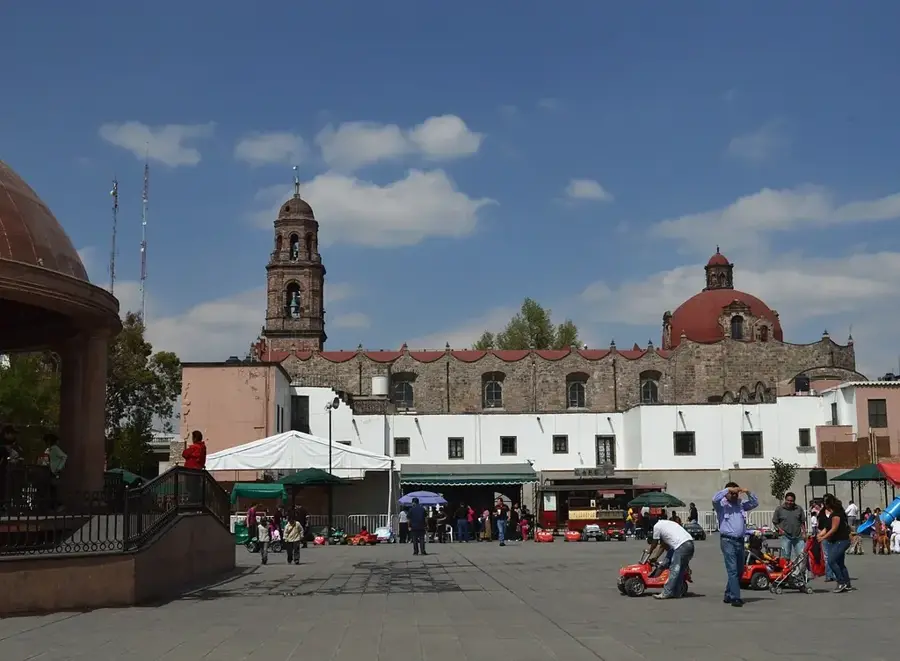
Cuernavaca, the capital of the state of Morelos, is globally renowned as the "City of Eternal Spring," a title bestowed by Alexander von Humboldt in honor of its consistently mild and pleasant climate. Set in the lush valleys south of Mexico City, the city sits at an elevation of roughly 5,000 feet, providing a natural sanctuary from the metropolitan hustle. Its origins trace back to the Tlahuica people, who established Cuauhnáhuac as a major agricultural and cultural hub before the Aztec Triple Alliance integrated it into their empire. Following the Spanish conquest, the city became a personal fiefdom of Hernán Cortés, who commissioned the massive Palace of Cortés, now a landmark museum showcasing the region's complex history through archaeological finds and 20th-century murals. The city's religious architecture is equally significant, with the Cuernavaca Cathedral serving as a prime example of the 16th-century fortress-style monasteries built by the Franciscans, now a UNESCO World Heritage site. Throughout the 20th century, Cuernavaca transformed into a cosmopolitan center, attracting intellectuals, artists, and international retirees. This cultural influx led to the establishment of numerous galleries and boutiques, particularly around the historic center and the serene Borda Gardens. Economically, Cuernavaca is a vital part of the "Cuernavaca-Cuautla" industrial corridor, hosting major manufacturing plants for automobiles and chemicals, alongside a robust service sector driven by weekend tourism from the capital. It is also a premier destination for Spanish language immersion, with a high density of specialized schools. The city’s demographic is diverse, blending traditional families with a large expatriate community and university students. Despite rapid urban sprawl, the city maintains its botanical charm, with bougainvillea and jacaranda trees lining its avenues. The nearby archaeological site of Teopanzolco gives a glimpse into the pre-Columbian urban planning, while modern malls and luxury hotels cater to the contemporary traveler. Cuernavaca continues to balance its role as a historic colonial jewel with its status as a forward-looking hub for science and education in modern Mexico.
Explore on the map
How well do you know Mexico?
Find cities, landscapes and regions in 10 varied challenges on the interactive map.
Your journey, your memory
A postcard from Cuernavaca
Turn your own photo into a personal postcard with a local stamp. Free and no sign-up required.
Create a postcard- Location: Mexico
- Highlights: Monumental Flag · El Chapitel · Proyecto Siqueiros La Tallera
- Nearby: Tepoztlán (16 km)
- Population: ~338.650 (2026)
Best time to visit & climate
The most pleasant time to visit is Mar–May.
| Jan | Feb | Mar | Apr | May | Jun | Jul | Aug | Sep | Oct | Nov | Dec | |
|---|---|---|---|---|---|---|---|---|---|---|---|---|
| Avg °C | 14 | 16 | 18 | 20 | 21 | 19 | 18 | 18 | 17 | 16 | 15 | 14 |
| Rain mm | 9 | 10 | 16 | 25 | 68 | 166 | 155 | 168 | 173 | 74 | 20 | 7 |
Geography
Facts
- Cuernavaca sits at an elevation of 4,950 feet (1,510 meters) above sea level.
- The Palace of Cortés is the oldest conserved colonial-era civil structure in the Americas.
- The city’s cathedral was originally a Franciscan monastery founded in 1525.
- Cuernavaca hosts a major campus of the National Autonomous University of Mexico (UNAM).
- The Borda Garden features a diverse collection of exotic plants and 18th-century fountains.
- The city is a major hub for the Mexican pharmaceutical and automotive component industries.
- Teopanzolco Archaeological Zone features temples dedicated to Tlaloc and Huitzilopochtli.
- Cuernavaca is often called the 'Land of the Tlahuicas' after its original inhabitants.
Explore nearby
Notable places around
Route planner — Car & Motorhome
Where do you start? We build the route here, with stops and country notes along the way.
© OpenStreetMap contributors · OpenRouteService
Morning begins with a deep dive into Mexico's contemporary indigenous art and urban history. Midday brings global treasures at the Robert Brady museum and vibrant local folk traditions. Afternoon focuses on the immense scale of the Cortez Palace. Evening winds down among the modern, serene sculpture gardens of Juan Soriano.
Museo de Arte Conteporaneo indigena
Museo de la ciudad de Cuernavaca
Museo Robert Brady
Museo Morelense de Arte Popular
Palace of Hernan Cortez
Museo Morelense de Arte Contemporáneo Juan Soriano
Morning starts with indoor exploration of indigenous art to stay dry from early drizzles. At noon, we navigate the historic center's covered walkways to avoid slippery cobblestones. Afternoon rain is best spent inside the fortress-like Palace, safe from heavy downpours. By evening, the wet streets shimmer under city lights as we head to the final contemporary art gallery.
Museo de Arte Conteporaneo indigena
Museo de la ciudad de Cuernavaca
Museo Robert Brady
Museo Morelense de Arte Popular
Palace of Hernan Cortez
Museo Morelense de Arte Contemporáneo Juan Soriano
The crisp morning air calls for layers during our walk through the historic district. By noon, the mild winter sun warms the squares, but narrow alleys remain chilly. We visit the Palace murals in the afternoon to catch the natural light before the early 17:00 sunset. As temperatures drop quickly after dark, we end the day inside the comfortably warm contemporary art galleries.
Museo de Arte Conteporaneo indigena
Museo de la ciudad de Cuernavaca
Museo Robert Brady
Museo Morelense de Arte Popular
Palace of Hernan Cortez
Museo Morelense de Arte Contemporáneo Juan Soriano
A crisp ride starts at the historic Chapitel and the quaint Castillito. Midday cycling brings you to the imposing Cortez Palace and the colorful Robert Brady collection. Afternoon pedaling leads south to explore ancient botanical remedies. Evening approaches with fascinating discoveries at the Science Museum.
El Chapitel
El Castillito
Palace of Hernan Cortez
Museo Robert Brady
Museo de la medicina tradicional y herbolaria
Museo de Ciencia
Cycling in the rain requires caution on Cuernavaca's steep, slippery streets. We start under light drizzle, visiting historic sites first. At noon, we seek shelter in museums as the showers intensify. In the afternoon, we pedal carefully to southern galleries, avoiding deep puddles. We finish the tour in the evening as streetlights begin to shimmer on the wet asphalt.
El Chapitel
El Castillito
Palace of Hernan Cortez
Museo Robert Brady
Museo de la medicina tradicional y herbolaria
Museo de Ciencia
On a clear winter morning, cycling is invigorating but requires gloves against the chilly breeze. By noon, we enjoy the sun at historic sites. In the afternoon, we must hurry to see outdoor areas before the 17:00 sunset. The evening ride to the science museum is cold, so a windproof jacket is a must for the final stretch.
El Chapitel
El Castillito
Palace of Hernan Cortez
Museo Robert Brady
Museo de la medicina tradicional y herbolaria
Museo de Ciencia
Morning starts high above the city at the Monumental Flag, followed by family-friendly interactive fun at Papalote. Midday driving brings you to Siqueiros's monumental artistry. The afternoon features the modern elegance of Juan Soriano and the massive Cortez Palace. Evening closes with advanced science at INEEL.
Monumental Flag
Papalote Museo del Niño
Proyecto Siqueiros La Tallera
Museo Morelense de Arte Contemporáneo Juan Soriano
Palace of Hernan Cortez
Museo INEEL
By car, we stay flexible and dry today despite the heavy rainfall. In the morning, we drive to the flag monument, watching for low visibility. At noon, the children's museum is an ideal spot to keep the family indoors. In the afternoon, we visit art centers with nearby parking. Evening traffic can be slow during rain, so allow extra time to reach the final museum destination.
Monumental Flag
Papalote Museo del Niño
Proyecto Siqueiros La Tallera
Museo Morelense de Arte Contemporáneo Juan Soriano
Palace of Hernan Cortez
Museo INEEL
On a clear winter day, the car provides the best comfort against the morning chill. We drive to the high-altitude flag monument where a cold breeze blows. At noon, we enjoy the sun while the car warms up in the lot. In the afternoon, we make the most of the daylight until 17:00 at art centers. Even as temperatures drop fast in the evening, we reach our final stop in warmth.
Monumental Flag
Papalote Museo del Niño
Proyecto Siqueiros La Tallera
Museo Morelense de Arte Contemporáneo Juan Soriano
Palace of Hernan Cortez
Museo INEEL
Sights in the town Cuernavaca (9)
Frequently asked questions
Why is Cuernavaca called the city of eternal spring?
How long to stay?
What is a must?
Is it family-friendly?
When to visit?
Cuernavaca: where is it located?
Cuernavaca: what is there to see?
Cuernavaca: when is the best time to visit?
Cuernavaca: why is it worth visiting?

Nearby cities
More places