Plizio Visual Lab
Nara
ℹ️Practical info — Nara
▾
🌤 Weather — 5 days
📍 Nearby
Sights nearby
💡 Tips
- Buy 'shika senbei' (deer crackers) only from official vendors in the park; try bowing to the deer and they might bow back.
- Arrive at the Todai-ji temple as soon as it opens to avoid the heavy afternoon crowds.
- If arriving from Kyoto or Osaka, the Kintetsu Nara station is much closer to the main sights than the JR station.
- Rent an electric bicycle if you plan to explore the hilly areas around Kasuga Taisha shrine.
🍽 Food
Sushi wrapped in persimmon leaves, a traditional method of preservation. Found in shops near the main stations.
Fresh, warm rice cakes. Look for the famous, fast-paced mochi pounding near the entrance to the covered shopping street.
Very thin white noodles often served cold. Available in traditional restaurants in the Naramachi district.
🛍 Shopping · 🧘 Quiet spots
A covered arcade near Kintetsu Station, first-rate for local crafts, sweets, and rainy day strolls.
The old merchant district with narrow streets, full of small boutiques selling traditional textiles and local goods.
A sub-complex of Todai-ji located on a hillside. The wooden balcony features a striking, quiet view over the city.
A beautiful, serene traditional Japanese garden situated beside the small Yoshiki River.
Water temperature…
Nara, the capital of Nara Prefecture in the Kansai region, stands as a premier historical destination, having served as Japan's first permanent capital from 710 to 784. This era, known as the Nara period, was a time of rapid state formation and the deepening of Buddhist influence, much of which remains tangible today. Located in the northern part of the Nara Basin, the city is a treasure trove of ancient architecture, with eight sites collectively designated as a UNESCO World Heritage site under the title 'Historic Monuments of Ancient Nara.' The expansive Nara Park is perhaps its most iconic feature, home to hundreds of free-roaming deer considered sacred messengers of the gods in the Shinto tradition. Within this park lies the Todai-ji Temple, which houses the world's largest bronze statue of the Buddha Vairocana in a massive wooden hall that was once the largest of its kind in the world. Adjacent to it, the Kasuga Taisha Shrine captivates visitors with its thousands of lanterns and primeval forest. Economically, Nara is a center for tourism and traditional crafts, notably the production of high-quality sumi ink and calligraphy brushes. The city also supports a modern administrative and educational sector, including the Nara Institute of Science and Technology. Nara’s demographic profile is characterized by a balance of long-term residents and a significant student population, contributing to a lively yet respectful community life. The Naramachi district features a glimpse into the life of merchants in the Edo period, with its narrow lanes and traditional townhouses. Geographically, its location between Kyoto and Osaka makes it a vital part of the Kansai cultural corridor, yet it retains a quiet, contemplative atmosphere distinct from its neighbors. Cultural events like the Wakakusa Yamayaki, where a hillside is set ablaze in a spectacular annual ritual, continue to link the modern city to its ancient past. With its blend of natural beauty, sacred animals, and monumental history, Nara remains an indispensable pillar of Japanese heritage.
Explore on the map
How well do you know Japan?
Find cities, landscapes and regions in 10 varied challenges on the interactive map.
Your journey, your memory
A postcard from Nara
Turn your own photo into a personal postcard with a local stamp. Free and no sign-up required.
Create a postcard- Location: Japan
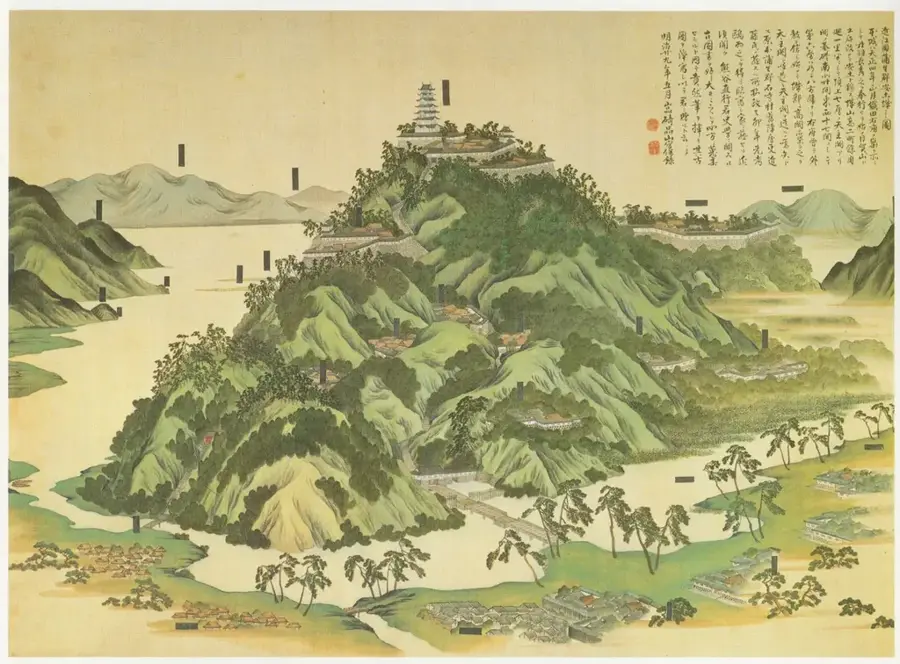
- Highlights: The Kids Science Museum of Photons · Naramachi Museum · Ruins of the Koriyama Castle
- Nearby: Osaka (28 km)
- Population: ~367.353 (2022)
Best time to visit & climate
The most pleasant time to visit is May, Jun, Sep.
| Jan | Feb | Mar | Apr | May | Jun | Jul | Aug | Sep | Oct | Nov | Dec | |
|---|---|---|---|---|---|---|---|---|---|---|---|---|
| Avg °C | 2 | 3 | 6 | 11 | 16 | 20 | 25 | 25 | 21 | 15 | 10 | 4 |
| Rain mm | 70 | 80 | 125 | 158 | 179 | 228 | 233 | 206 | 266 | 222 | 100 | 73 |
Live webcam – Nara
See what it looks like near Nara right now.
Nara: The sky in south Kyoto seen from world heritage ancient capital - of Japan · 4.4 km · Open webcam on Windy · Webcams provided by Windy.com
Geography
Facts
- Nara’s total area is 276.84 square kilometers.
- The city’s population density is around 1,270 people per square kilometer.
- Nara was Japan's capital for 74 years during the 8th century.
- The Todai-ji temple was completed in 752 AD.
- Kasuga Taisha is the ancestral shrine of the powerful Fujiwara clan.
- Nara is famous for 'Kakinoha-zushi', sushi wrapped in persimmon leaves.
- The city is located at 34.6 degrees North latitude.
- Nara Park was established as a public park in 1880.
Explore nearby
Notable places around
Route planner — Car & Motorhome
Where do you start? We build the route here, with stops and country notes along the way.
© OpenStreetMap contributors · OpenRouteService
Sights in the town Nara (10)
Frequently asked questions
What is the most famous attraction in Nara?
Are you allowed to feed the deer in Nara?
How long should you plan for Nara?
What food is typical for Nara?
When is the best time to visit Nara?
Nara: where is it located?
Nara: what is there to see?
Nara: when is the best time to visit?
Nara: why is it worth visiting?
Nearby cities

History & landmarks
Nature
More places