Plizio Visual Lab

Sugarloaf Mountain
Plizio editorial teamData Sources
Mountain
—°18
Sugarloaf Mountain (Brazil)

Weather…

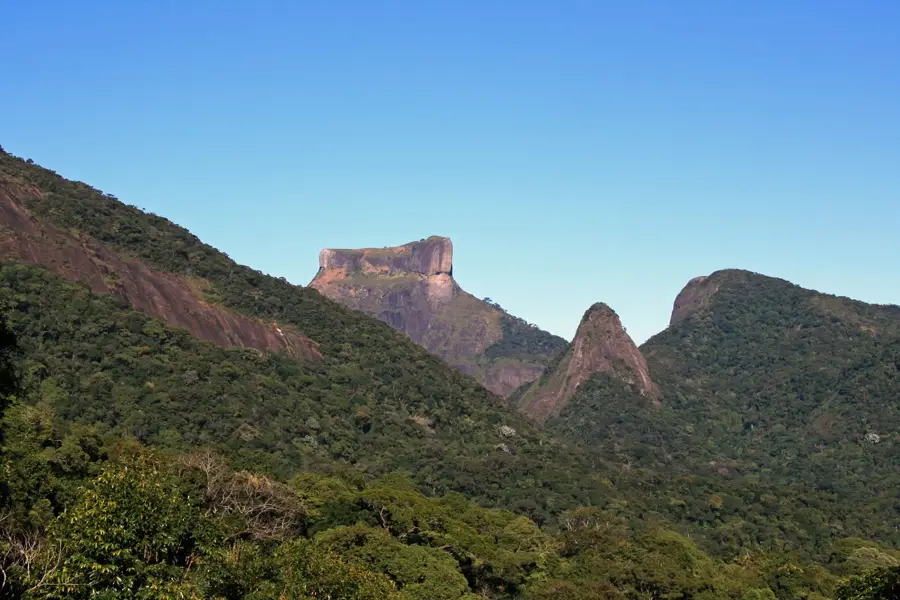
Sugarloaf Mountain (Pão de Açúcar) is an iconic peak situated at the mouth of Guanabara Bay in Rio de Janeiro, rising 396 meters above the Atlantic Ocean. This granite and gneiss monolith was formed roughly 600 million years ago through tectonic activity during the Precambrian period. Its name dates back to the 16th century, referring to the conical shape of 'sugarloaves' used to transport refined sugar by sea. The summit was made accessible to the public in 1912 with the opening of a cable car system, the 'Bondinho,' which was one of the first of its kind globally and has since carried millions of passengers. In 2012, the mountain was designated a UNESCO World Heritage site as part of Rio's cultural landscape. Beyond tourism, Sugarloaf is a world-class destination for rock climbing, featuring over 270 established routes across its steep, smooth stone faces.

Best time to visit & climate

The most pleasant time to visit is Jun–Aug.

JanFebMarAprMayJunJulAugSepOctNovDec
Avg °C262625242222212122232325
Rain mm2081521731017149454269108220232

📋 Practical info

🧭
Getting there
Most commonly rapidly reached via the deeply iconic aerial cable car system brilliantly starting directly from the bustling Urca neighborhood. Alternatively, highly experienced climbers can physically scale the rock face itself.
📅
Best season
A genuinely superb year-round destination, but generally visually clearest during the cooler winter months roughly from June to August. Late afternoon is typically the most overwhelmingly popular time to spectacularly catch the sunset.
⛰️
Terrain & paths
The primary upper visitor areas proudly feature flawlessly paved accessible pathways, expansive observation decks, and occasional stairs. The surrounding natural slopes are undeniably steep, smooth solid granite ultimately requiring highly technical climbing.
🎒
What to bring
Exceptionally comfortable daily walking shoes are completely sufficient for merely enjoying the standard tourist viewing paths. If deciding to hike the lower Morro da Urca segment, surely bring some water and standard insect repellent.
🅿️
Parking
Extremely limited local street parking is sometimes barely available in Urca, but it aggressively fills up immensely rapidly. Utilizing convenient local ride-share services or extensive public transport is generally the absolute most reliable method.
⚠️
Safety
The elevated concrete viewing platforms are wonderfully inherently safe with heavily reinforced sturdy safety railings. Merely watch out for minor occasional petty theft in densely crowded areas, and please strictly do not feed the local tiny marmosets.
⏱️
Time needed
A typical, relaxing scenic visit utilizing the incredible cable cars smoothly takes about two to three comfortable hours. Naturally allow significantly extra leisurely time if you heavily plan to hike the first stage or lovingly stay for the busy sunset.

Geography

Coordinates
-22.94000, -43.15000

Facts

  • The mountain rises to a height of 396 meters
  • Formed from 600-million-year-old granite and gneiss
  • The first cable car line was inaugurated in 1912
  • Designated as a UNESCO World Heritage site in 2012
  • Named after the conical sugar molds used in the 16th century
  • Features more than 270 distinct rock climbing routes

Explore nearby

Notable places around

Route planner — Car & Motorhome

Where do you start? We build the route here, with stops and country notes along the way.

Vehicle
Only stops with (optional):

© OpenStreetMap contributors · OpenRouteService

Sights in the town Sugarloaf Mountain (18)

Forte Tamandaré da Lage🏰 castle

Constructed on a small, rocky islet in Guanabara Bay, this historic naval fort once heavily guarded the maritime entrance to Rio.

Forte Duque de Caxias🏛 museum

Situated atop a steep coastal hill, this former military fortification now operates as a museum offering sweeping views of the Atlantic.

Earth Science Museum🏛 museum

This specialized scientific museum houses extensive, well-preserved collections of unique minerals, meteorites, and fascinating paleontological fossils.

Farol da Fortaleza de Santa Cruz📍 landmark

This historic navigational lighthouse is seamlessly integrated into the robust stone walls of a major 16th-century colonial fortress.

Sugarloaf📍 landmark

Rising dramatically 396 meters above the harbor, this iconic granite monolithic peak is famously accessible by a glass-walled cable car.

Morro Cara de Cão🌿 nature

This strategically located, rocky peak forms the very peninsula where the initial Portuguese settlement of Rio was formally established.

Morro da Babilônia🌿 nature

This prominent coastal hill is notable both for its historic military remnants and the lively, dense favela communities clinging to its steep slopes.

Praia do Sossego🎡 recreation

Tucked away discreetly between steep rocky cliffs, this secluded, sandy cove provides a peaceful nature retreat from the bustling city beaches.

Praia Vermelha🎡 recreation

Characterized by its unique reddish-tinted sand, this easy on the eye, curving beach sits directly at the imposing base of Sugarloaf Mountain.

Aos Herois de Laguna e Dourados🏺 historical

This imposing granite memorial honors the valiant Brazilian soldiers who fought and perished in the pivotal campaigns of the Paraguayan War.

Morro do Macaco🌿 nature

This rugged granite elevation, covered in dense tropical vegetation, contributes significantly to the dramatic, hilly topography that defines the region's coastal landscape.

Praia de Camboinhas🎡 recreation

This expansive, curving stretch of coastline features notably clear waters and is a highly popular weekend destination for sunbathing and active water sports in Niterói.

Ponta do Imbuí🏰 castle

Positioned on a rocky point overlooking the bay, this historic coastal defense structure guards the entrance to the harbor.

Centro Ecocultural Sueli Pontes🏛 museum

This eco-cultural museum near Sugarloaf Mountain features exhibitions dedicated to local environmental conservation.

Forte São José🏰 castle

Positioned along the shoreline, this historical stone fortification was part of the crossfire defense system for the bay.

Cópia Pequena do Cristo Redentor do Rio de Janeiro🏺 historical

This scaled-down replica of the iconic Christ the Redeemer statue provides a close-up appreciation of its Art Deco design.

Ruínas do Atalaia🏺 historical

These weathered stone ruins are the remnants of a historic coastal watchtower that once monitored incoming ships.

Teatro Qorpo Santo🎭 culture

This cozy coastal theater venue regularly stages intimate local drama productions and cultural performances.

Sights nearby

Frequently asked questions

How do you get to Sugarloaf Mountain?
By a famous cable car that goes up in two stages.
When is the best time to visit?
At sunset, to have the most spectacular view over Rio de Janeiro.
Should you buy tickets in advance?
Yes, online tickets help you avoid long queues at the ticket office.
Can you hike up the mountain?
You can hike up the first hill (Morro da Urca), but the summit is only accessible by cable car or rock climbing.
Are there restaurants at the summit?
Yes, there are cafes and snack bars with fantastic views.
Sugarloaf Mountain: where is it located?
Sugarloaf Mountain is located in Brazil.
Sugarloaf Mountain: what is there to see?
Highlights include Forte Tamandaré da Lage, Forte Duque de Caxias, Earth Science Museum.
Sugarloaf Mountain: when is the best time to visit?
The most pleasant time to visit is Jun, Aug.
Sugarloaf Mountain: why is it worth visiting?

Sugarloaf Mountain (Pão de Açúcar) is an iconic peak situated at the mouth of Guanabara Bay in Rio de Janeiro, rising 396 meters above the Atlantic Ocean.
View on map → The Top 50 Attractions → OpenStreetMap →
South America
Explore with Plizio Discover more places in South America
More places in Brazil →

Nearby cities

History & landmarks
More places