Plizio Visual Lab
Ulugh Beg Observatory
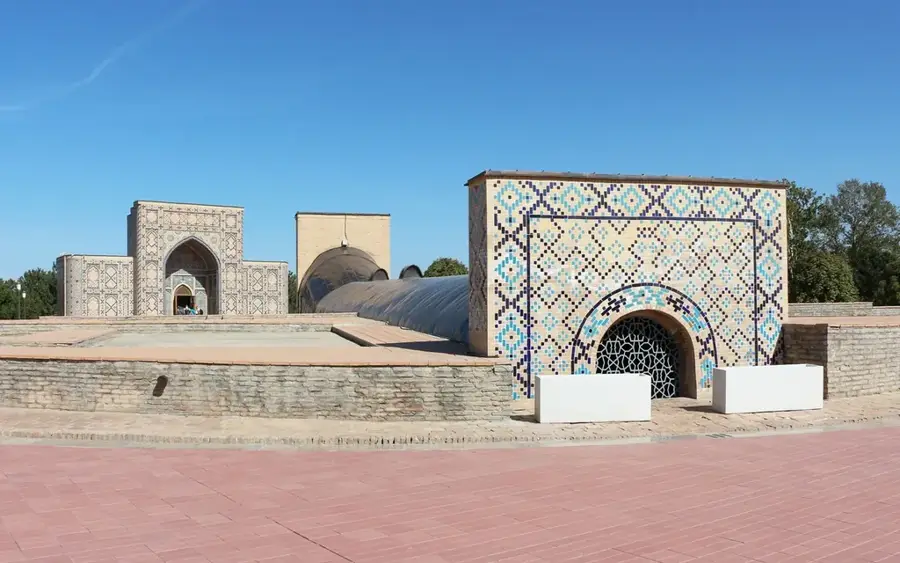
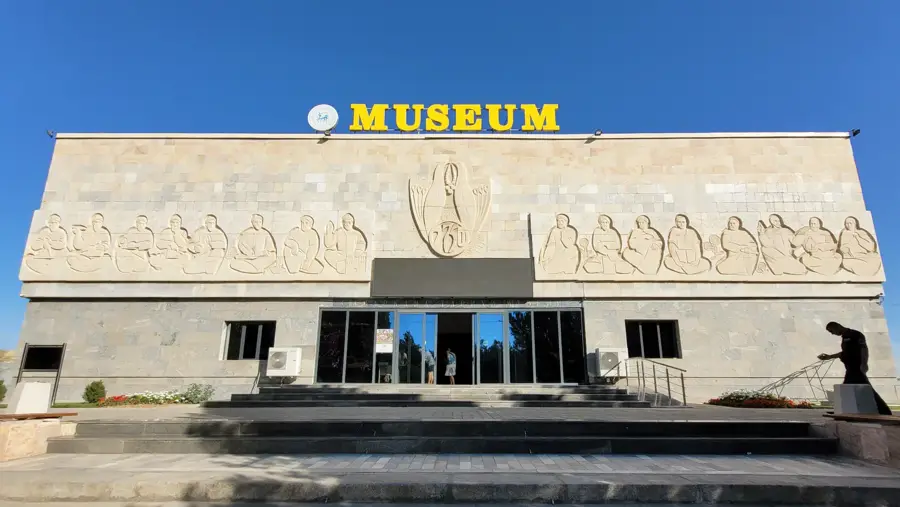
The Ulugh Beg Observatory in Samarkand was one of the most significant astronomical research centers of the Middle Ages, constructed in the 1420s. Ulugh Beg, the grandson of Tamerlane and a highly accomplished astronomer and mathematician himself, commissioned a gigantic quadrant with a radius of 36 meters, partially embedded in the rock. Using this instrument, the positions of stars and planets were determined with precision that remained unsurpassed for centuries. The most critical outcome of the research conducted here was the 'Zij-i Sultani' star catalog, which detailed the coordinates of 1,018 stars and profoundly influenced astronomical science globally. Following Ulugh Beg's assassination in 1449, the observatory was destroyed by religious fanatics and remained forgotten for centuries. It was not until 1908 that Russian archaeologist Vasily Vyatkin rediscovered the remains of the massive sextant. Today, a museum stands on the site, showcasing the scientific achievements of the Timurid era.
Explore on the map
How well do you know Uzbekistan?
Find cities, landscapes and regions in 10 varied challenges on the interactive map.
Your journey, your memory
A postcard from Ulugh Beg Observatory
Turn your own photo into a personal postcard with a local stamp. Free and no sign-up required.
Create a postcard- Location: Uzbekistan
- Highlights: R A D A R · Silk Road Samarkand · Amphitheatre
- Nearby: Samarkand (5 km)
Best time to visit & climate
The most pleasant time to visit is May, Jun, Sep.
| Jan | Feb | Mar | Apr | May | Jun | Jul | Aug | Sep | Oct | Nov | Dec | |
|---|---|---|---|---|---|---|---|---|---|---|---|---|
| Avg °C | 1 | 3 | 9 | 14 | 20 | 26 | 28 | 26 | 21 | 14 | 7 | 2 |
| Rain mm | 35 | 48 | 58 | 56 | 30 | 7 | 2 | 1 | 2 | 14 | 35 | 30 |
📋 Practical info
Geography
Facts
- The observatory was constructed between 1424 and 1429.
- The massive embedded sextant had a radius of approximately 36 meters.
- Ulugh Beg precisely cataloged 1,018 stars from this location.
- His calculation of the solar year deviated by less than one minute from modern values.
- The building was nearly leveled following Ulugh Beg's death in 1449.
- The site was only rediscovered in 1908 through the work of Vasily Vyatkin.
Explore nearby
Notable places around
Route planner — Car & Motorhome
Where do you start? We build the route here, with stops and country notes along the way.
© OpenStreetMap contributors · OpenRouteService
Sights in the town Ulugh Beg Observatory (9)
"The Eternal City" Historical and Ethnographic Park🎡 recreation
An ethnographic park faithfully recreating the architecture and crafts of various regions of Uzbekistan.
Sights nearby
Frequently asked questions
What is the Ulugbek Observatory?
Can the remains be visited?
How long does a visit take?
Is there a museum on site?
When is the best time to visit?
Ulugh Beg Observatory: where is it located?
Ulugh Beg Observatory: what is there to see?
Ulugh Beg Observatory: when is the best time to visit?
Ulugh Beg Observatory: why is it worth visiting?

Nearby cities
History & landmarks
Nature
More places