Plizio Visual Lab
Eurasian Otter

Weather…
Water temperature…
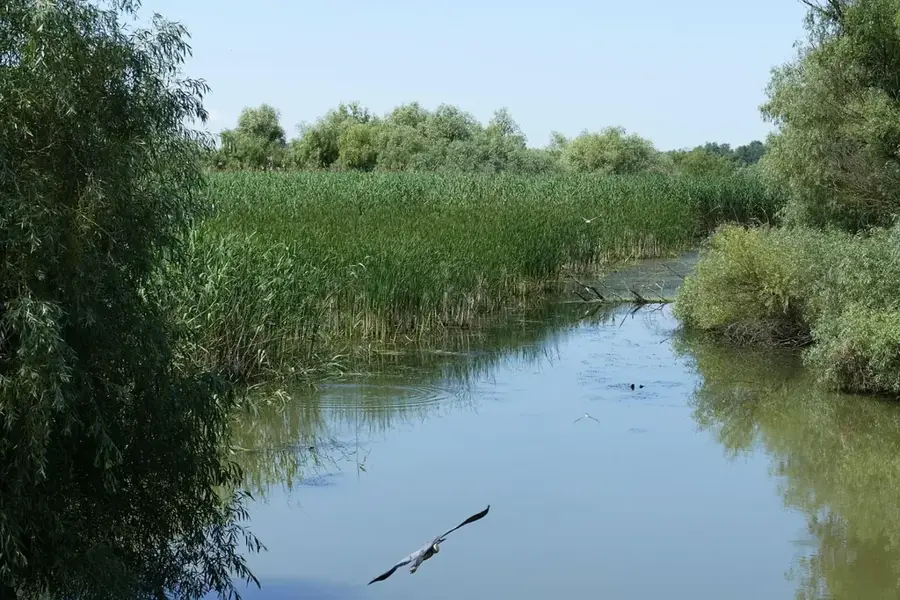
The Eurasian otter (Lutra lutra) is a semi-aquatic carnivore belonging to the weasel family, perfectly adapted for a life in and around water. In Romania, the species is widespread in clean rivers, lakes, and especially throughout the Danube Delta, serving as a key indicator of high water quality. Its streamlined body, powerful muscular tail, and webbed feet make it an exceptionally efficient underwater hunter. The otter's diet consists primarily of fish, though it also consumes amphibians, crustaceans, and occasionally small water birds. Its fur is one of the densest in the animal kingdom, with up to 50,000 hairs per square centimeter, providing waterproof insulation even in freezing temperatures. Because otters are highly sensitive to pollution and habitat destruction, their presence reflects a healthy ecological balance. Strictly protected across Europe, the otter remains a symbol of pristine freshwater environments.
Explore on the map
How well do you know Romania?
Find cities, landscapes and regions in 10 varied challenges on the interactive map.
Your journey, your memory
A postcard from Eurasian Otter
Turn your own photo into a personal postcard with a local stamp. Free and no sign-up required.
Create a postcard- Location: Tulcea, Romania
- Nearby: Tulcea (25 km)
Best time to visit & climate
The most pleasant time to visit is Jun, Aug, Sep.
| Jan | Feb | Mar | Apr | May | Jun | Jul | Aug | Sep | Oct | Nov | Dec | |
|---|---|---|---|---|---|---|---|---|---|---|---|---|
| Avg °C | -1 | 1 | 6 | 11 | 18 | 23 | 25 | 25 | 19 | 13 | 7 | 1 |
| Rain mm | 41 | 29 | 32 | 34 | 44 | 54 | 45 | 28 | 38 | 47 | 38 | 43 |
📋 Practical info
Geography
Facts
- Otters have up to 50,000 hairs per square centimeter of fur for insulation.
- They can hold their breath for up to 8 minutes while diving.
- Fish accounts for approximately 80% of their total diet.
- An adult otter can consume up to 1.5 kg (3.3 lbs) of food per day.
- They can swim at speeds of up to 12 km/h (7.5 mph).
- Otters use distinct whistling sounds to communicate with each other.
Explore nearby
Notable places around
Route planner — Car & Motorhome
Where do you start? We build the route here, with stops and country notes along the way.
© OpenStreetMap contributors · OpenRouteService
Sights nearby
Frequently asked questions
Where do otters live in Romania?
What do otters mainly eat?
Can otters be spotted during the day?
Are otters endangered in Romania?
Do otters have natural enemies?
Eurasian Otter: where is it located?
Eurasian Otter: when is the best time to visit?
Eurasian Otter: why is it worth visiting?

Nearby cities
History & landmarks
Nature
More places