Plizio Visual Lab
Rabaul
ℹ️Practical info — Rabaul
▾
🌤 Weather — 5 days
📍 Nearby
Sights nearby
💡 Tips
- Mount Tavurvur is an active volcano; always check local safety advisories and go with an experienced local guide.
- The town is covered in volcanic ash from past eruptions, which can irritate lungs and eyes; carrying a mask and sunglasses is wise.
- Visit the Japanese WWII tunnels and bunkers hidden in the hillsides; a local guide will provide vital historical context.
- Bring enough cash (Kina) as ATMs and card payment facilities can be scarce outside major hotels.
- Malaria is a risk in this region; ensure you take appropriate precautions and use mosquito repellent constantly.
🍽 Food
A traditional Papua New Guinean meal cooked in an earth oven; often arranged by local guesthouses on request.
Raw fish marinated in lime juice and coconut cream, a staple coastal dish available at local eateries.
Buy locally grown sweet bananas, papayas, and coconuts directly from the local markets.
🛍 Shopping · 🧘 Quiet spots
The central hub for buying fresh produce, local handicrafts, and traditional shell money (tabu).
Since the eruption, much commerce moved to nearby Kokopo; it's a larger, spirited market for local goods.
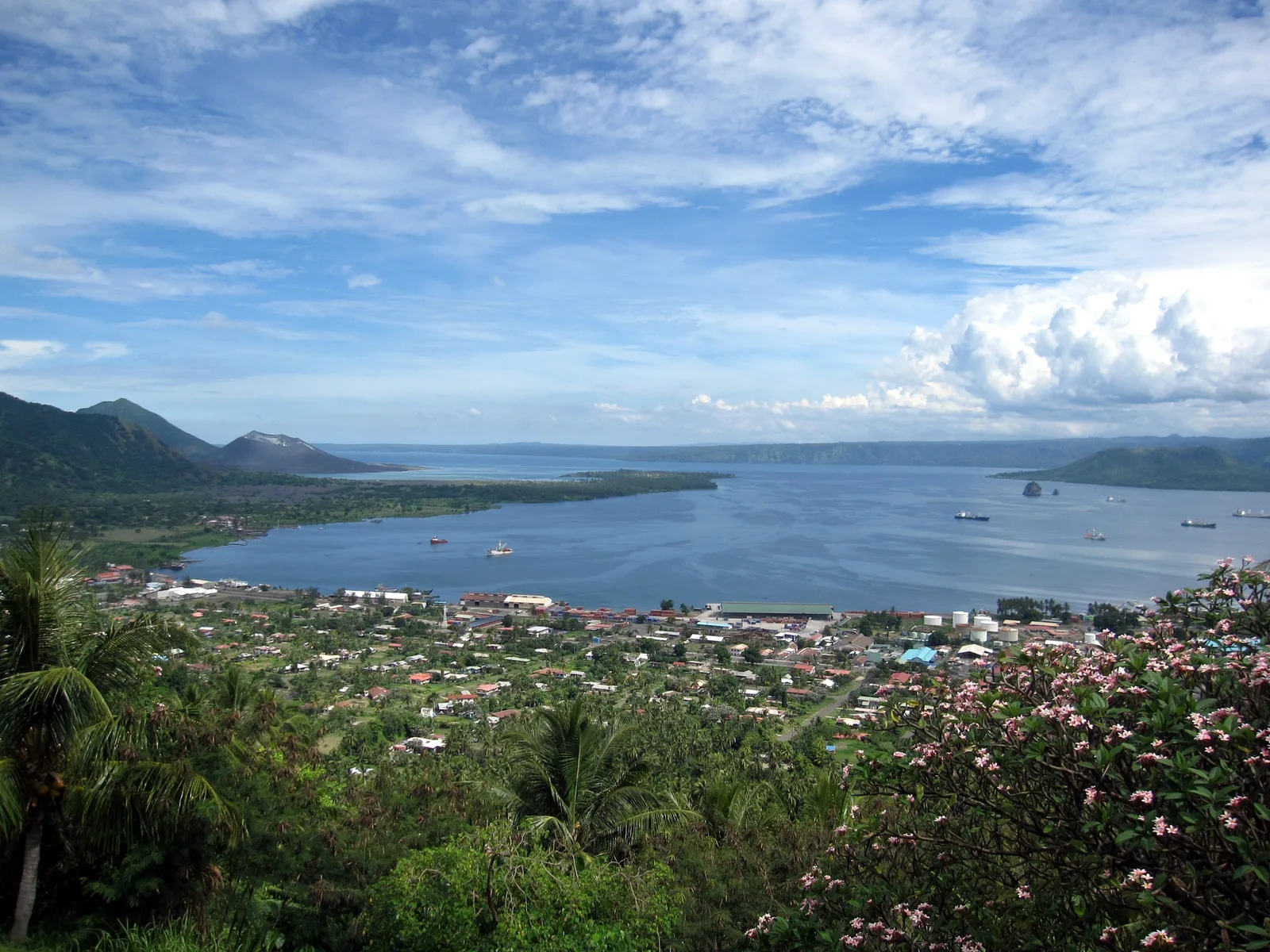
Has a safe, panoramic vantage point over the caldera, the town ruins, and Simpson Harbour.
A beautifully maintained, solemn resting place for WWII soldiers, located a short scenic drive away.
Water temperature…
Rabaul is located on the island of New Britain in Papua New Guinea, set against the wide-open backdrop of a flooded volcanic caldera. This deep, sheltered caldera forms Blanche Bay, giving Rabaul one of the finest natural harbors in the Pacific. The town is famously resilient; it was largely buried by the massive eruption of Mount Tavurvur in 1994, which coated the region in heavy volcanic ash. Today, the ash-covered remnants and the continuously puffing volcano create an incredibly striking, surreal landscape for adventurous travelers. The area holds immense historical significance, particularly from World War II. It was a major Japanese military base in the South Pacific. Visitors can explore a vast network of tunnels, see rusted anti-aircraft guns, and visit Admiral Yamamoto’s underground bunker. The surrounding waters of Simpson Harbour are a premier destination for wreck diving, offering access to sunken Japanese warships and aircraft that have now become animated artificial reefs. While tourism here is more rugged and intrepid, the natural beauty is undeniable. The rich volcanic soil supports lush tropical vegetation outside the immediate blast zones, and local markets sell exotic fruits, shell money, and traditional crafts. Accessible via flights to nearby Kokopo, Rabaul has an unforgettable mix of raw volcanic power, profound war history, and spirited Melanesian culture.
Explore on the map
How well do you know Papua New Guinea?
Find cities, landscapes and regions in 10 varied challenges on the interactive map.
Your journey, your memory
A postcard from Rabaul
Turn your own photo into a personal postcard with a local stamp. Free and no sign-up required.
Create a postcard- Location: Papua New Guinea
- Highlights: Namanula Hill · Old Rabaul Airport · Yamamoto Bunker
- Nearby: Kokopo (19 km)
- Population: ~57.268
Geography
Facts
- Located inside a flooded volcanic caldera
- Devastated by the 1994 Tavurvur eruption
- Major WWII Japanese military base
- Famous for incredible wreck diving
- Features Admiral Yamamoto's bunker
- Tavurvur volcano remains highly active
- Situated on New Britain island
- Surrounded by rich volcanic soils
Explore nearby
Notable places around
Route planner — Car & Motorhome
Where do you start? We build the route here, with stops and country notes along the way.
© OpenStreetMap contributors · OpenRouteService
Sights in the town Rabaul (5)
Frequently asked questions
Rabaul: where is it located?
Rabaul: what is there to see?
Rabaul: why is it worth visiting?