Plizio Visual Lab
Varela Dunes

Weather…
Water temperature…
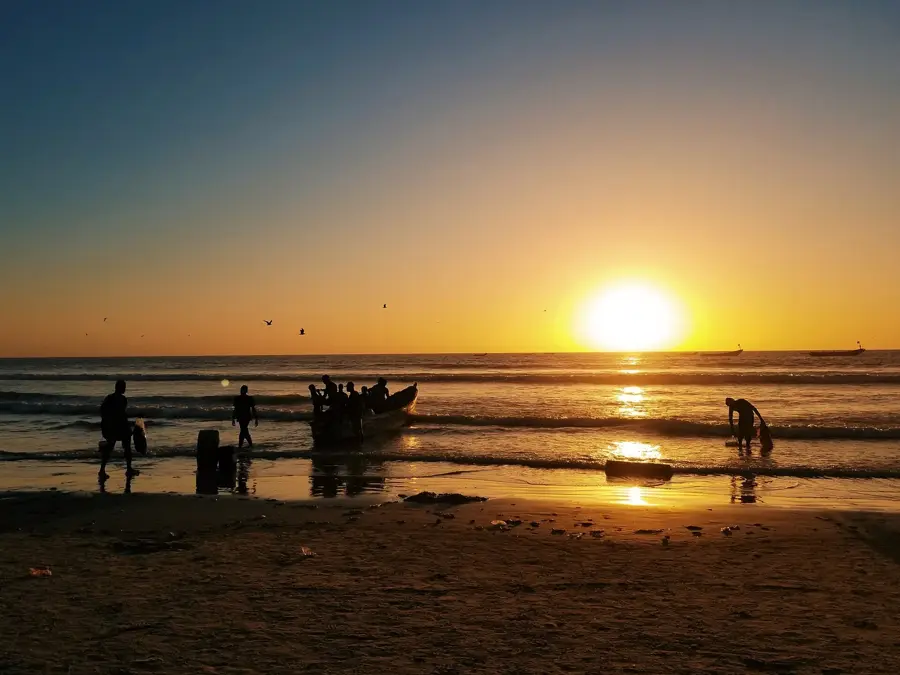
The dunes of Varela in far northwestern Guinea-Bissau represent a unique geomorphological phenomenon along a coastline otherwise dominated by mangroves and mud. This relief feature consists of a chain of white sand dunes extending along the Atlantic, shaped by the influence of wind and ocean currents. The dunes reach significant heights and provide a natural protective barrier against coastal erosion. The vegetation on the dunes is highly specialized; salt-tolerant grasses and pioneer plants stabilize the sand and prevent the dunes from migrating inland. Behind the dune crests, small depressions often form where freshwater accumulates during the rainy season, leading to the creation of small, temporary wetlands. Geologically, this area is characterized by the deposition of fine quartz sands, which stand in sharp contrast to the reddish laterite soils of the interior. The Varela dunes are a critical ecosystem that not only gives scenic beauty but also serves as a nesting site for sea turtles and a habitat for specialized reptiles. Preserving this fragile relief is of decisive importance for the coastal protection of the entire region in light of rising sea levels.
Explore on the map
How well do you know Guinea-Bissau?
Find cities, landscapes and regions in 10 varied challenges on the interactive map.
Your journey, your memory
A postcard from Varela Dunes
Turn your own photo into a personal postcard with a local stamp. Free and no sign-up required.
Create a postcard- Location: Guinea-Bissau
- Nearby: São Domingos (44 km)
Best time to visit & climate
The most pleasant time to visit is Jan, Feb, Dec.
| Jan | Feb | Mar | Apr | May | Jun | Jul | Aug | Sep | Oct | Nov | Dec | |
|---|---|---|---|---|---|---|---|---|---|---|---|---|
| Avg °C | 24 | 26 | 28 | 29 | 29 | 29 | 27 | 26 | 26 | 27 | 26 | 23 |
| Rain mm | 1 | 0 | 15 | 2 | 9 | 108 | 312 | 438 | 315 | 133 | 8 | 0 |
📋 Practical info
Geography
Facts
- It is the only extensive coastal dune system in Guinea-Bissau.
- The dunes are composed of nearly pure white quartz sand.
- They act as a natural barrier against seasonal storm surges.
- The flora includes specialized species such as beach morning glory.
- Sand is partially supplied by the Saharan Harmattan winds.
- The dunes provide vital nesting habitat for Olive Ridley turtles.
Explore nearby
Notable places around
Route planner — Car & Motorhome
Where do you start? We build the route here, with stops and country notes along the way.
© OpenStreetMap contributors · OpenRouteService
Sights nearby
Frequently asked questions
When is the best time to visit the Varela Dunes?
Is there parking available near the dunes?
How difficult is the hike in the Varela Dunes?
Are there sanitary facilities on site?
What risks are there at the dunes?
Varela Dunes: where is it located?
Varela Dunes: when is the best time to visit?
Varela Dunes: why is it worth visiting?
Nearby cities
History & landmarks
Nature
More places