Plizio Visual Lab
Taklamakan Desert

Weather…
Water temperature…
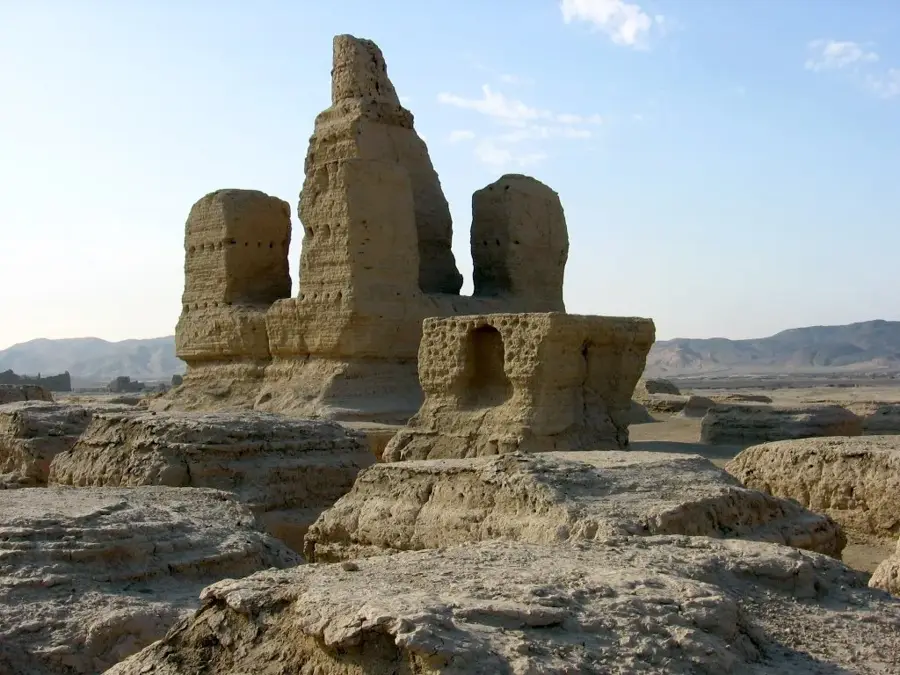
The Taklamakan Desert, located in the Tarim Basin in Xinjiang, China, is one of the largest sandy deserts in the world and is often referred to as the "Sea of Death." Spanning approximately 337,000 square kilometers, it is composed of 85% shifting sand dunes that can reach heights of up to 300 meters. The name is frequently translated as "place of no return," highlighting its historically treacherous and life-threatening conditions. Geographically, the Taklamakan is a cold desert, experiencing very low temperatures in winter while facing scorching heat during the summer months. Historically, it was a significant obstacle on the Silk Road, forcing trade routes to split into northern and southern branches to bypass its hazardous center. Hidden beneath the sands are the remains of ancient cities and oases that once thrived as cultural melting pots. Today, the desert is crossed by the Cross-Desert Highway, a massive engineering project that uses elaborate biological sand fixation techniques to prevent the road from being buried.
Explore on the map
How well do you know China?
Find cities, landscapes and regions in 10 varied challenges on the interactive map.
Your journey, your memory
A postcard from Taklamakan Desert
Turn your own photo into a personal postcard with a local stamp. Free and no sign-up required.
Create a postcardBest time to visit & climate
The most pleasant time to visit is Apr, May, Sep.
| Jan | Feb | Mar | Apr | May | Jun | Jul | Aug | Sep | Oct | Nov | Dec | |
|---|---|---|---|---|---|---|---|---|---|---|---|---|
| Avg °C | -7 | -2 | 7 | 16 | 22 | 27 | 30 | 28 | 22 | 13 | 3 | -6 |
| Rain mm | 2 | 1 | 1 | 2 | 7 | 11 | 12 | 9 | 6 | 3 | 2 | 1 |
📋 Practical info
Geography
Facts
- Covers about 337,000 km², nearly the size of Germany
- 85% of the desert consists of shifting dunes up to 300 meters high
- Classified as a cold desert with winter lows reaching -20 °C
- A major geographical barrier on the historic Silk Road
- Crossed by the 522 km long Tarim Desert Highway
- Site of numerous well-preserved Bronze Age mummies
Route planner — Car & Motorhome
Where do you start? We build the route here, with stops and country notes along the way.
© OpenStreetMap contributors · OpenRouteService
Sights nearby
Frequently asked questions
What does the name Taklamakan mean?
Can you visit the Taklamakan Desert?
What role did it play for the Silk Road?
Are there water sources in the desert?
How extreme are the temperatures there?
Taklamakan Desert: where is it located?
Taklamakan Desert: when is the best time to visit?
Taklamakan Desert: why is it worth visiting?
Nearby cities
Nature
More places