Plizio Visual Lab
Santa Cruz Soy Fields
Weather…
Water temperature…
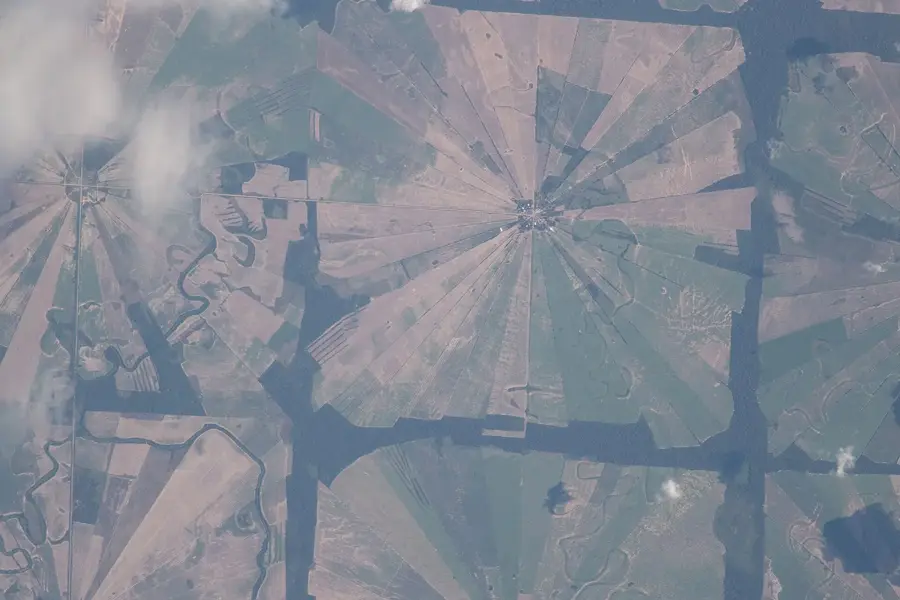
The Santa Cruz Department in eastern Bolivia is the hub of the country's industrial agriculture, with soy fields significantly shaping the landscape. Since the 1980s, the area dedicated to soy cultivation has expanded rapidly, favored by the flat terrain and tropical climate of the lowlands. Today, soy is the most important export commodity of the Bolivian agricultural sector and contributes significantly to the gross domestic product. Production is concentrated in regions like Pailón and Cuatro Cañadas, where modern machinery and large-scale monocultures dominate. However, the boom has ecological downsides, as vast areas of the Chiquitano dry forest have been cleared for new fields. The Bolivian government and international organizations are increasingly striving for regulations to balance the economic benefits of soy production with the protection of biodiversity.
Explore on the map
How well do you know Bolivia?
Find cities, landscapes and regions in 10 varied challenges on the interactive map.
Your journey, your memory
A postcard from Santa Cruz Soy Fields
Turn your own photo into a personal postcard with a local stamp. Free and no sign-up required.
Create a postcardBest time to visit & climate
The most pleasant time to visit is Jun–Aug.
| Jan | Feb | Mar | Apr | May | Jun | Jul | Aug | Sep | Oct | Nov | Dec | |
|---|---|---|---|---|---|---|---|---|---|---|---|---|
| Avg °C | 27 | 26 | 26 | 25 | 22 | 22 | 22 | 24 | 26 | 28 | 28 | 27 |
| Rain mm | 173 | 161 | 120 | 100 | 90 | 76 | 39 | 44 | 52 | 95 | 121 | 146 |
📋 Practical info
Geography
Facts
- Over 80% of Bolivian soy production originates from Santa Cruz.
- Soy is cultivated in two cycles per year (summer and winter seasons).
- Around 1.3 million hectares of land are utilized for soy in Bolivia.
- Most of the harvest is exported as meal or oil to Colombia and Peru.
- Mechanization was significantly driven by Japanese and Brazilian immigrants.
- Soy is Bolivia's fourth largest source of foreign exchange after gas and minerals.
Explore nearby
Notable places around
Route planner — Car & Motorhome
Where do you start? We build the route here, with stops and country notes along the way.
© OpenStreetMap contributors · OpenRouteService
Sights nearby
Frequently asked questions
Why are there so many soy fields in Santa Cruz?
How large are these fields?
Are there environmental concerns?
When is harvest time?
Are the fields irrigated?
Santa Cruz Soy Fields: where is it located?
Santa Cruz Soy Fields: when is the best time to visit?
Santa Cruz Soy Fields: why is it worth visiting?
History & landmarks
Nature
More places