Plizio Visual Lab
Tata Sabaya Volcano
Weather…
Water temperature…
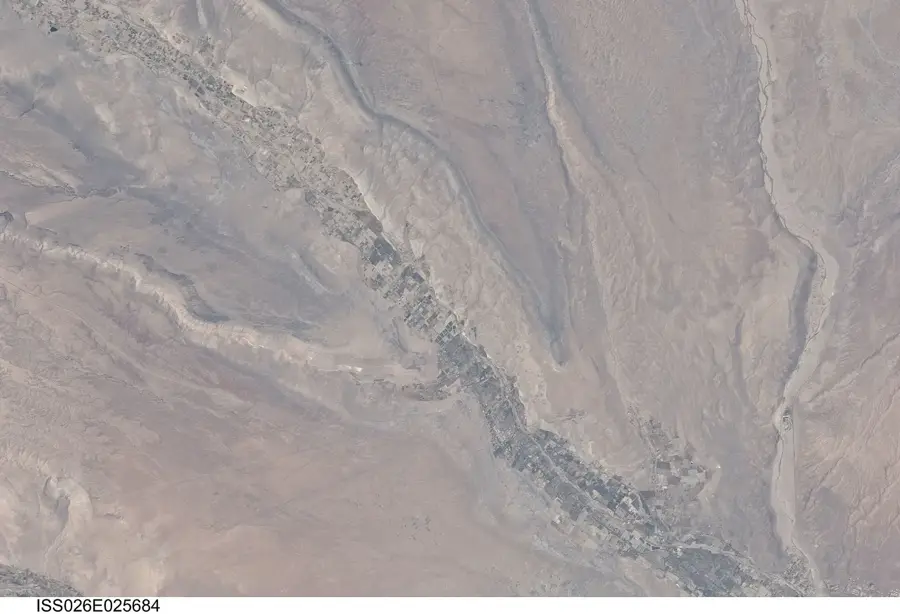
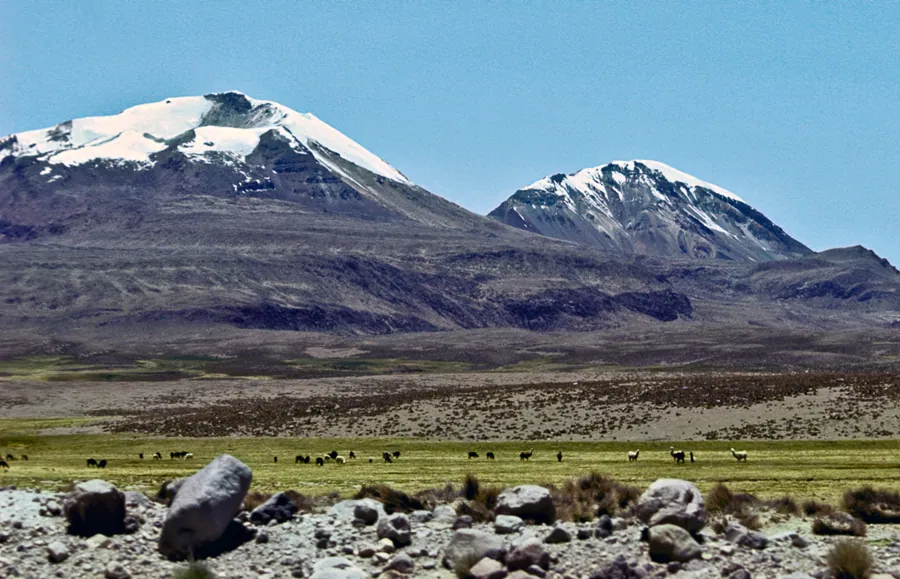
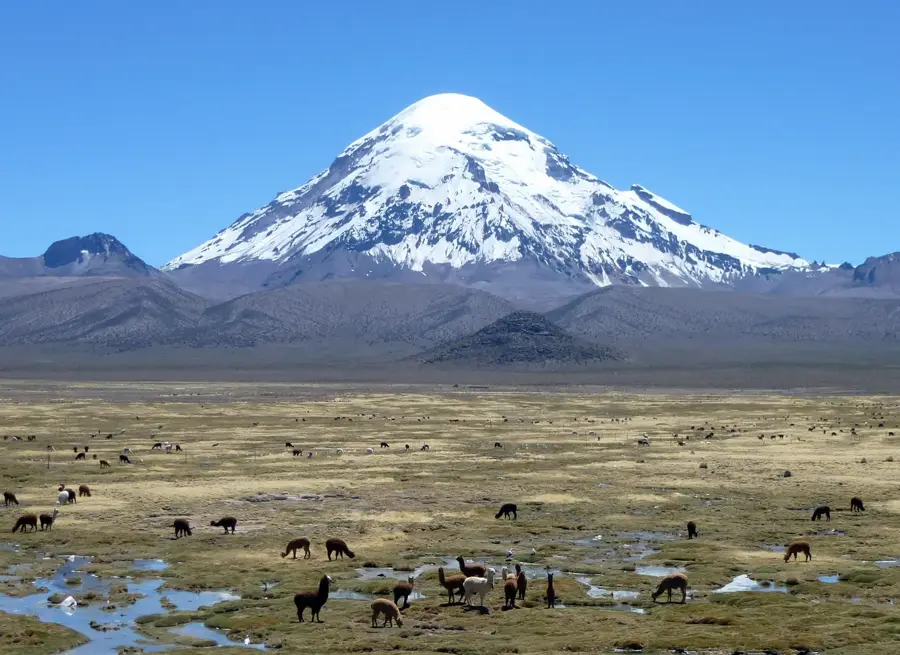
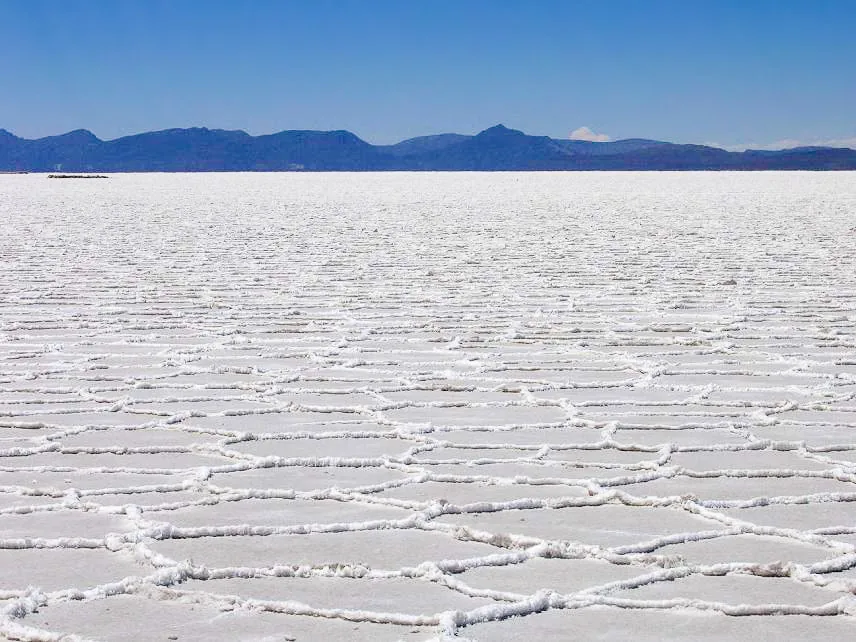
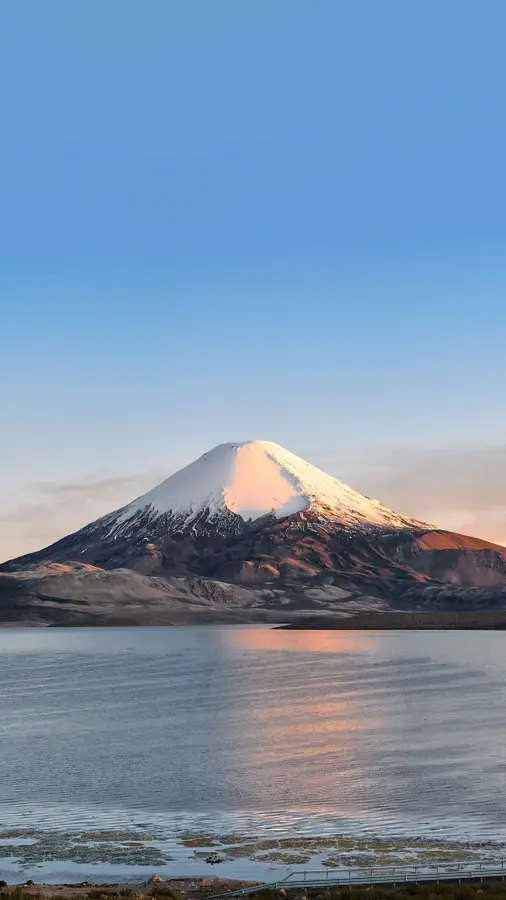
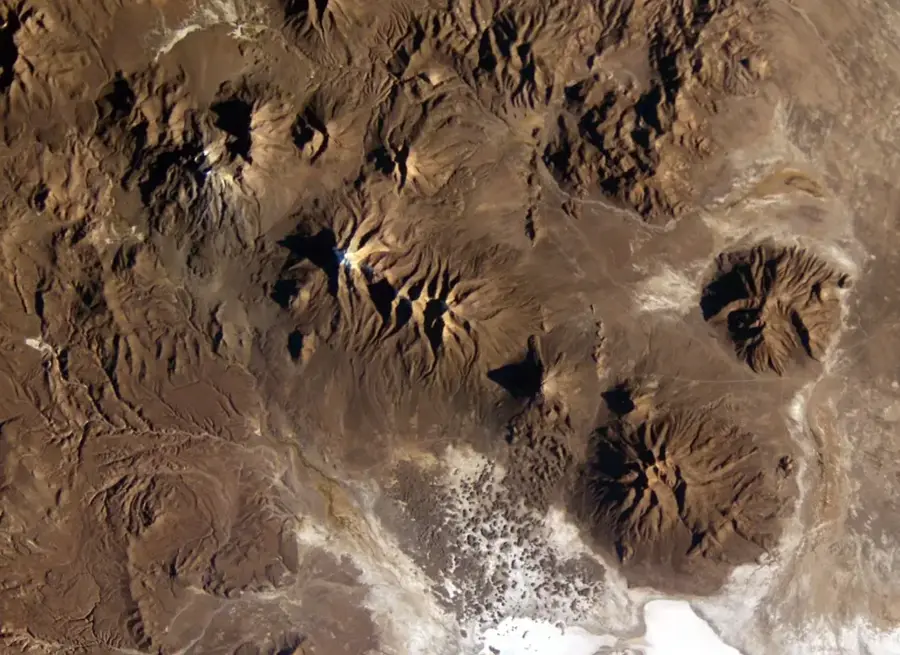
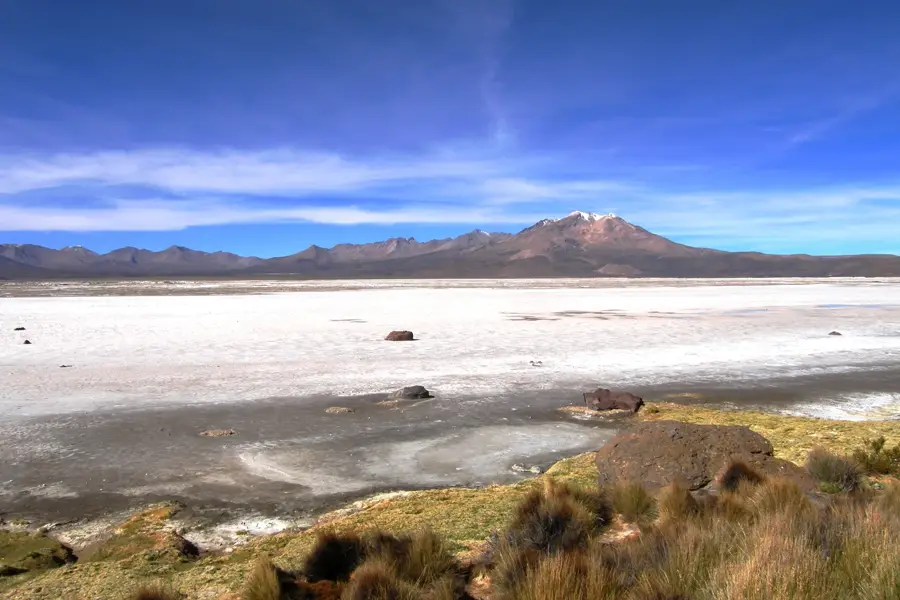
The Tata Sabaya volcano is an impressive stratovolcano on the Bolivian Altiplano, rising on the northern shore of the Salar de Coipasa. Standing at an elevation of 5,430 meters, it dominates the barren high-desert landscape and is famous for its symmetrical cone shape and a massive debris avalanche that occurred approximately 6,000 years ago. Geologically, the volcano consists mainly of andesite and is part of the central Andean range. For the local Aymara communities, Tata Sabaya holds deep cultural and spiritual significance, often associated with legends regarding the birth of mountains in the region. Despite the extreme dryness and cold, clusters of Ichu grass and other resilient plants can be found at lower elevations. Scientifically, the volcano is of great interest for researching mountain collapses and their effects on the surrounding topography. Climbing the mountain is challenging due to the altitude and loose volcanic ash, but it provides a vast view over the endless white flats of the salt lake. It remains a symbol of the dynamic geological history of the Bolivian highlands.
Explore on the map
How well do you know Bolivia?
Find cities, landscapes and regions in 10 varied challenges on the interactive map.
Your journey, your memory
A postcard from Tata Sabaya Volcano
Turn your own photo into a personal postcard with a local stamp. Free and no sign-up required.
Create a postcardBest time to visit & climate
The most pleasant time to visit is Mar, Nov, Dec.
| Jan | Feb | Mar | Apr | May | Jun | Jul | Aug | Sep | Oct | Nov | Dec | |
|---|---|---|---|---|---|---|---|---|---|---|---|---|
| Avg °C | 9 | 9 | 8 | 7 | 4 | 3 | 2 | 4 | 5 | 7 | 8 | 9 |
| Rain mm | 43 | 37 | 23 | 8 | 3 | 3 | 3 | 4 | 8 | 9 | 10 | 31 |
📋 Practical info
Geography
Facts
- Tata Sabaya reaches a maximum height of 5,430 meters.
- A prehistoric debris avalanche covered an area of approximately 300 km².
- The volcano is located on the edge of the Salar de Coipasa in Oruro Department.
- The last major eruption is dated to the Holocene epoch.
- It is considered a powerful deity (Achachila) in Aymara cosmology.
- Geologically, it is closely related to the Isluga volcano in Chile.
Explore nearby
Notable places around
Route planner — Car & Motorhome
Where do you start? We build the route here, with stops and country notes along the way.
© OpenStreetMap contributors · OpenRouteService
Sights in the town Tata Sabaya Volcano (1)
Sights nearby
Frequently asked questions
Where is this volcano located?
Can it be climbed without a guide?
What is the terrain of the mountain like?
Is there accommodation nearby?
When should it be avoided?
Tata Sabaya Volcano: where is it located?
Tata Sabaya Volcano: when is the best time to visit?
Tata Sabaya Volcano: why is it worth visiting?
History & landmarks
Nature
More places