Plizio Visual Lab
West Boundary Escarpment

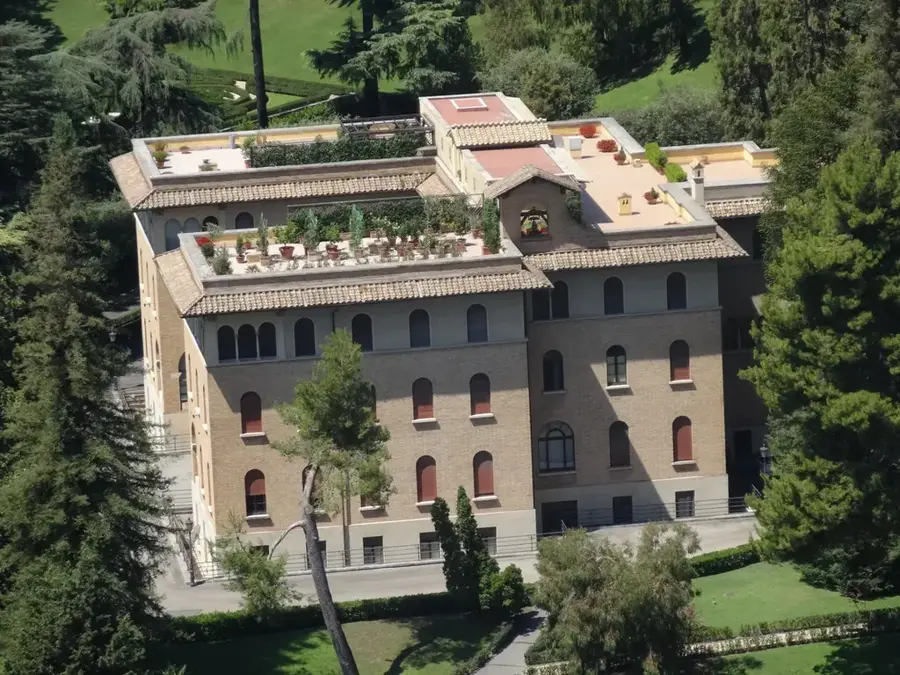
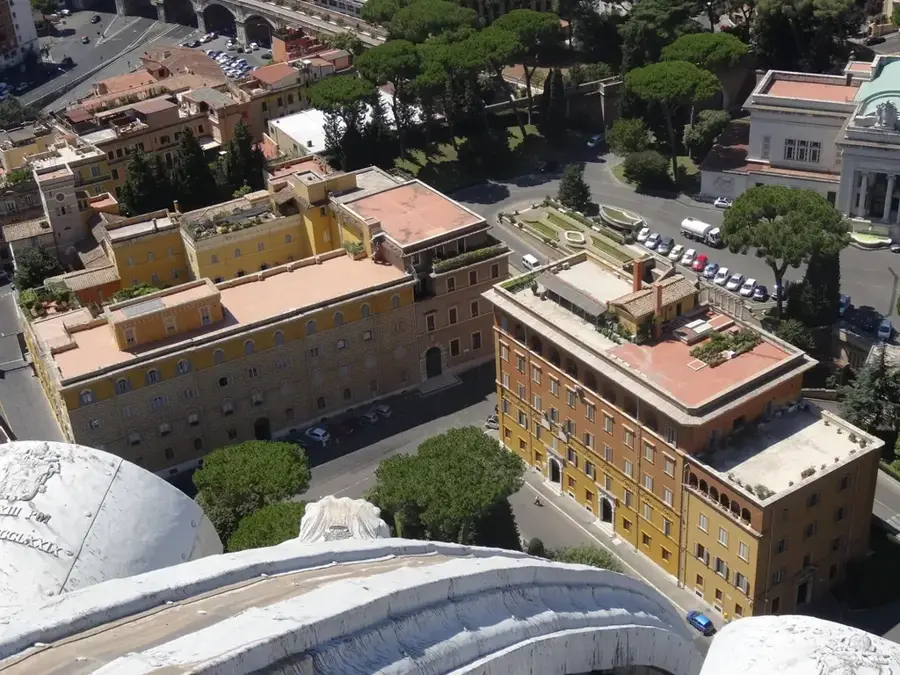
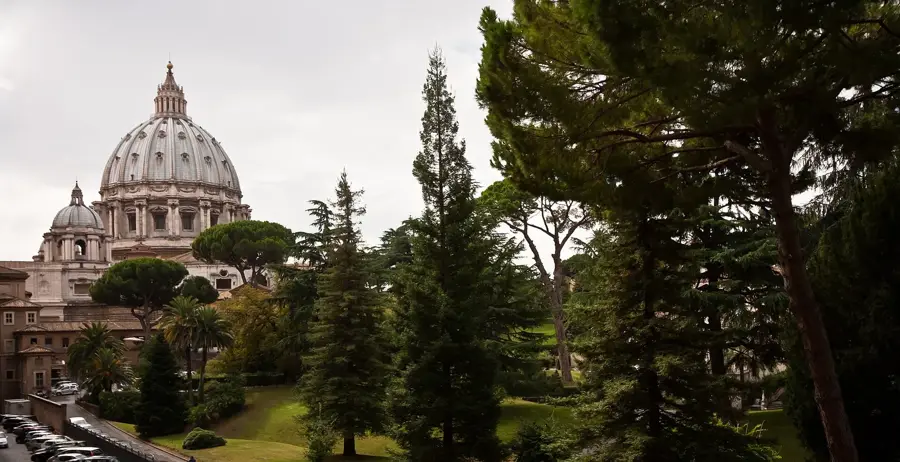
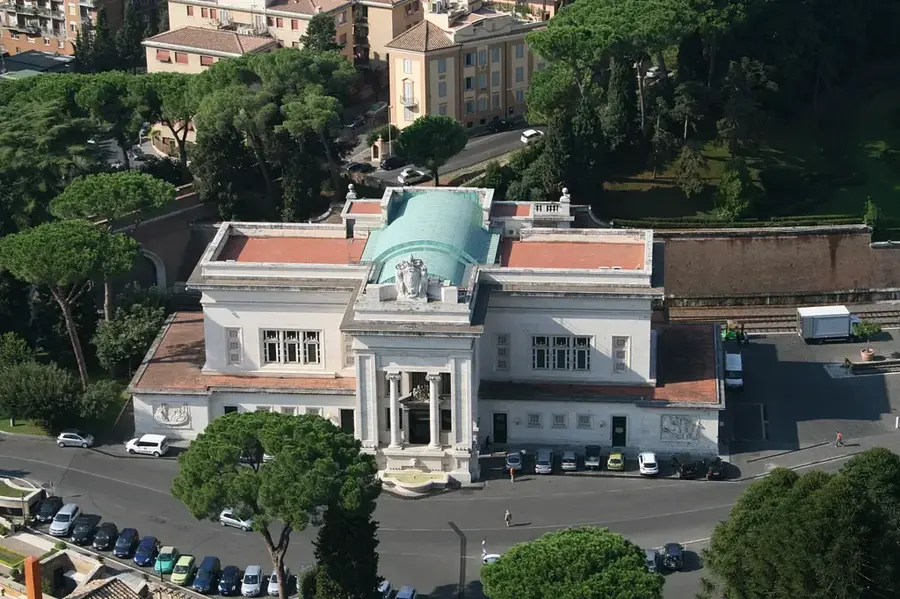
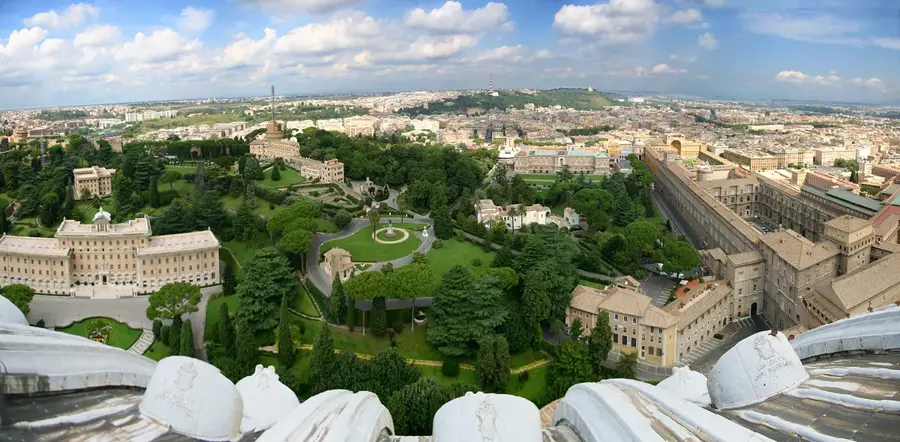
The West Boundary Escarpment marks the steepest topographical boundary of Vatican City toward the Roman district of Aurelio. This relief feature is characterized by an abrupt change in elevation, resulting from the natural erosion of the Vatican Hill and artificial terrain adjustments for the boundary wall systems. Geologically, the escarpment consists of stable sandstone formations, partially secured by historical retaining walls and modern concrete structures. The incline serves as a natural barrier and reinforces the enclaved character of the microstate. Security routes and patrol paths of the Vatican Gendarmerie run along the escarpment. The vegetation primarily consists of hardy shrubs and creeping plants that contribute to soil stabilization. The relief was further accentuated in the 20th century by the construction of Via Vaticano at the foot of the slope. This zone is of critical importance for the security of the Vatican and is strictly guarded.
Explore on the map
How well do you know Vatican?
Find cities, landscapes and regions in 10 varied challenges on the interactive map.
Your journey, your memory
A postcard from West Boundary Escarpment
Turn your own photo into a personal postcard with a local stamp. Free and no sign-up required.
Create a postcard- Location: Vatican
- Highlights: Vatican Hill · St Mary's Church · Lourdes Grotto
Best time to visit & climate
The most pleasant time to visit is May, Jun, Sep.
| Jan | Feb | Mar | Apr | May | Jun | Jul | Aug | Sep | Oct | Nov | Dec | |
|---|---|---|---|---|---|---|---|---|---|---|---|---|
| Avg °C | 7 | 8 | 10 | 14 | 18 | 23 | 26 | 26 | 21 | 17 | 12 | 8 |
| Rain mm | 73 | 77 | 69 | 56 | 57 | 34 | 26 | 26 | 70 | 82 | 114 | 92 |
📋 Practical info
Geography
Facts
- The elevation difference at the escarpment exceeds 30 meters in places.
- The boundary line was fixed in 1929 by the Lateran Treaty.
- The geological layering includes marine Pliocene sandstone.
- Security cameras monitor the entire stretch of the escarpment.
- The incline reaches an angle of 45 degrees at certain points.
- Via Vaticano runs parallel to the base of the escarpment.
Explore nearby
Notable places around
Route planner — Car & Motorhome
Where do you start? We build the route here, with stops and country notes along the way.
© OpenStreetMap contributors · OpenRouteService
Sights in the town West Boundary Escarpment (10)
Saint Stephen of the Ethiopians⛪ church
Church in Vatican City, serving the Ethiopian Christian community.
Vatican Art Gallery🏛 museum
Branch of the Vatican Museums, housing a painting collection.
Cupola di San Pietro
Dome of St. Peter's Basilica, iconic landmark of Vatican City.
Dome of Saint Peter
Viewpoint atop St. Peter's dome, offering panoramic views of Rome.
Padiglione delle carrozze🏛 museum
Pavilion in Vatican City, formerly used for carriages.
St John's Tower🗼 tower
Building in Vatican City, a tower of unknown purpose.
Sights nearby
Frequently asked questions
What is the west boundary escarpment?
Does this place offer a good view?
Can you walk around freely there?
Is the area wooded?
Are there hiking trails there?
West Boundary Escarpment: where is it located?
West Boundary Escarpment: what is there to see?
West Boundary Escarpment: when is the best time to visit?
West Boundary Escarpment: why is it worth visiting?

History & landmarks
Nature
More places