Plizio Visual Lab
Vatican Obelisk
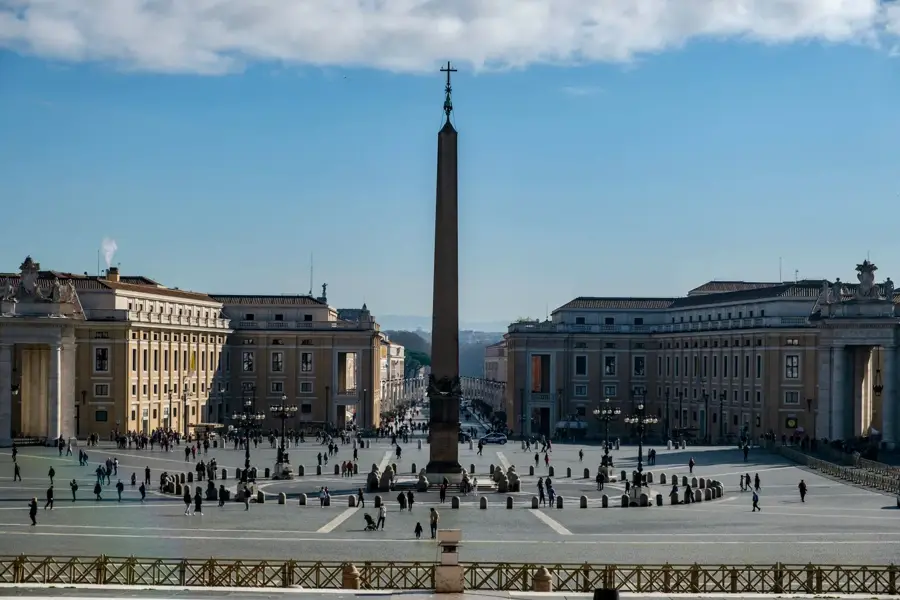
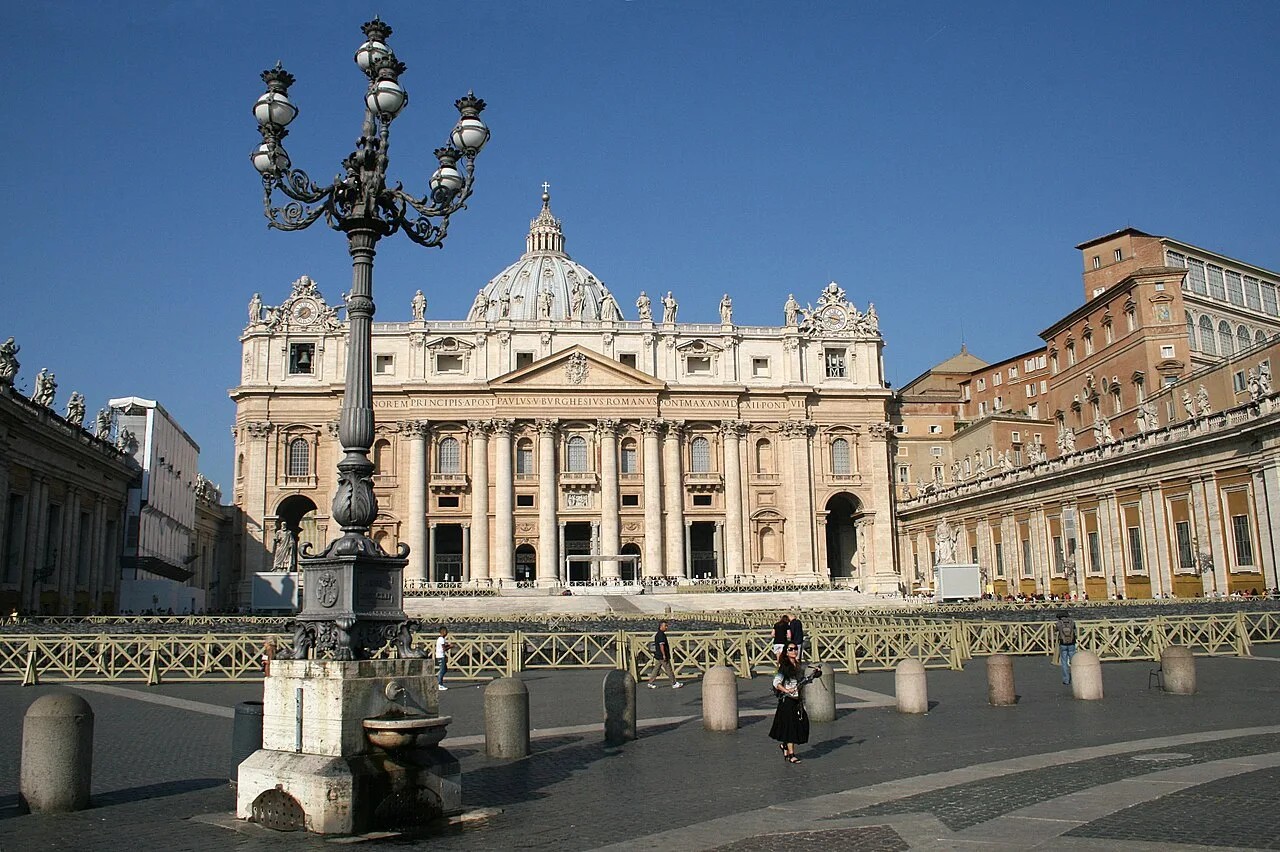
The Vatican Obelisk is a massive red granite monument standing at the heart of St. Peter's Square. Originally erected in Heliopolis, Egypt, over 3,000 years ago, it was brought to Rome in 37 AD by Emperor Caligula to decorate the spina of his private circus. This obelisk is unique among Rome's ancient monoliths because it remained standing throughout the Middle Ages, near the site of St. Peter’s martyrdom. In 1586, Pope Sixtus V commissioned the architect Domenico Fontana to move the 326-ton structure to its current location in front of the basilica. The relocation was a monumental engineering feat of the Renaissance, employing hundreds of horses and men using a complex system of pulleys and ropes. Atop the obelisk sits a bronze cross containing a relic of the True Cross, replacing a bronze sphere that once resided there. The obelisk also serves as a giant sundial, with its shadow falling on markers in the square’s pavement to indicate the solstices and equinoxes.
Explore on the map
How well do you know Vatican?
Find cities, landscapes and regions in 10 varied challenges on the interactive map.
Your journey, your memory
A postcard from Vatican Obelisk
Turn your own photo into a personal postcard with a local stamp. Free and no sign-up required.
Create a postcard- Location: Vatican
- Highlights: Vatican Obelisk · Saint Peter's Square · Il Cuore di Nerone
Best time to visit & climate
The most pleasant time to visit is May, Jun, Sep.
| Jan | Feb | Mar | Apr | May | Jun | Jul | Aug | Sep | Oct | Nov | Dec | |
|---|---|---|---|---|---|---|---|---|---|---|---|---|
| Avg °C | 7 | 8 | 10 | 14 | 18 | 23 | 26 | 26 | 21 | 17 | 12 | 8 |
| Rain mm | 73 | 77 | 69 | 56 | 57 | 34 | 26 | 26 | 70 | 82 | 114 | 92 |
📋 Practical info
Geography
Facts
- The height of the obelisk is 25.5 meters
- The total weight is approximately 326 tons
- Brought to Rome by Caligula in 37 AD
- Relocated to its current spot in 1586
- The task required 900 men and 140 horses
- It functions as a gnomon for a giant sundial
Explore nearby
Notable places around
Route planner — Car & Motorhome
Where do you start? We build the route here, with stops and country notes along the way.
© OpenStreetMap contributors · OpenRouteService
Sights in the town Vatican Obelisk (10)
Maderno Fountain
Fountain by Carlo Maderno, completed in 1614, with two marble basins.
Terrazza Augustinians
Viewpoint on the roof of the Augustinian church, overlooking the square.
Saints Martin and Sebastian of the Swiss
Church of the Swiss Guard, built in 1568, next to Saint Peter's.
Chiesa dei Santi Michele e Magno
Roman Catholic church, consecrated in 1141, in the Borgo district.
San Lorenzo in Piscibus
Church building from the 12th century, near Saint Peter's Square.
Arch of the Bells
Passage under the bell tower, entrance to Saint Peter's Square.
Sights nearby
Frequently asked questions
Where does the obelisk come from?
Does the obelisk have hieroglyphs?
How did it get to the Vatican?
When was it moved to its current location?
What is on top of it?
Vatican Obelisk: where is it located?
Vatican Obelisk: what is there to see?
Vatican Obelisk: when is the best time to visit?
Vatican Obelisk: why is it worth visiting?

History & landmarks
More places