Plizio Visual Lab
Central Stone Outcrop
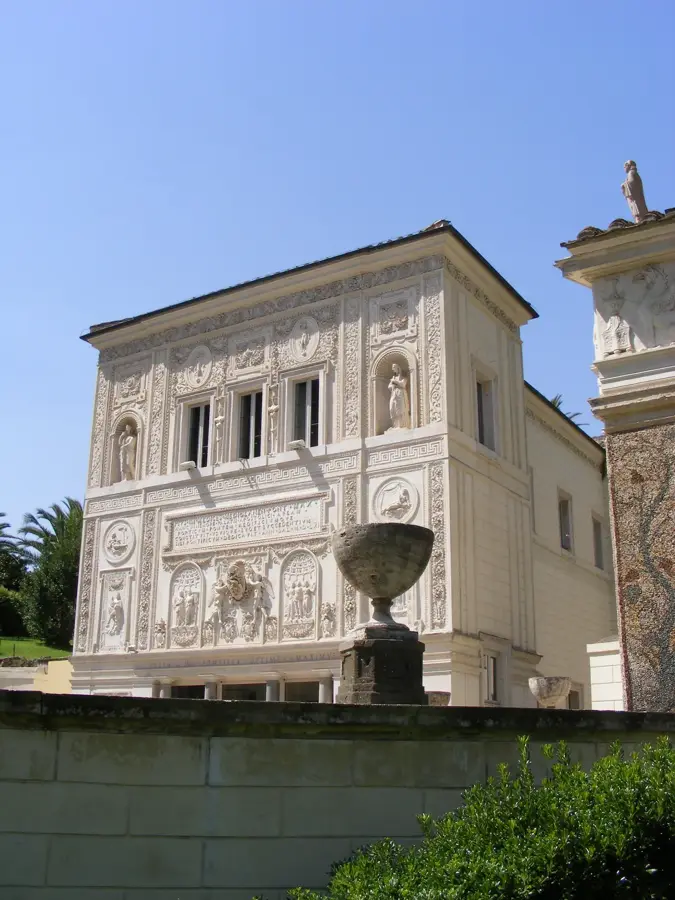
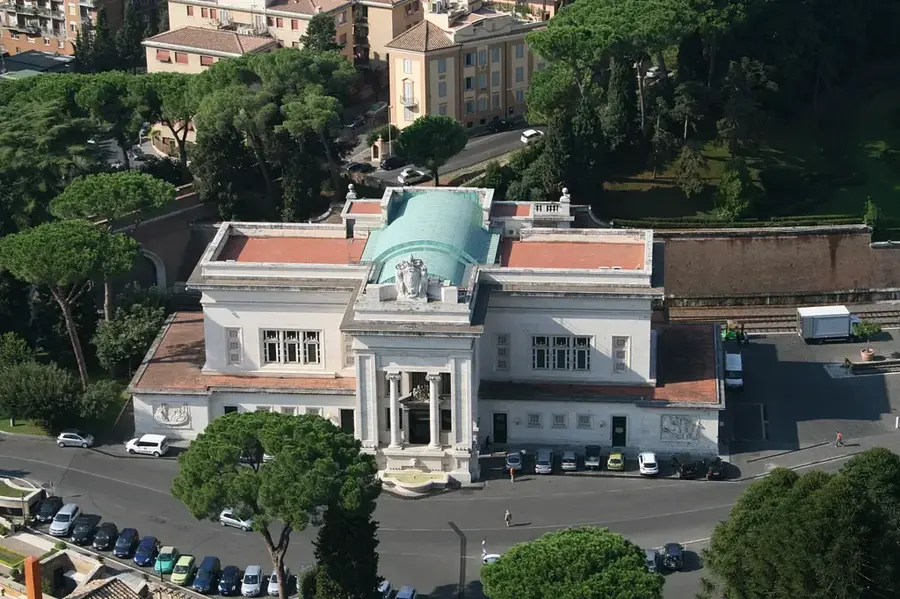
The Central Stone Outcrop in the Vatican is a distinctive geological formation that highlights the natural composition of the Vatican Hill. It is an exposed section of volcanic tufa, deposited millions of years ago by the activity of the surrounding volcanoes in the Latium region. This outcrop is located in the heart of the Vatican Gardens and was deliberately preserved as a decorative and educational element during the landscaping of the park system. Historically, the tufa of the hill was used as far back as antiquity as a building material for fortifications and foundations. The rough surface of the rock provides a habitat for specialized plants such as succulents and lichens, which have adapted to extreme dry conditions. The geography of this site marks a transition point between the gentle lawns and the steeper sections of the terrain. Today, the stone outcrop is an important spot for studying the geology of the Vatican and serves as a testament to the original topography before massive human modification.
Explore on the map
How well do you know Vatican?
Find cities, landscapes and regions in 10 varied challenges on the interactive map.
Your journey, your memory
A postcard from Central Stone Outcrop
Turn your own photo into a personal postcard with a local stamp. Free and no sign-up required.
Create a postcard- Location: Vatican
- Highlights: Pius IV House · Cupola di San Pietro · Dome of Saint Peter
Best time to visit & climate
The most pleasant time to visit is May, Jun, Sep.
| Jan | Feb | Mar | Apr | May | Jun | Jul | Aug | Sep | Oct | Nov | Dec | |
|---|---|---|---|---|---|---|---|---|---|---|---|---|
| Avg °C | 7 | 8 | 10 | 14 | 18 | 23 | 26 | 26 | 21 | 17 | 12 | 8 |
| Rain mm | 73 | 77 | 69 | 56 | 57 | 34 | 26 | 26 | 70 | 82 | 114 | 92 |
📋 Practical info
Geography
Facts
- Composed of volcanic tufa stone.
- Displays the hill's natural structure.
- Located in the center of the gardens.
- Habitat for succulents and lichens.
- Tufa was used since ancient times.
- Deliberately preserved as a decorative element.
Explore nearby
Notable places around


Route planner — Car & Motorhome
Where do you start? We build the route here, with stops and country notes along the way.
© OpenStreetMap contributors · OpenRouteService
Sights in the town Central Stone Outcrop (10)
Sistine Chapel
Chapel in the Apostolic Palace, Vatican City, famous for Michelangelo's frescoes.
Saint Stephen of the Ethiopians⛪ church
Church of the Vatican City, dedicated to Saint Stephen and Ethiopian Christians.
St Mary's Church
Church building in Vatican City, dedicated to Saint Mary.
Raphael Rooms🏛 museum
Suite of reception rooms in the Palace of the Vatican, painted by Raphael and his workshop between 1509 and 1524.
Pauline Chapel
Chapel in the Apostolic Palace, Vatican City, known for Michelangelo's frescoes.
Galleria delle Carte Geografiche🏛 museum
Map-filled art museum in the Vatican, part of the Vatican Museums.
Sights nearby
Frequently asked questions
Is it natural rock?
Is climbing on the rock allowed?
Do plants grow on the stone outcrop?
Is the rock's stability monitored?
What color is the rock?
Central Stone Outcrop: where is it located?
Central Stone Outcrop: what is there to see?
Central Stone Outcrop: when is the best time to visit?
Central Stone Outcrop: why is it worth visiting?

History & landmarks


Nature
More places