Plizio Visual Lab
Jebel Bou Hedma
Weather…
Water temperature…
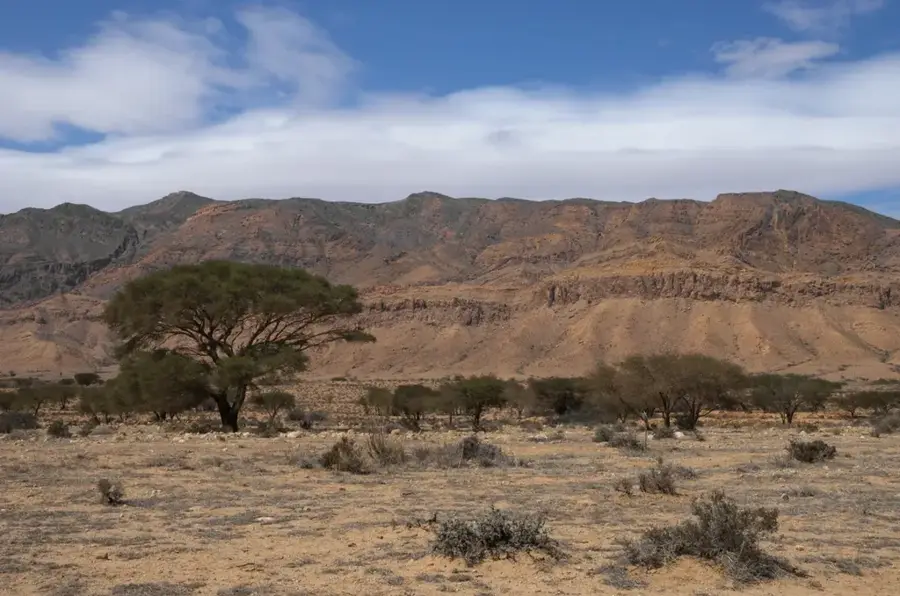
Jebel Bou Hedma is a vital nature reserve in central Tunisia, established as a national park in 1980 and designated a UNESCO Biosphere Reserve in 1977. The park spans a mountain massif and its surrounding steppe lands, serving as a critical transition zone between the Mediterranean and Saharan ecosystems. One of its most distinctive features is the presence of Tunisia's last natural stand of Acacia raddiana, a tree species that once covered vast areas of North Africa. Jebel Bou Hedma is also famous for its successful reintroduction programs for endangered wildlife, including the Scimitar-horned oryx, Addax, and Dama gazelle. Geographically, it is located between the cities of Gafsa and Sidi Bouzid, characterized by a semi-arid climate. The landscape comprises rugged limestone cliffs, expansive plains, and dry riverbeds that flow only after rare rainfall events. The park's scientific value as a global model for the restoration of arid-land ecosystems is widely recognized by conservationists.
Explore on the map
How well do you know Tunisia?
Find cities, landscapes and regions in 10 varied challenges on the interactive map.
Your journey, your memory
A postcard from Jebel Bou Hedma
Turn your own photo into a personal postcard with a local stamp. Free and no sign-up required.
Create a postcard- Location: Tunisia
- Nearby: El Hamma (73 km)
Best time to visit & climate
The most pleasant time to visit is Apr, May, Oct.
| Jan | Feb | Mar | Apr | May | Jun | Jul | Aug | Sep | Oct | Nov | Dec | |
|---|---|---|---|---|---|---|---|---|---|---|---|---|
| Avg °C | 9 | 10 | 14 | 17 | 22 | 26 | 30 | 29 | 25 | 21 | 14 | 10 |
| Rain mm | 19 | 12 | 21 | 20 | 15 | 6 | 2 | 8 | 21 | 18 | 21 | 22 |
📋 Practical info
Geography
Facts
- The area was recognized as a UNESCO Biosphere Reserve in 1977.
- It protects the last 16,000 hectares of Acacia raddiana forest in Tunisia.
- The highest point of the massif stands at approximately 790 meters.
- Over 100 Scimitar-horned oryx have been successfully reintroduced since 1985.
- The total protected area covers roughly 16,488 hectares.
- The average annual temperature in the park is around 19 degrees Celsius.
Explore nearby
Notable places around
Route planner — Car & Motorhome
Where do you start? We build the route here, with stops and country notes along the way.
© OpenStreetMap contributors · OpenRouteService
Sights in the town Jebel Bou Hedma (1)
Sights nearby
Frequently asked questions
What makes Djebel Bou Hedma special?
Are there marked hiking trails?
When is the best time for wildlife viewing?
Is a 4x4 car needed?
Is camping allowed?
Jebel Bou Hedma: where is it located?
Jebel Bou Hedma: when is the best time to visit?
Jebel Bou Hedma: why is it worth visiting?
Nearby cities
More places