Plizio Visual Lab

Teide
Plizio editorial teamData Sources
Mountain
—°11
Teide (Spain)

Weather…

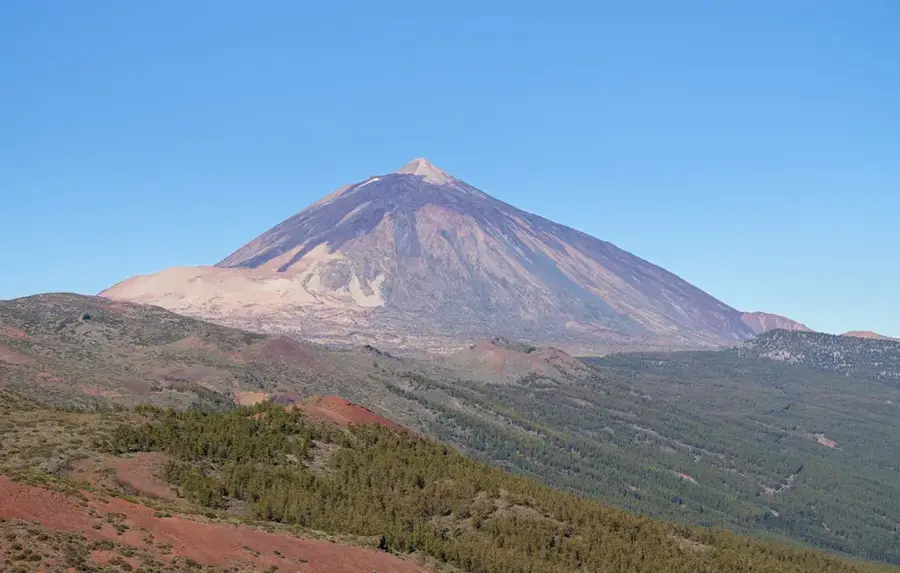
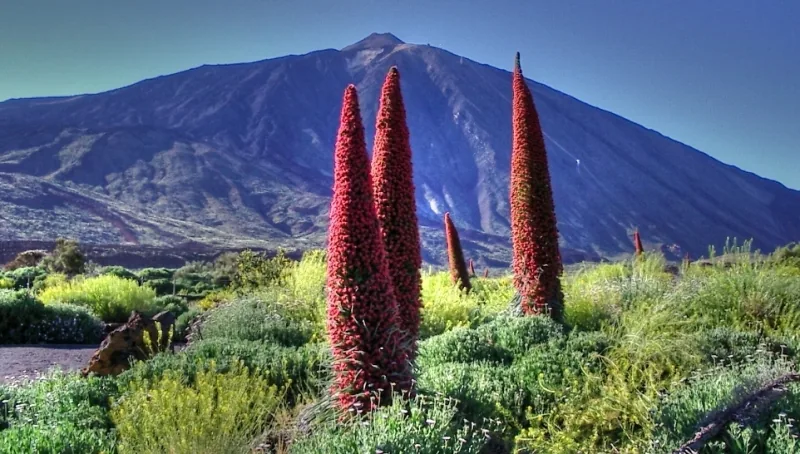
Mount Teide is a massive stratovolcano located on the island of Tenerife in the Canary Islands and is the highest point in Spain, reaching an elevation of 3,715 meters. From its base on the ocean floor, it rises approximately 7,500 meters, making it the third tallest volcanic structure in the world. The volcano is the centerpiece of the Teide National Park, which was established in 1954 and covers about 190 square kilometers of unique volcanic landscape. Its geological significance lies in its complex caldera system and diverse volcanic formations, including lava flows and craters that provide insight into the islands formation. In 2007, the park was declared a UNESCO World Heritage Site due to its exceptional natural beauty and its scientific importance for understanding geological processes. The summit remains dormant, with its last eruption occurring in 1909 from the Chinyero vent, and it continues to be a major site for astronomical observation due to its high altitude and clear skies.

Explore on the map

How well do you know Spain?

Find cities, landscapes and regions in 10 varied challenges on the interactive map.

Start the map quiz 10 challenges

Your journey, your memory

A postcard from Teide

Turn your own photo into a personal postcard with a local stamp. Free and no sign-up required.

Create a postcard

Best time to visit & climate

The most pleasant time to visit is Jun–Aug.

JanFebMarAprMayJunJulAugSepOctNovDec
Avg °C171717181921222323222019
Rain mm25322215733510253539

📋 Practical info

🧭
Getting there
The imposing volcano is typically accessible via well-maintained, winding roads that lead directly through the fascinating national park. Many visitors use the popular cable car to overcome the last strenuous section up to just below the soaring summit.
📅
Best season
A visit is basically possible all year round, with spring and autumn often offering the most pleasant temperatures for hikes in the vast crater. In winter, snowfall and icy winds can certainly occur at this enormous and highly exposed altitude.
⛰️
Terrain & paths
The environment is characterized by a barren, bizarre lava rock landscape that is highly reminiscent of a distant planet and is often very uneven. Official paths are mostly well marked, but off these, the loose scree very quickly becomes unpredictable.
🎒
What to bring
Despite the often hot coasts, warm clothing, a windproof jacket, and absolutely sturdy footwear are mandatory up in the high alpine volcanic zone. Strong sun protection and sufficient drinking water must never be missing from your well-packed backpack.
🅿️
Parking
Parking spaces are generally available at the base station of the cable car as well as at designated viewpoints throughout the national park. Since the crowds are mostly immense in high season, a very early arrival or the use of organized tours is recommended.
⚠️
Safety
The enormous altitude can unexpectedly lead to dizziness or mild shortness of breath in some visitors, so one should always move very slowly. For the ultimate summit ascent, a special, official permit obtained in advance is strictly required in most cases.
⏱️
Time needed
For simply taking the cable car and spending time at the mountain station, half a day is typically sufficient to fully enjoy the expansive views. Extensive hikes through the bizarre rock formations of the crater, however, can easily fill an entire vacation day.

Geography

Coordinates
28.27000, -16.64000

Facts

  • Highest peak in Spain (3,715 m)
  • Third tallest island volcano on Earth
  • UNESCO World Heritage site since 2007
  • Last volcanic eruption occurred in 1909
  • National Park covers 18,990 hectares
  • Major site for global astronomy

Explore nearby

Notable places around
Route planner — Car & Motorhome

Where do you start? We build the route here, with stops and country notes along the way.

Vehicle
Only stops with (optional):
Motorhome dimensions

© OpenStreetMap contributors · OpenRouteService

Sights in the town Teide (11)

Ermita de Nuestra Señora de las Nieves⛪ religious

This high-altitude hermitage is a place of worship located in the volcanic landscape of Las Cañadas.

Roque Cinchado📍 landmark

This iconic, uniquely shaped rock formation stands prominently within the volcanic landscape near Mount Teide.

Roque de la Grieta🌿 nature

This rugged volcanic peak is characterized by striking fissures and cracked rock formations.

Montaña Blanca🌿 nature

Distinguished by its light-colored pumice surface, this volcanic peak flanks the slopes of Mount Teide.

Guajara🌿 nature

As the highest peak of the caldera wall, this mountain has sweeping panoramic views over the volcanic park.

Juan Évora Ethnographic Museum🏛 museum

This ethnographic museum explores the traditional lifestyle and customs of the last shepherds who lived in the high-altitude volcanic park.

Los Azulejos📍 landmark

These striking geological formations are renowned for the distinctive blue and green hues created by iron hydrates in the volcanic rock.

Cueva del Hielo🏺 historical

This high-altitude volcanic cave historically served as a natural repository for ice and snow year-round.

Choza🏺 historical

These simple stone ruins are the remnants of a rudimentary shelter once used by local goatherds in the volcanic basin.

Chozas Viejas🏺 historical

The scattered stone foundations at this site mark the location of old temporary dwellings built by high-mountain shepherds.

Coloradas📍 landmark

This striking geological area is renowned for its vividly colored, mineral-rich volcanic rock formations.

Sights nearby

Frequently asked questions

Is a permit required for the summit?
Yes, a free online permit is required for the final stretch to the summit, booked weeks in advance.
Does the cable car run in all weather?
No, in case of strong winds, operations are suspended for safety reasons.
How cold is it at the summit?
Even in summer, it can be around freezing at the top. Warm clothing is always necessary.
Can you get altitude sickness?
At 3718m, the air is thinner; move slowly and drink plenty of water.
Where is the best place to park?
There are parking lots at the cable car station, but they usually fill up quickly in the mornings.
Teide: where is it located?
Teide is located in Canary Islands, Spain.
Teide: what is there to see?
Highlights include Ermita de Nuestra Señora de las Nieves, Roque Cinchado, Roque de la Grieta.
Teide: when is the best time to visit?
The most pleasant time to visit is Jun, Aug.
Teide: why is it worth visiting?
Mount Teide is a massive stratovolcano located on the island of Tenerife in the Canary Islands and is the highest point in Spain, reaching an elevation of 3,715 meters.
View on map → The Top 50 Attractions → Most beautiful beaches → OpenStreetMap →
Europe
Explore with Plizio Discover more places in Europe
More places in Spain →

Nearby cities

History & landmarks
Nature

More places