Plizio Visual Lab
Pustozersk
ℹ️Practical info — Pustozersk
▾
🌤 Weather — 5 days
📍 Nearby
Sights nearby
💡 Tips
- Pustozersk is an abandoned site; you must arrange transport (boat in summer, snowmobile in winter) from Naryan-Mar.
- There are no facilities or shelters on site; bring your own food, water, and emergency supplies.
- In summer, mosquito repellent is absolutely essential in the Arctic tundra.
- Visit the local history museum in Naryan-Mar first to fully appreciate the empty landscape.
🍽 Food
Try hearty local stews in Naryan-Mar restaurants before heading out.
Frozen raw fish sliced thin, a true Arctic delicacy.
Look for this local Arctic berry in jams or desserts.
🛍 Shopping · 🧘 Quiet spots
Traditional indigenous souvenirs available in Naryan-Mar.
Warm, locally made boots and accessories.
The memorial crosses marking the former town offer a haunting, peaceful atmosphere.
Enjoy the silent, untouched Arctic nature around the lake shores.
Water temperature…
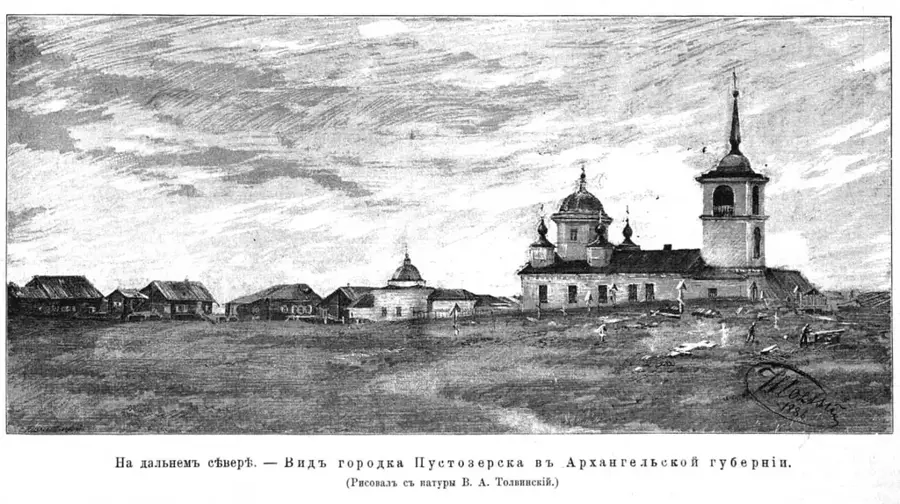
Pustozersk was the first Russian town established north of the Arctic Circle and served as a vital arctic outpost for centuries. Founded in 1499 on the lower reaches of the Pechora River, the settlement functioned as a strategic trading post and military base during the exploration of the Far North and Siberia. The town gained historical notoriety as a place of exile for political and religious dissidents, most notably the Old Believer leader Archpriest Avvakum, who was executed at the stake here in 1682. Despite its early significance, Pustozersk's influence began to wane in the 18th century as trade routes shifted and new cities like Arkhangelsk grew in importance. By 1962, the settlement was officially abandoned, and its last inhabitants departed, leaving behind a ghost town. Today, the site is a designated archaeological reserve and an open-air museum, preserving the history of early Russian Arctic colonization and religious resistance.
Explore on the map
How well do you know Russia?
Find cities, landscapes and regions in 10 varied challenges on the interactive map.
Your journey, your memory
A postcard from Pustozersk
Turn your own photo into a personal postcard with a local stamp. Free and no sign-up required.
Create a postcardBest time to visit & climate
The most pleasant time to visit is Jun–Aug.
| Jan | Feb | Mar | Apr | May | Jun | Jul | Aug | Sep | Oct | Nov | Dec | |
|---|---|---|---|---|---|---|---|---|---|---|---|---|
| Avg °C | -18 | -17 | -11 | -5 | 1 | 9 | 14 | 11 | 6 | -1 | -10 | -14 |
| Rain mm | 35 | 30 | 38 | 43 | 65 | 87 | 75 | 94 | 79 | 66 | 54 | 45 |
Geography
Facts
- Founded in 1499, Pustozersk was the first Russian Arctic town.
- It served as the administrative center for the Pechora district in the 1600s.
- Old Believer leader Avvakum was imprisoned and executed here in 1682.
- The town lost its importance as trade shifted to the port of Arkhangelsk.
- The settlement was formally abandoned in 1962.
- Today, the site is preserved as the Pustozersk Historical and Natural Museum.
Route planner — Car & Motorhome
Where do you start? We build the route here, with stops and country notes along the way.
© OpenStreetMap contributors · OpenRouteService
Frequently asked questions
What was the historical role of Pustozersk?
Can one still travel there today?
When is a visit worthwhile?
What can you see there?
How to plan such a trip?
Pustozersk: where is it located?
Pustozersk: when is the best time to visit?
Pustozersk: why is it worth visiting?

Nearby cities

History & landmarks