Plizio Visual Lab

Santa Catalina Monastery

Plizio editorial teamData Sources
Landmark
—°15
Santa Catalina Monastery (Peru)

Weather…

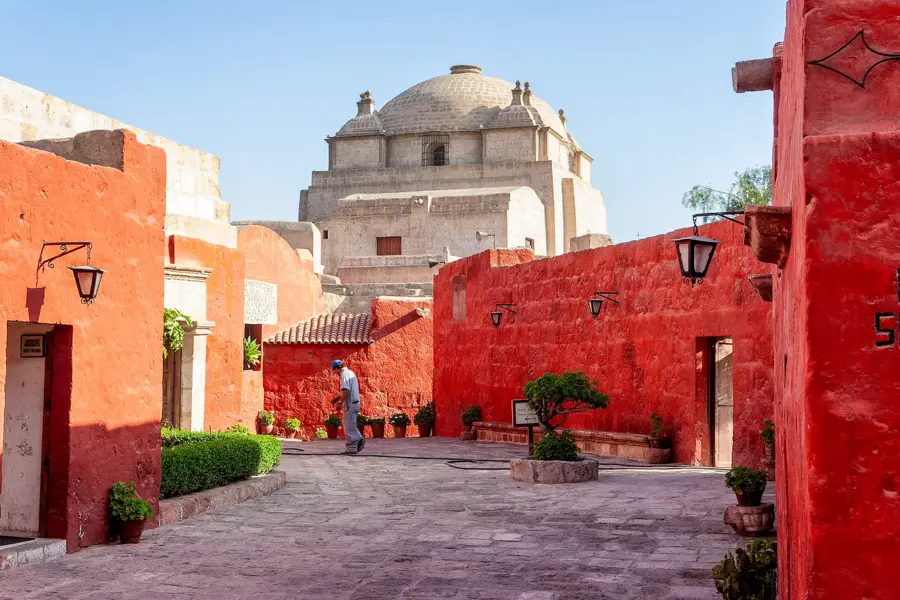
The Santa Catalina Monastery in Arequipa is often described as a 'city within a city,' a vast and lively complex of narrow streets, colorful cloisters, and secret gardens. Founded in 1579, it served for centuries as a secluded retreat for the daughters of wealthy Spanish families. The monastery is famous for its striking walls painted in deep blues and brilliant reds, creating a surreal and photogenic atmosphere. Its architecture is a first-rate example of the 'Arequipeño' style, using white volcanic sillar stone to create elegant arches and sturdy walls designed to withstand earthquakes. Walking through its plazas and cells, which are still furnished with colonial antiques, features a profound sense of peace and a unique glimpse into the spiritual and social life of colonial Peru.

Best time to visit & climate

The most pleasant time to visit is Apr, Oct, Nov.

JanFebMarAprMayJunJulAugSepOctNovDec
Avg °C12121211101091011121212
Rain mm3547256202137416

📋 Practical info

🚪
Visiting
The Santa Catalina Monastery in Arequipa is a colorful, city-like complex open to visitors. You can wander through narrow streets, courtyards, and many rooms.
🕒
Typical hours
Typically open daily from 9 am to 5 pm, with possible restrictions on holidays. Last entry is usually one hour before closing.
📷
Photography
Photography without flash is allowed in most areas. In some chapels, photography may be restricted.
⏱️
Time needed
Allow at least 2 to 3 hours to explore the extensive complex. The many rooms and gardens invite lingering.
Combine with
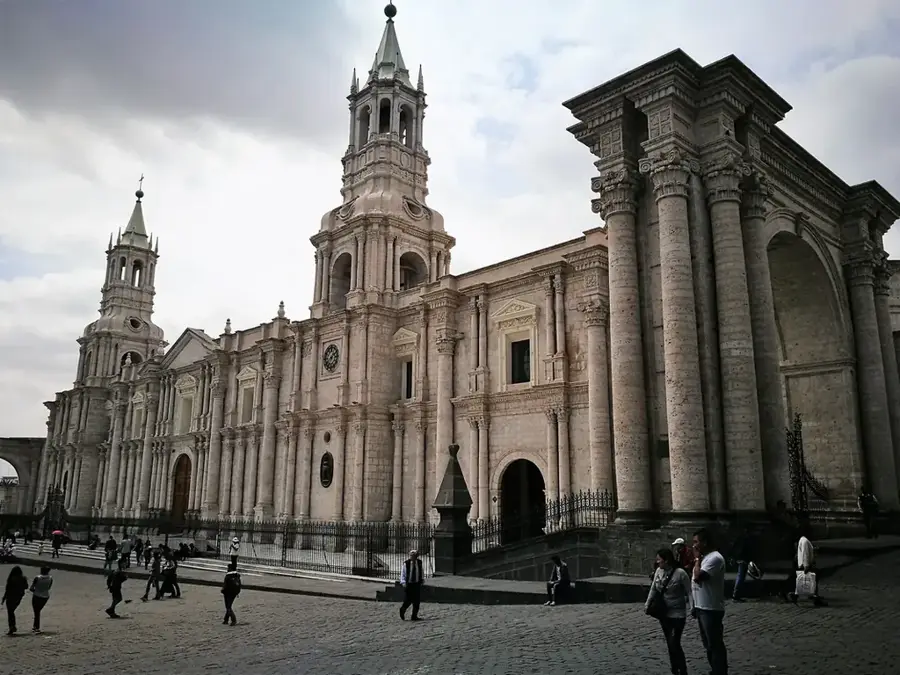
Combine your visit with Arequipa's Plaza de Armas and the Cathedral. The Museo Santuarios Andinos is also nearby.
🧭
Getting there
The monastery is in Arequipa's historic center, a short walk from Plaza de Armas. Taxis and city buses serve it easily.
💡
Insider tip
Visit the monastery early in the morning to avoid crowds. Wear comfortable shoes as there are many cobblestone streets to walk.

Geography

Coordinates
-16.39520, -71.53690

Facts

  • Covers an area of 20,000 square meters in the heart of Arequipa's historic center.
  • Founded on September 10, 1579, by Maria de Guzman, a wealthy widow.
  • For nearly 400 years, it was completely closed to the public until 1970.
  • The monastery had its own streets named after Spanish cities like Seville and Granada.
  • Built predominantly with sillar, the local white volcanic stone.
  • At its peak, it housed over 450 people, including nuns and their servants.
  • Features beautiful fountains and courtyards filled with orange trees and flowers.
  • A small community of nuns still lives in a private wing of the monastery today.

Explore nearby

Notable places around

Route planner — Car & Motorhome

Where do you start? We build the route here, with stops and country notes along the way.

Vehicle
Only stops with (optional):

© OpenStreetMap contributors · OpenRouteService

Sights in the town Santa Catalina Monastery (15)

Santa Catalina Monastery🏛 museum

A historic colonial monastery complex founded in 1579, built almost entirely from white volcanic sillar stone.

🕒 Fr-Mo 9:00-17:00; Tu-Th 8:00-20:00

San Francisco⛪ religious

A prominent basilica and convent complex constructed with thick walls of ashlar stone to withstand earthquakes.

Arequipa Peru Temple⛪ religious

A modern Latter-day Saint temple featuring a striking white exterior and beautifully manicured gardens.

Barrio San Lázaro📍 landmark

A historic neighborhood characterized by narrow, winding streets and traditional houses built from volcanic sillar.

Puente Grau📍 landmark

A prominent bridge spanning the Chili River, constructed with the region's iconic volcanic sillar stone.

Parque Selva Alegre🌳 park

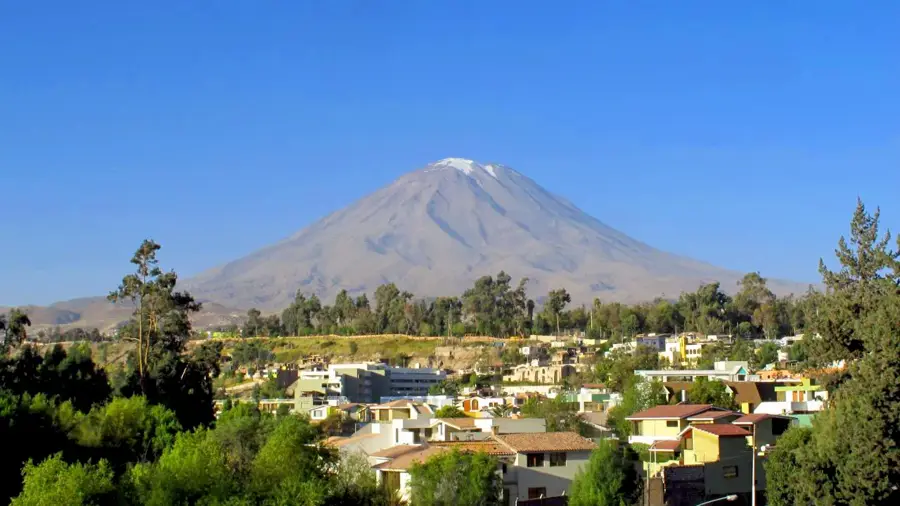
A large urban park offering expansive green spaces, mature trees, and scenic views of the surrounding volcanoes.

Ruta del Sillar🏛 museum

A popular tourist route showcasing the active quarries where Arequipa's famous white volcanic stone is extracted.
🕒 Mo-Su 07:30-17:00

Sol Terracé🏛 museum

A local exhibition and gallery space in Arequipa displaying regional art and cultural crafts.

Plaza de Tomilla🏺 historical

A public neighborhood square featuring a commemorative monument surrounded by local greenery and paved pathways.

Monumento a José Abelardo Quiñones🏺 historical

This memorial statue honors the famed Peruvian military aviator and national hero.

Estatua Miguel Grau🏺 historical

This bronze sculptural tribute is dedicated to the renowned Peruvian naval hero of the War of the Pacific.

Teatro Komensky🎭 culture

A local performing arts venue that hosts a variety of dramatic plays and cultural community events.

Artescénica🎭 culture

This spirited creative hub focuses on contemporary theater performances and provides various artistic workshops.

Centro Cultural Peruano Norteamericano🎭 culture

An expansive cultural institute featuring an art gallery, a library, and bilingual educational programs.

Congregacion Mujeres con Esperanza⛪ religious

A local place of worship providing spiritual support and community fellowship programs primarily focused on women.

Sights nearby

Frequently asked questions

Is the Santa Catalina Monastery a city within a city?
Yes, the monastery is like a small city with its own streets and alleys.
How much time is needed for the visit?
Plan for 2 to 3 hours to explore the complex at your leisure.
Is photography allowed there?
Yes, photography is permitted and very popular due to the colors.
Is there a café there?
Yes, there is an appealing café inside the monastery.
Is it easily walkable for seniors?
The paths are partly uneven, but there are many seating areas.
Santa Catalina Monastery: where is it located?
Santa Catalina Monastery is located in Peru.
Santa Catalina Monastery: what is there to see?
Highlights include Santa Catalina Monastery, San Francisco, Arequipa Peru Temple.
Santa Catalina Monastery: when is the best time to visit?
The most pleasant time to visit is Apr, Oct, Nov.
Santa Catalina Monastery: why is it worth visiting?
The Santa Catalina Monastery in Arequipa is often described as a 'city within a city,' a vast and lively complex of narrow streets, colorful cloisters, and secret gardens.
View on map → The Top 50 Attractions → OpenStreetMap →
South America
Explore with Plizio Discover more places in South America
More places in Peru →

Nearby cities

History & landmarks

Nature

More places