Plizio Visual Lab
Anti-Atlas
Weather…
Water temperature…
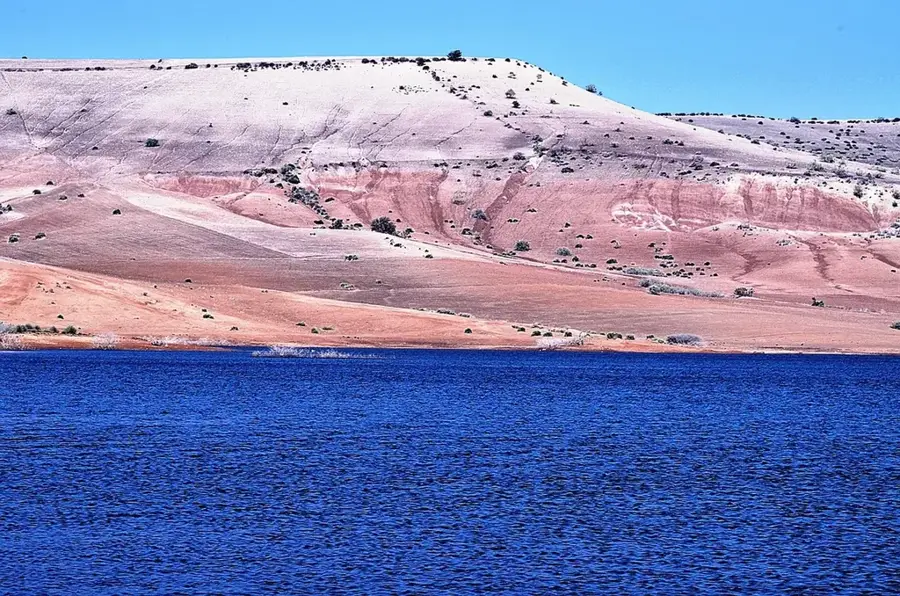
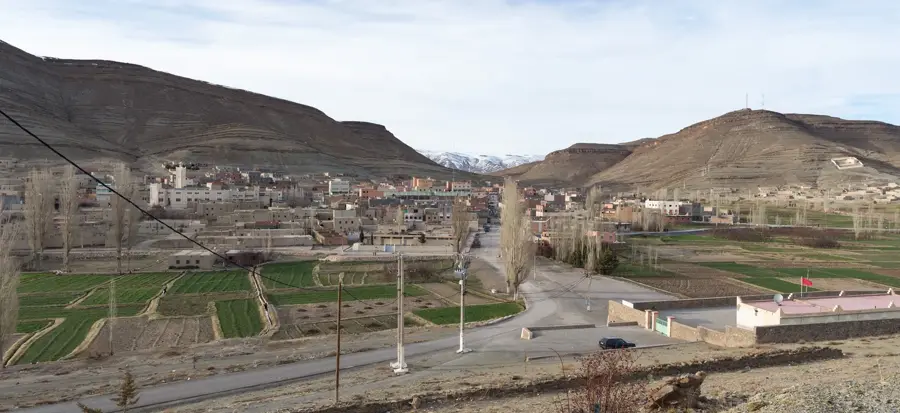
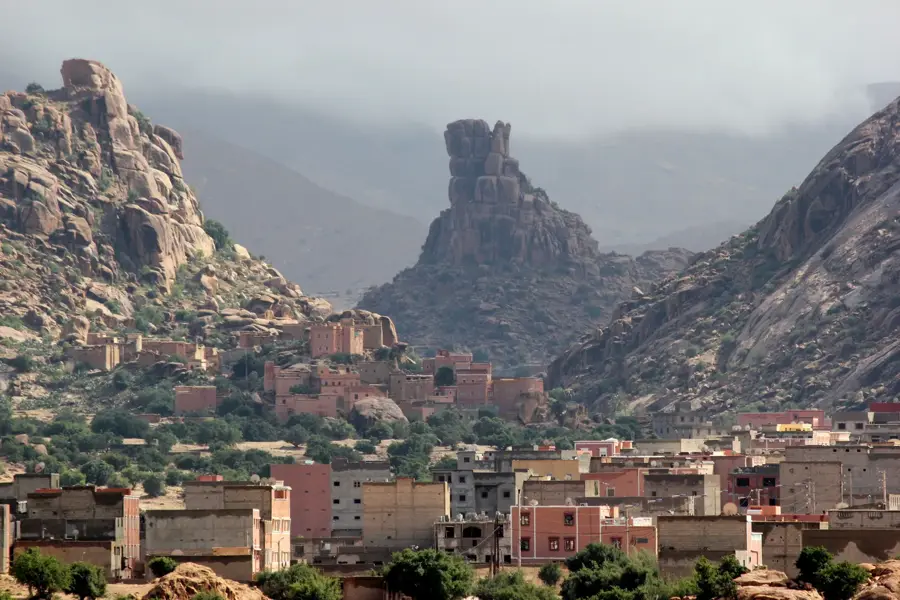
The Anti-Atlas is the southernmost of the three major Moroccan Atlas ranges, stretching for 500 kilometers from the Atlantic coast to the Tafilalet oases. Unlike the High Atlas, this range is geologically much older, consisting primarily of Precambrian metamorphic and igneous rocks. The landscape is characterized by stark, almost lunar mountain vistas, deep rocky gorges, and lush oases located in the valley floors. Its highest peak is Jbel Sirwa, an extinct volcano reaching 3,304 meters, which serves as a transitional massif toward the High Atlas. The region is famous for saffron cultivation in Taliouine and the traditional 'agadirs' (fortified communal granaries) of the Berber tribes. Historically, the Anti-Atlas was a bastion of resistance against French colonial rule, only fully pacified in the 1930s. The climate is semi-arid to arid, with the southern slopes merging directly into the rocky hammada of the Sahara Desert. The rugged hillsides are home to the endemic Argan tree, which remains vital to the local Berber economy.
Explore on the map
How well do you know Morocco?
Find cities, landscapes and regions in 10 varied challenges on the interactive map.
Your journey, your memory
A postcard from Anti-Atlas
Turn your own photo into a personal postcard with a local stamp. Free and no sign-up required.
Create a postcard- Location: Morocco
- Nearby: Tafraoute (52 km)
Best time to visit & climate
The most pleasant time to visit is Apr, May, Oct.
| Jan | Feb | Mar | Apr | May | Jun | Jul | Aug | Sep | Oct | Nov | Dec | |
|---|---|---|---|---|---|---|---|---|---|---|---|---|
| Avg °C | 10 | 12 | 15 | 18 | 21 | 26 | 31 | 30 | 25 | 20 | 15 | 11 |
| Rain mm | 8 | 16 | 15 | 7 | 5 | 2 | 3 | 4 | 12 | 16 | 25 | 16 |
📋 Practical info
Geography
Facts
- The Anti-Atlas range stretches for approximately 500 kilometers.
- Jbel Sirwa is the highest peak in the range at 3,304 meters.
- The range constitutes some of the oldest geological formations in Africa.
- Taliouine in the Anti-Atlas is the hub of Moroccan saffron production.
- Annual rainfall in many parts of the range is less than 200 mm.
- The Argan tree grows almost exclusively in this region and the Souss Valley.
Explore nearby
Notable places around
Route planner — Car & Motorhome
Where do you start? We build the route here, with stops and country notes along the way.
© OpenStreetMap contributors · OpenRouteService
Sights in the town Anti-Atlas (1)
Sights nearby
Frequently asked questions
What makes the Anti-Atlas special?
Is a 4x4 vehicle necessary?
Are there water sources?
What is the best time to visit?
Is camping allowed?
Anti-Atlas: where is it located?
Anti-Atlas: when is the best time to visit?
Anti-Atlas: why is it worth visiting?
Nearby cities
Nature
More places