Plizio Visual Lab
Bayankhongor
ℹ️Practical info — Bayankhongor
▾
🌤 Weather — 5 days
📍 Nearby
Sights nearby
💡 Tips
- Visit the local natural history museum to see replicas of dinosaur fossils found in the region.
- Plan a trip to the Shargaljuut hot springs, located about 50 km away.
- The city is situated on the Tuin River; the riverbanks are pleasantly cool in summer.
- Be prepared for extreme temperature differences between day and night.
- Use the city as a starting point for travels into the 'Great Gobi B' nature reserves.
🍽 Food
Meat cooked with hot stones, often offered in larger restaurants along the main road.
Buy this in the morning directly from vendors at the market entrance.
A hearty meat soup with noodles, good for cold evenings, found in local cafes.
🛍 Shopping · 🧘 Quiet spots
Known for high-quality yak wool and cashmere products.
Look for handmade saddles and bridles in the small shops on the outskirts of town.
A peaceful spot for a walk, especially south of the bridge.
Outside of events, a large open area for quiet exercise.
Water temperature…
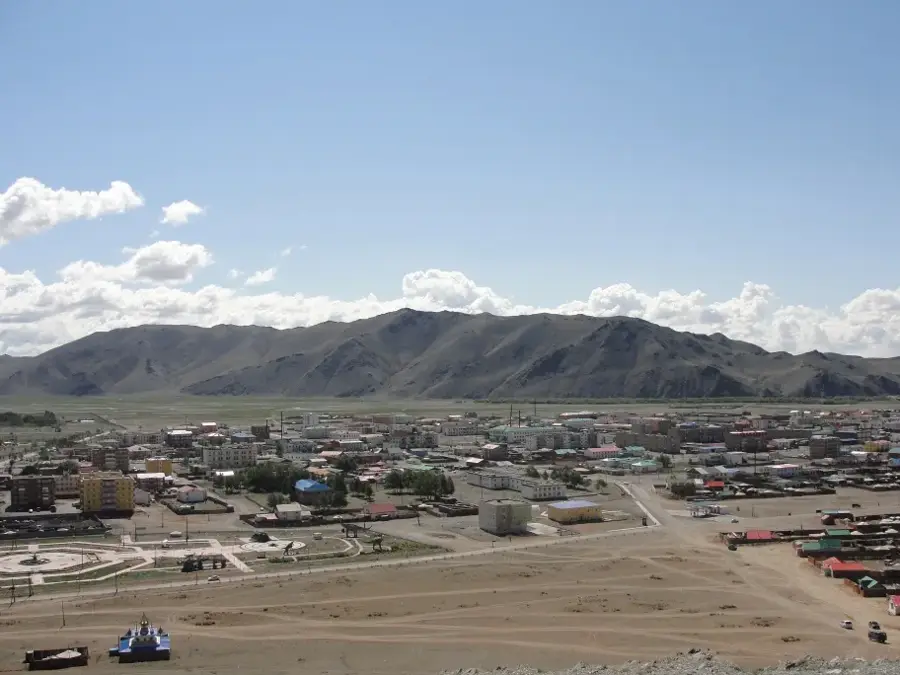
Bayankhongor, meaning rich Khongor, sits at 1,859 metres above sea level along the Tüin River and has been the capital of the namesake province since 1942, with around 27,000 inhabitants. The town lies 630 kilometres west of Ulaanbaatar and forms an ecological boundary between the snow-capped peaks of the Khangai Mountains (Otgontenger, 4,008 m) to the north and the Gobi Desert to the south. The province preserves the famous cave paintings of Tsagaan Agui (white cave), dated between 33,000 and 47,000 years old and among the oldest in the world. About 100 kilometres south lies the Shargaljuut hot-spring area, with more than 100 springs reaching 92 degrees, the country's foremost spa region. The surrounding area is rich in dinosaur fossils, especially Tarbosaurus bataar. The local economy rests on traditional livestock herding and gold panning along the rivers, which provides income but also raises significant environmental concerns.
Explore on the map
How well do you know Mongolia?
Find cities, landscapes and regions in 10 varied challenges on the interactive map.
Your journey, your memory
A postcard from Bayankhongor
Turn your own photo into a personal postcard with a local stamp. Free and no sign-up required.
Create a postcardBest time to visit & climate
The most pleasant time to visit is Jun–Aug.
| Jan | Feb | Mar | Apr | May | Jun | Jul | Aug | Sep | Oct | Nov | Dec | |
|---|---|---|---|---|---|---|---|---|---|---|---|---|
| Avg °C | -17 | -13 | -4 | 5 | 11 | 17 | 20 | 17 | 10 | 1 | -8 | -15 |
| Rain mm | 2 | 3 | 4 | 6 | 13 | 35 | 42 | 38 | 16 | 4 | 3 | 3 |
Geography
Facts
- Extreme scenic diversity.
- Known for dinosaur discoveries.
- Hot springs found in the province.
- Located at 1,859 meters above sea level.
Route planner — Car & Motorhome
Where do you start? We build the route here, with stops and country notes along the way.
© OpenStreetMap contributors · OpenRouteService
Frequently asked questions
What does Bajanchongor offer?
Is there nature nearby?
How is the atmosphere?
Are supplies available?
What means of transport?
Bayankhongor: where is it located?
Bayankhongor: when is the best time to visit?
Bayankhongor: why is it worth visiting?