Plizio Visual Lab

Beit She'arim

Plizio editorial teamData Sources
ruin
—°13
Beit She'arim (Israel)

Weather…

Beit She'arim is an ancient city and necropolis in Lower Galilee that reached its zenith between the 2nd and 4th centuries CE. Following the destruction of Jerusalem and the suppression of Jewish revolts, it became the seat of the Sanhedrin under the leadership of Rabbi Yehuda HaNasi, who was buried here around 217 CE. The site is world-renowned for its vast underground cemetery, consisting of more than 30 burial caves intricately carved into the soft limestone hillside. These catacombs contain hundreds of stone sarcophagi adorned with rich decorations, Jewish symbols like the menorah, and inscriptions in Greek, Aramaic, and Hebrew. The inscriptions reveal that Jews from throughout the ancient diaspora, including Syria, Mesopotamia, and Southern Arabia, sought to be buried here. In 2015, the necropolis was designated a UNESCO World Heritage site, recognized as a unique testimony to the revival of Jewish culture and tradition in the Roman period.

Best time to visit & climate

The most pleasant time to visit is May, Jun, Oct.

JanFebMarAprMayJunJulAugSepOctNovDec
Avg °C131315182225272726241915
Rain mm118884723711121857104

📋 Practical info

🚪
Visiting
The archaeological site can be explored on foot, allowing visitors to walk among the ancient ruins and enter the remarkable rock-cut catacombs. Most of the famous necropolis is accessible to the public during regular operation.
🕒
Typical hours
As a managed national park, the site typically operates during standard daytime hours, opening early in the morning and closing before sunset. It is advisable to check for reduced hours on Fridays, Saturdays, and major Jewish holidays.
📷
Photography
Photography is generally permitted throughout the open-air ruins and inside most of the accessible catacombs. Bringing a camera with good low-light capabilities is highly recommended for capturing the intricate carvings in the underground tombs.
⏱️
Time needed
A comprehensive visit to explore the vast necropolis, the main settlement ruins, and the visitor center usually requires around two to three hours. Visitors with a deep interest in ancient history might spend even longer examining the diverse burial caves.
Combine with
This ancient town can easily be combined with a trip to the nearby Jezreel Valley attractions or Mount Carmel. Many travelers also include the historical sites of Nazareth, which is just a short drive away in the northern region.
🧭
Getting there
The site is easily reachable by car with dedicated parking available for visitors at the entrance. Public transportation options are typically limited to buses traveling to the nearby modern town, which may require an additional walk or taxi ride.
💡
Insider tip
Because the subterranean spaces remain remarkably cool even during the peak heat of the Israeli summer, it is highly recommended to bring a light jacket or sweater. Wearing sturdy, non-slip footwear is also crucial for navigating the occasionally uneven and damp rock floors.

Geography

Coordinates
32.70420, 35.12860

Facts

  • Designated a UNESCO World Heritage site in 2015
  • Burial place of Rabbi Yehuda HaNasi, compiler of the Mishnah
  • Features over 30 burial caves with hundreds of ornate sarcophagi
  • Served as the seat of the Sanhedrin in the 2nd century CE
  • Burial inscriptions found in Greek, Aramaic, and Hebrew
  • A central pilgrimage and burial site for the ancient Jewish diaspora

Explore nearby

Notable places around
Route planner — Car & Motorhome

Where do you start? We build the route here, with stops and country notes along the way.

Vehicle
Only stops with (optional):

© OpenStreetMap contributors · OpenRouteService

Sights in the town Beit She'arim (13)

Wilfrid Museum🏛 museum

This art museum in Kibbutz HaZore'a houses a significant collection of Asian art and archaeology.

Shimron🏺 historical

An ancient settlement mound on the edge of the Jezreel Valley, mentioned as far back as the Bible.

Tel Qashish🏺 historical

This archaeological site is strategically located on the banks of the Kishon River.

Tel Yokneam🏺 historical

A historical tel featuring ruins that range from the Bronze Age to the Crusader period.

Beit Shearim📍 landmark

This UNESCO World Heritage site is famous for its extensive ancient Jewish catacombs and stone sarcophagi.

Elro'i Spring📍 landmark

A shallow natural spring by the Kishon stream, with pools suitable for wading and relaxation.

Rakefet Cave🌿 nature

A prehistoric cave in Mount Carmel where significant burial remains of the Natufian culture were found.

Muhraqa Carmelite Monastry⛪ religious

This Carmelite monastery marks the traditional site where the prophet Elijah challenged the prophets of Baal.

"Ha'emek" train station📍 landmark

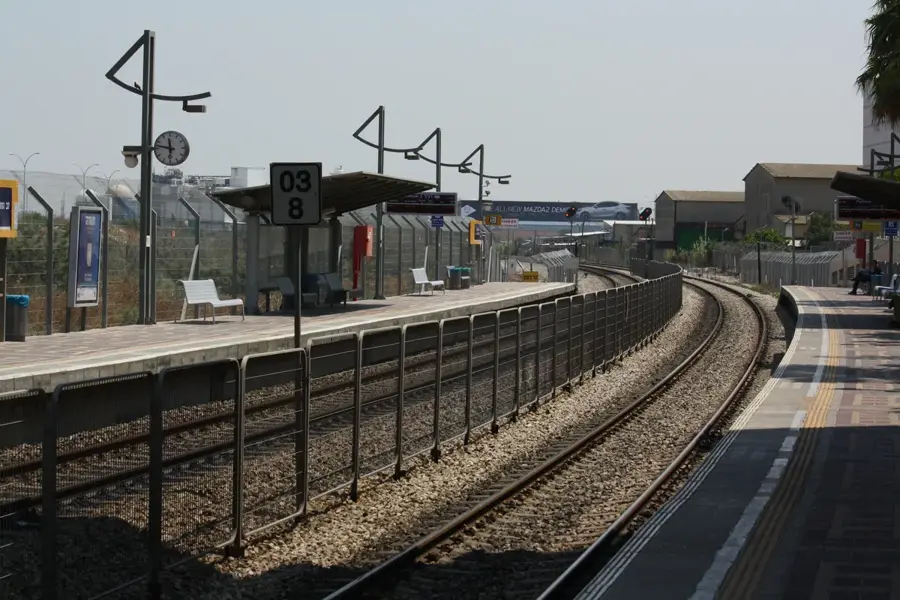
A restored station of the historic Hejaz Railway, which now houses a museum dedicated to railway history.

Mish'ol Hill🌿 nature

A peak in Lower Galilee that has wide panoramic views over the surrounding valleys.

Theater🎭 culture

The excavated remains of a semicircular Roman theater once used for public performances.

Conservatorium🎭 culture

A regional center for musical education and cultural events in the Jezreel district.

Nahalal Wizo Amphitheatre🎭 culture

An open-air amphitheater located within the historic circular moshav of Nahalal.

Sights nearby

Frequently asked questions

What makes Beit She'arim special?
It houses a significant Jewish necropolis from the time of the Talmud.
Are the burial caves accessible?
Yes, many of the elaborately decorated burial caves can be visited.
Do you need a guided tour?
You can easily explore the site on your own.
Is the park family-friendly?
Yes, visiting the caves is an interesting history experience.
How long does a visit take?
Expect about 1.5 to 2 hours.
Beit She'arim: where is it located?
Beit She'arim is located in Israel.
Beit She'arim: what is there to see?
Highlights include Wilfrid Museum, Shimron, Tel Qashish.
Beit She'arim: when is the best time to visit?
The most pleasant time to visit is May, Jun, Oct.
Beit She'arim: why is it worth visiting?

Beit She'arim is an ancient city and necropolis in Lower Galilee that reached its zenith between the 2nd and 4th centuries CE.
View on map → The Top 50 Attractions → OpenStreetMap →
Asia
Explore with Plizio Discover more places in Asia
More places in Israel →

Nearby cities

Nature

More places