Plizio Visual Lab
Glaumbær Farm Museum
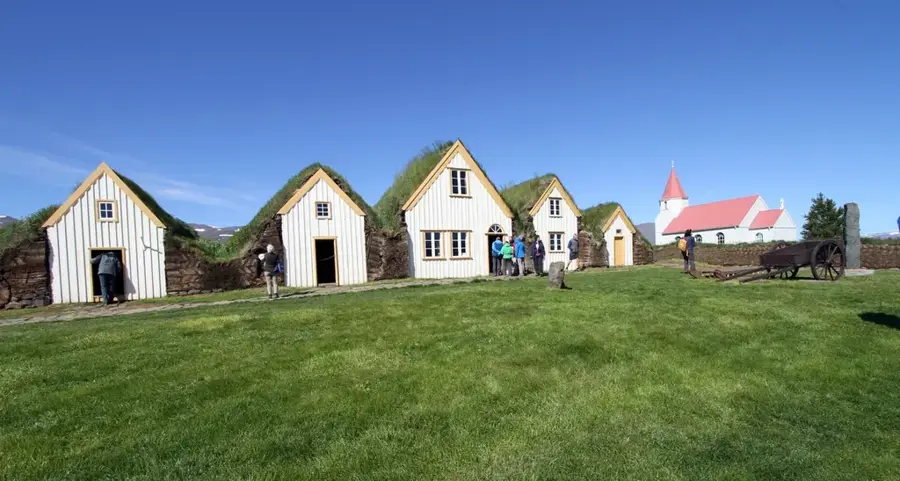
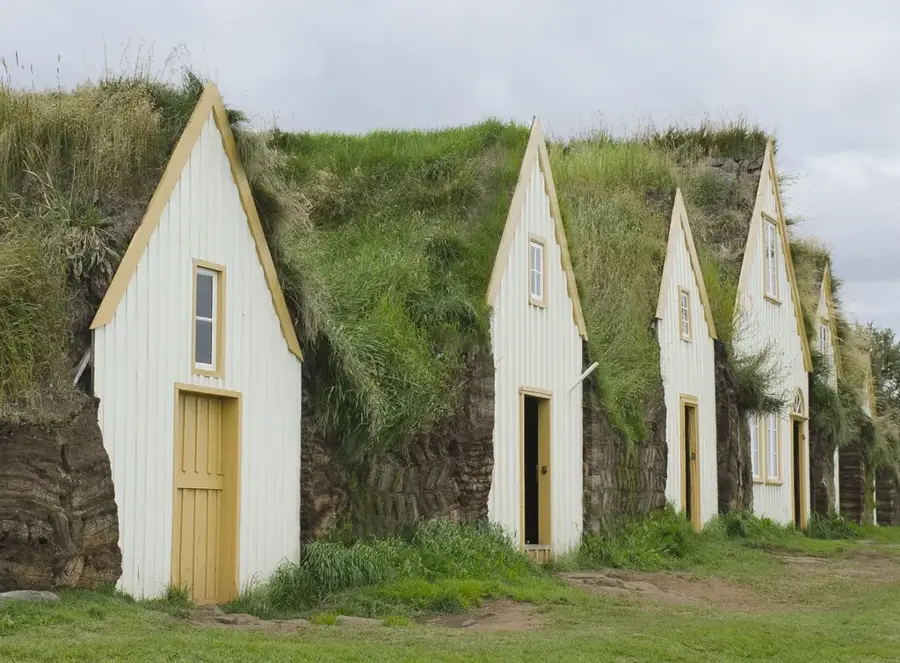
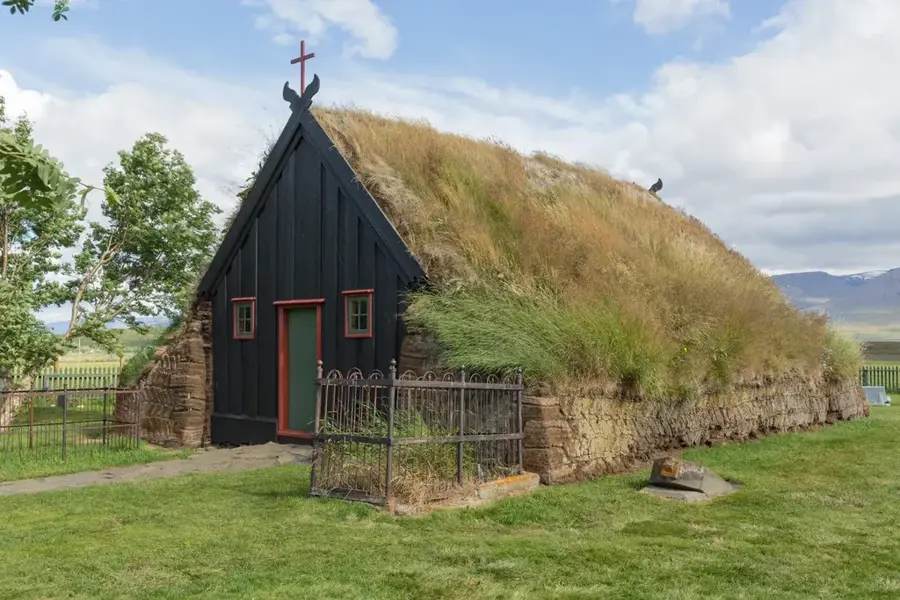
The Glaumbær Farm Museum, located in the Skagafjörður district of North Iceland, is one of the best-preserved examples of traditional turf and peat architecture in the country. While the site has been inhabited since the settlement era in the 10th century, the current farm buildings mostly date from the 18th and 19th centuries. The complex consists of 13 interconnected buildings, each serving a specific purpose, such as living quarters, food storage, or workshops. The walls are constructed from carefully layered blocks of turf, while the roofs are covered with a thick layer of soil and grass, providing exceptional insulation against the harsh subarctic climate. Glaumbær is also historically significant due to its association with Snorri Þorfinnsson, the first European born in North America, whose family settled here upon their return from Vinland. Today, the museum is managed by the National Museum of Iceland and provides visitors a profound insight into rural life over the past several hundred years. The authentic interiors feature original furniture and tools, documenting the daily routines and cultural heritage of the Icelandic peasantry. The labyrinthine structure of the rooms was a practical solution for retaining heat during the freezing winter months.
Explore on the map
How well do you know Iceland?
Find cities, landscapes and regions in 10 varied challenges on the interactive map.
Your journey, your memory
A postcard from Glaumbær Farm Museum
Turn your own photo into a personal postcard with a local stamp. Free and no sign-up required.
Create a postcard- Location: Iceland
- Nearby: Sauðárkrókur (16 km)
Best time to visit & climate
The most pleasant time to visit is Jun–Aug.
| Jan | Feb | Mar | Apr | May | Jun | Jul | Aug | Sep | Oct | Nov | Dec | |
|---|---|---|---|---|---|---|---|---|---|---|---|---|
| Avg °C | -6 | -6 | -5 | -2 | 1 | 6 | 8 | 7 | 4 | -1 | -4 | -6 |
| Rain mm | 96 | 85 | 88 | 81 | 74 | 62 | 87 | 92 | 114 | 110 | 104 | 103 |
📋 Practical info
Geography
Facts
- The complex consists of 13 separate but interconnected buildings.
- The site has been continuously inhabited since the 10th century.
- Most of the current turf structures date from the 18th and 19th centuries.
- Snorri Þorfinnsson, the first European born in America, lived here.
- The site was officially converted into a museum in 1947.
- The construction materials are turf, stone, and gathered driftwood.
Explore nearby
Notable places around
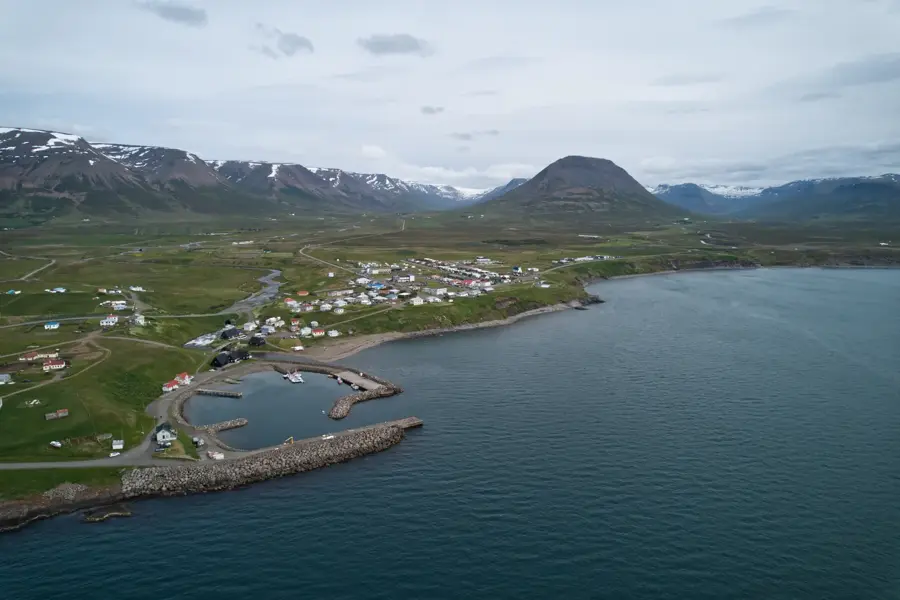

Route planner — Car & Motorhome
Where do you start? We build the route here, with stops and country notes along the way.
© OpenStreetMap contributors · OpenRouteService
Sights nearby
Frequently asked questions
When is the museum open?
How much is the entrance fee?
Is there a cafe on-site?
Are you allowed inside the turf houses?
How long does a visit take?
Glaumbær Farm Museum: where is it located?
Glaumbær Farm Museum: when is the best time to visit?
Glaumbær Farm Museum: why is it worth visiting?

Nearby cities




History & landmarks
Nature
More places