Plizio Visual Lab
Marae Ta'ata (Punaauia)
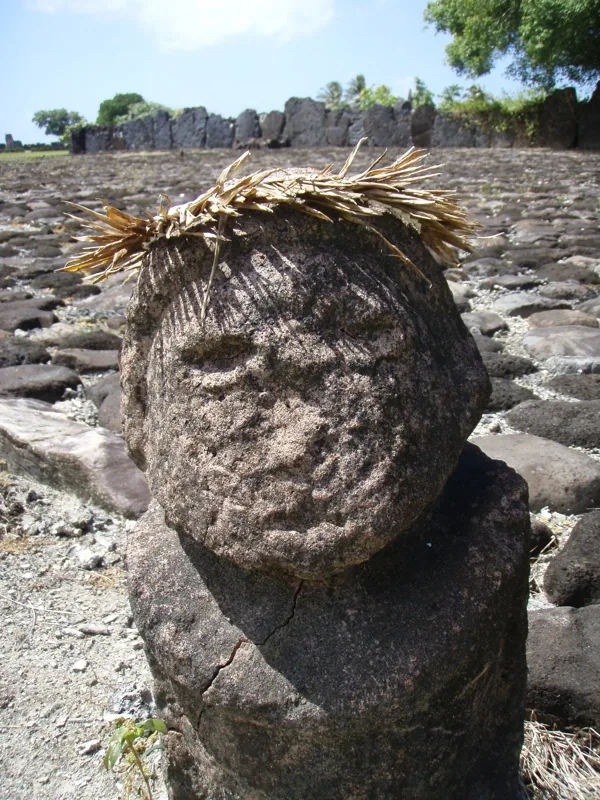
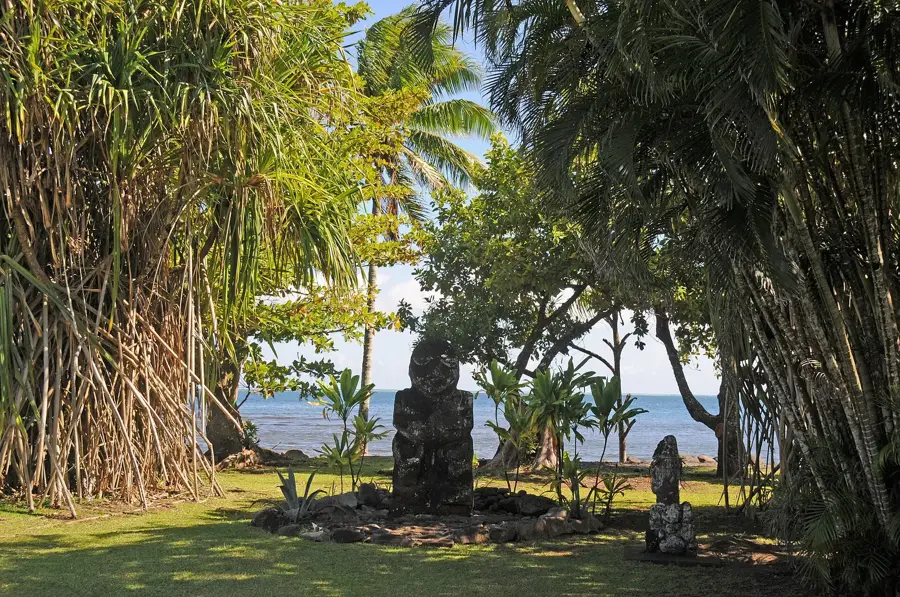
Marae Ta'ata stands as one of the most significant archaeological landmarks on Tahiti's west coast, offering profound insight into the social hierarchy of ancient Polynesian society. The site is uniquely characterized by its three large, adjoining stone terraces, constructed from meticulously placed basalt blocks and coral limestone. During the 18th century, it served as a paramount religious and political hub for the high chiefs (Ari'i) of Punaauia, acting as the primary venue for royal investiture ceremonies. The presence of three distinct courtyards suggests a sophisticated division of ritual space among different lineages. Following extensive restoration in 1973 led by archaeologist José Garanger, the marae regained its structural integrity, preserving the original orientation of its ceremonial stones. Today, it remains a quiet place of cultural reflection, representing the spiritual heart of the island before the introduction of Western religious practices.
Explore on the map
How well do you know French Polynesia?
Find cities, landscapes and regions in 10 varied challenges on the interactive map.
Your journey, your memory
A postcard from Marae Ta'ata (Punaauia)
Turn your own photo into a personal postcard with a local stamp. Free and no sign-up required.
Create a postcard- Location: French Polynesia
- Highlights: Air Evasion · Musée de Tahiti et des Îles · Église de J-C des St des derniers jours
- Nearby: Paea (6 km)
Best time to visit & climate
The most pleasant time to visit is Jul–Sep.
| Jan | Feb | Mar | Apr | May | Jun | Jul | Aug | Sep | Oct | Nov | Dec | |
|---|---|---|---|---|---|---|---|---|---|---|---|---|
| Avg °C | 27 | 27 | 27 | 27 | 27 | 26 | 25 | 25 | 25 | 26 | 26 | 27 |
| Rain mm | 190 | 175 | 134 | 116 | 90 | 69 | 52 | 47 | 40 | 84 | 113 | 221 |
📋 Practical info
Geography
Facts
- The complex features three separate stone platforms or 'Ahu'.
- Extensive restoration work was carried out on the site in 1973.
- It served as a high-ranking assembly point for Teva clan leaders.
- The marae is located within the modern district of Punaauia.
- Construction materials include both basalt rock and coral blocks.
- Crucial political alliances between Tahitian clans were finalized here.
Explore nearby
Notable places around
Route planner — Car & Motorhome
Where do you start? We build the route here, with stops and country notes along the way.
© OpenStreetMap contributors · OpenRouteService
Sights in the town Marae Ta'ata (Punaauia) (10)
Musée de Tahiti et des Îles🏛 museum
Ethnographic museum in Puna'auia, Tahiti. Showcases Polynesian art and culture.
Église de J-C des St des derniers jours
Church of Jesus Christ of Latter-day Saints (Mormon) in Punaauia.
Chappelle Maria Goretti
A small chapel in Punaauia, dedicated to Saint Maria Goretti.
Temple adventiste
Seventh-day Adventist church in the community of Punaauia on Tahiti.
Point de vue Punavai
A viewpoint in Punaauia overlooking the coast and the sea.
Temaruata
A lookout point on Tahiti offering a wide view of the landscape.
Église Saint-Étienne
A church in French Polynesia, dedicated to Saint Stephen.
Plage Publique Vaiava
A public beach in Punaauia, Tahiti, for swimming and relaxing.
Sentier aquatique de Vaiava
A water trail along the Vaiava coast in Punaauia.
Sights nearby
Frequently asked questions
Is Marae Ta'ata significant?
How is the access?
Are there guides there?
Can I park there?
Is the place suitable for families?
Marae Ta'ata (Punaauia): where is it located?
Marae Ta'ata (Punaauia): what is there to see?
Marae Ta'ata (Punaauia): when is the best time to visit?
Marae Ta'ata (Punaauia): why is it worth visiting?
Nearby cities




More places