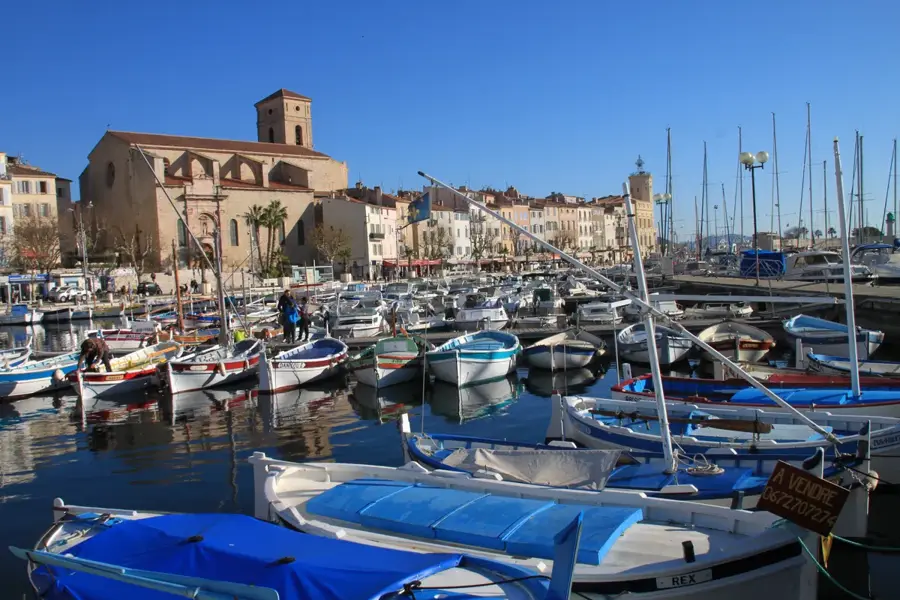
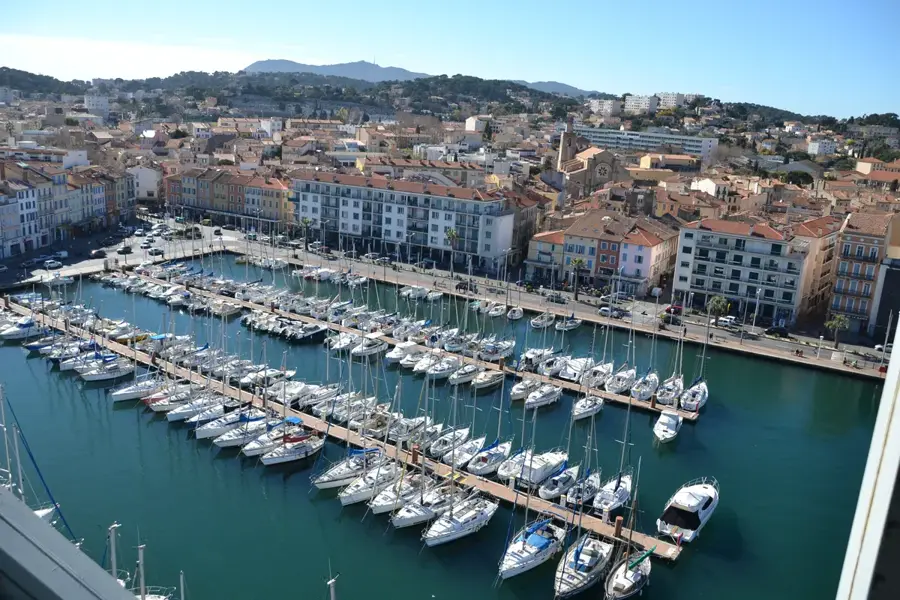
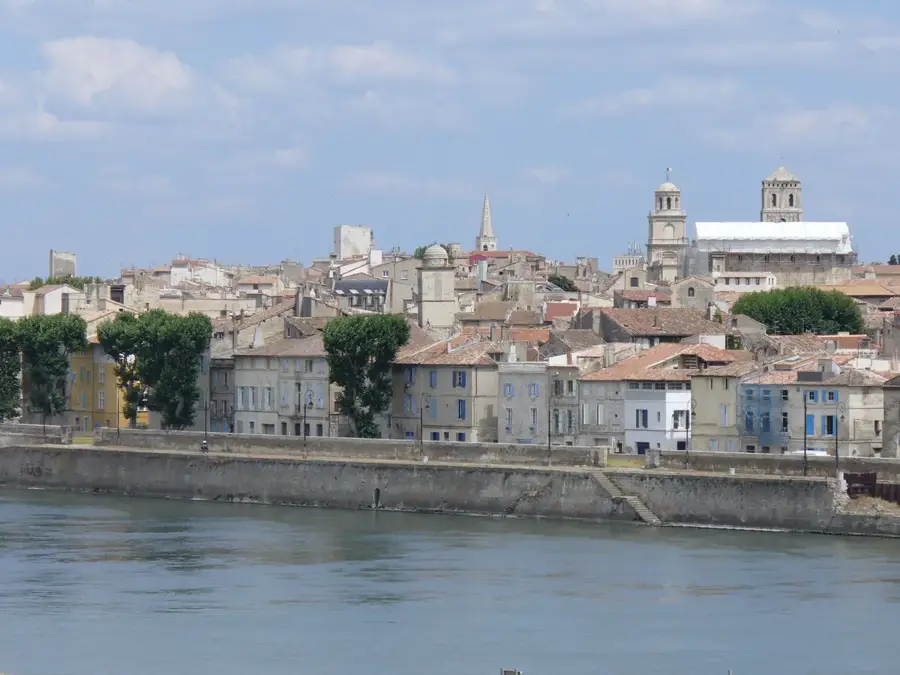
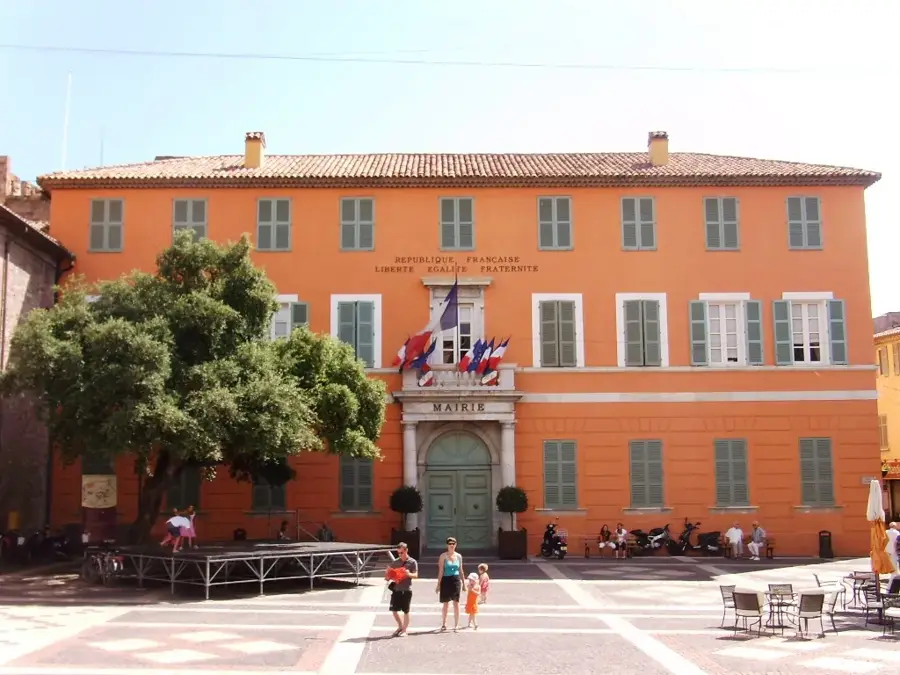
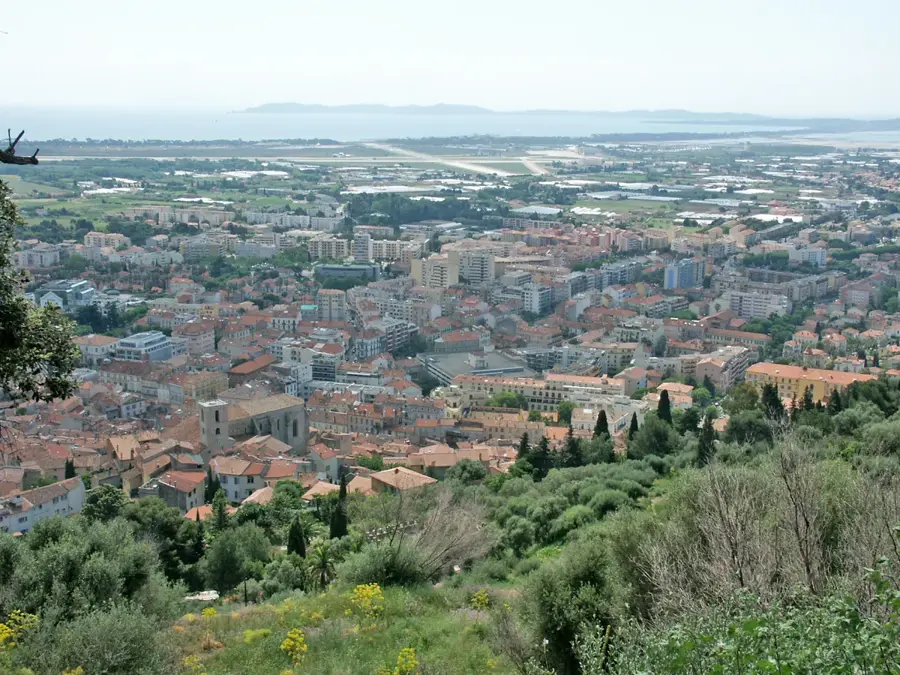
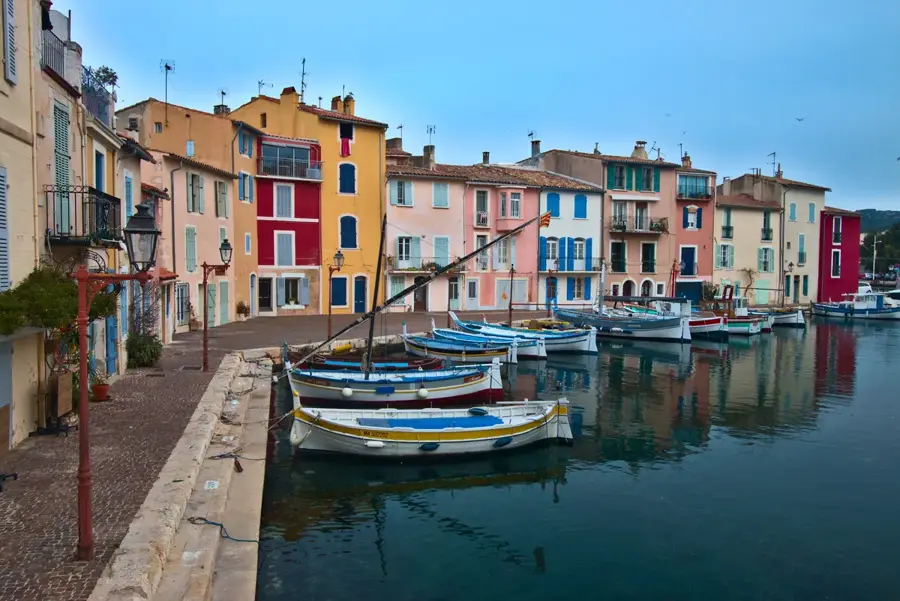
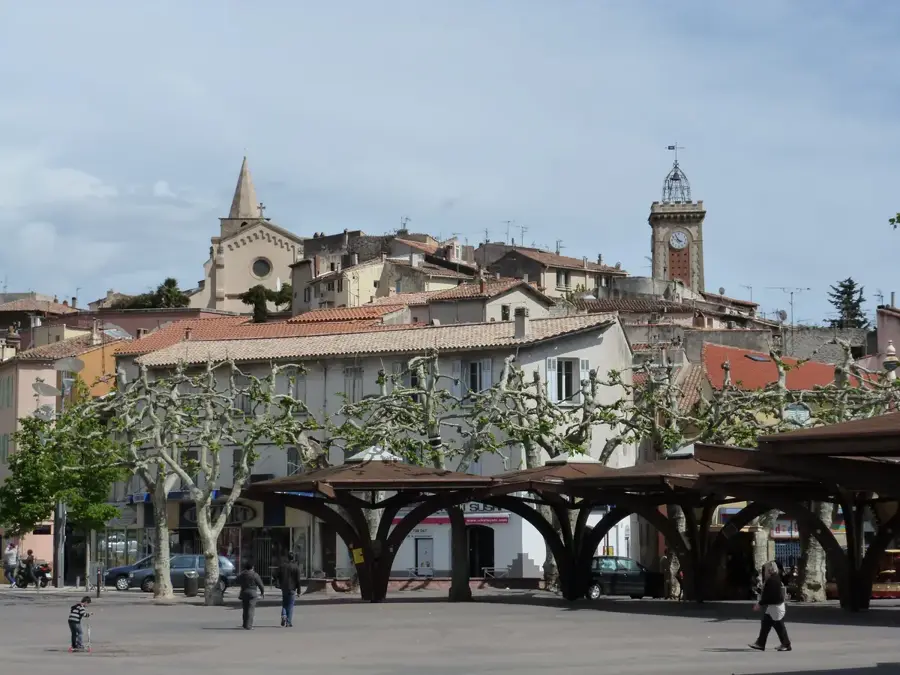
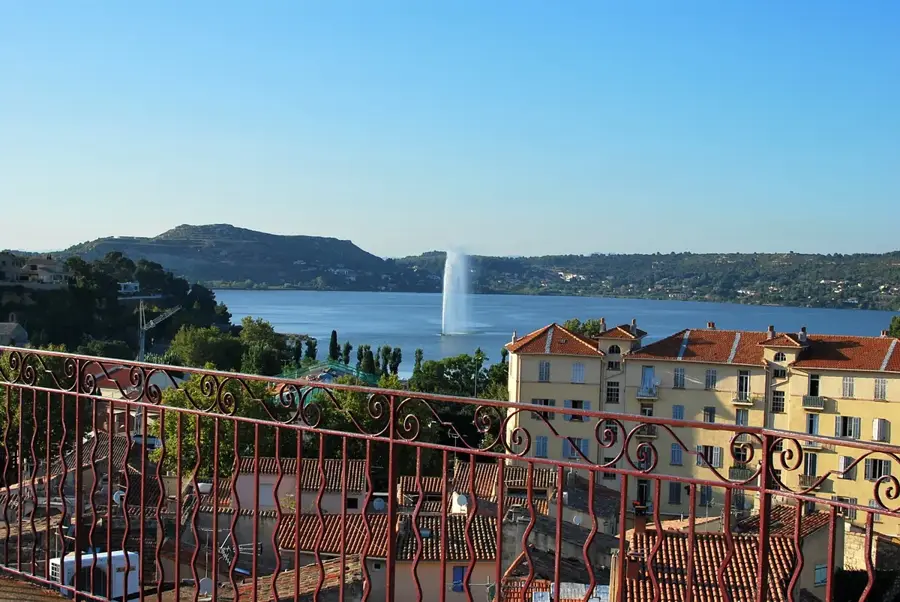
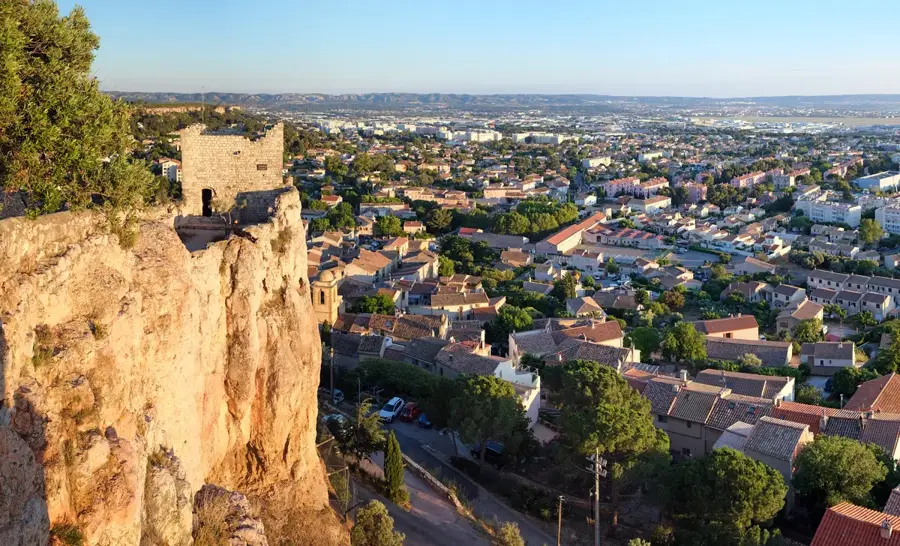
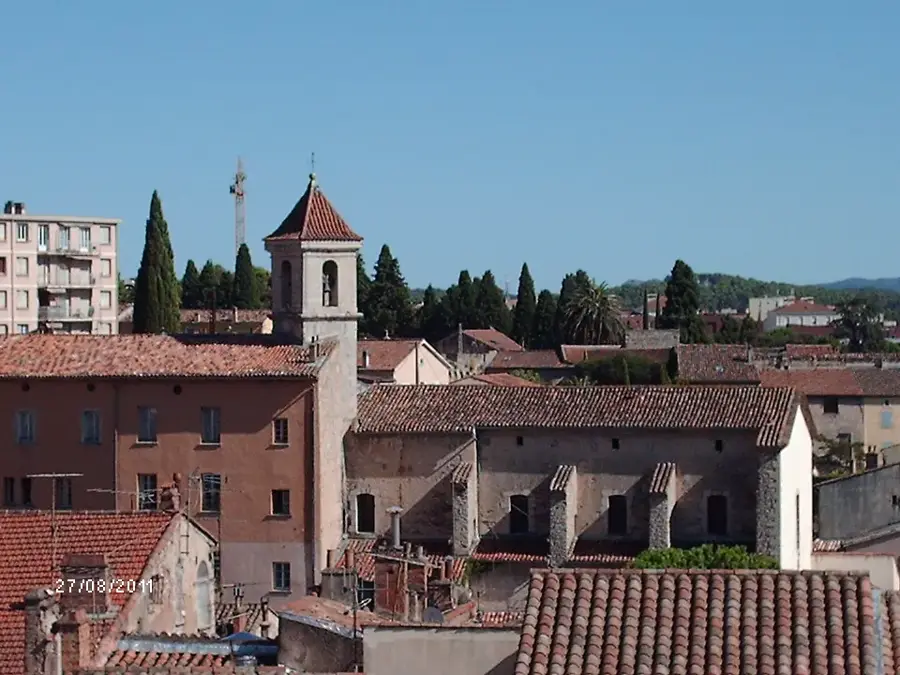
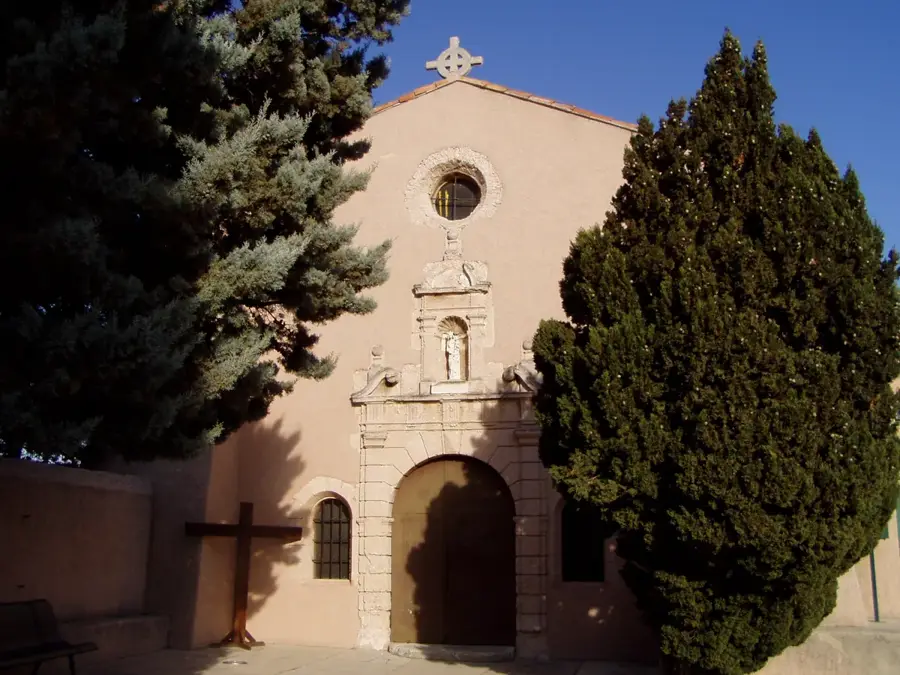
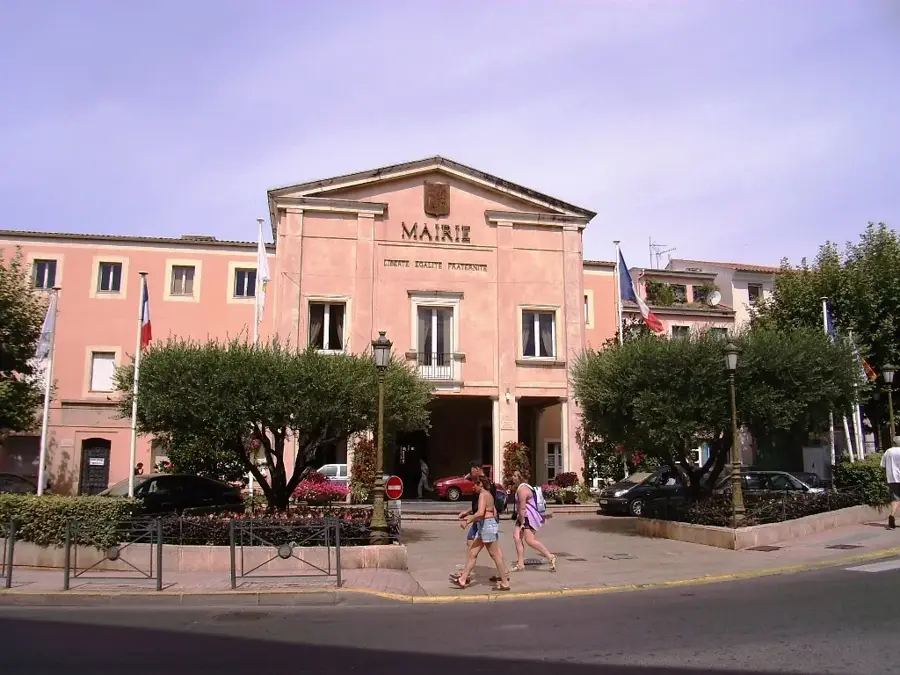
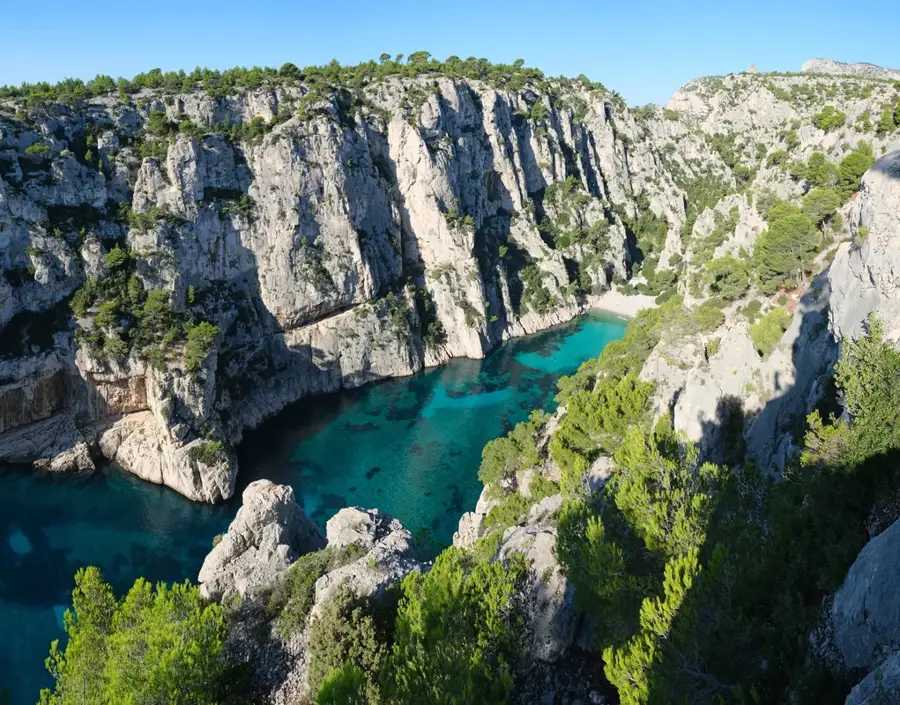
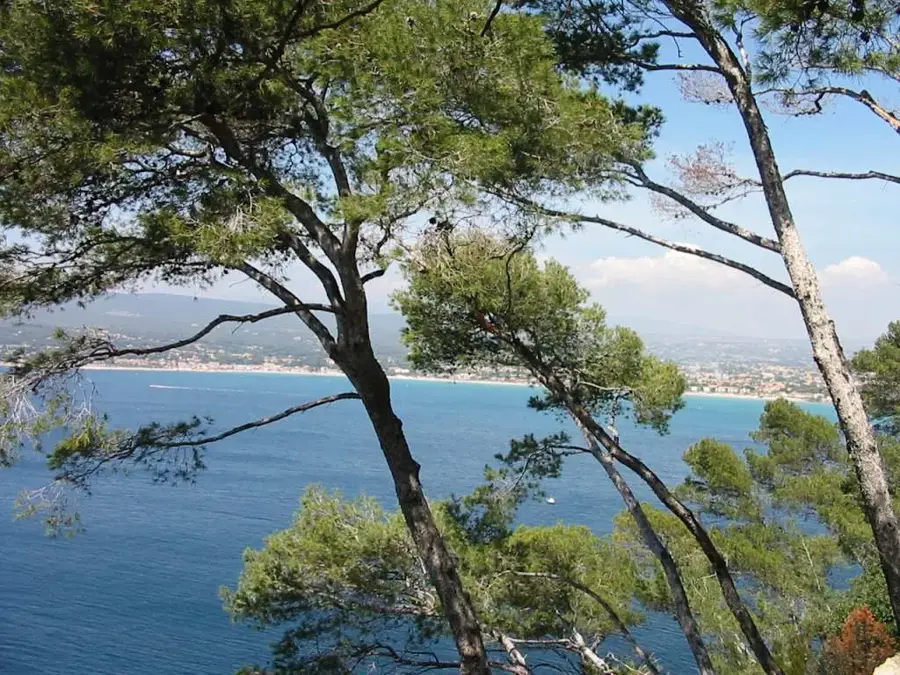
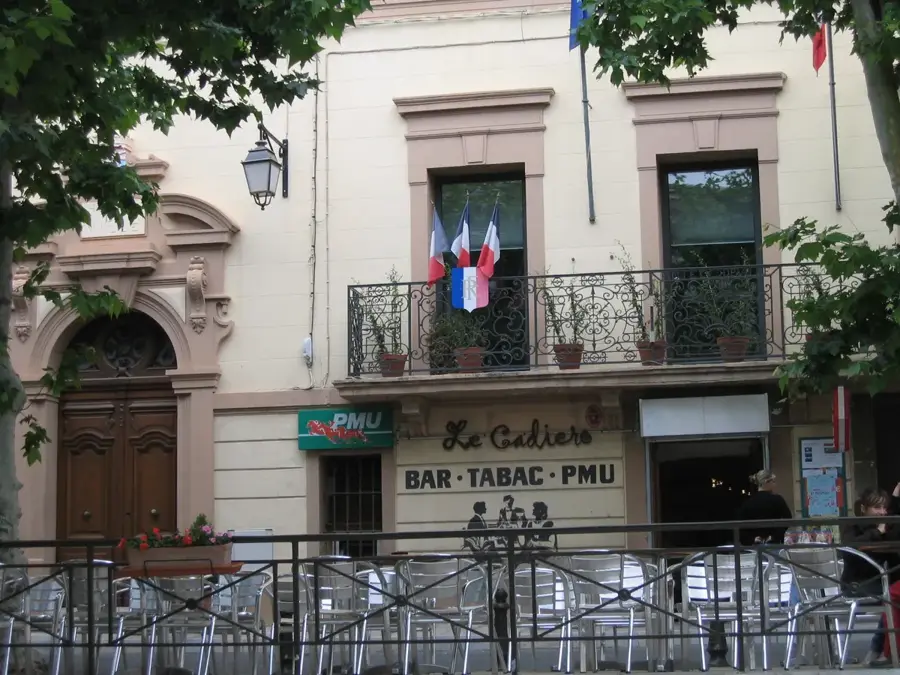
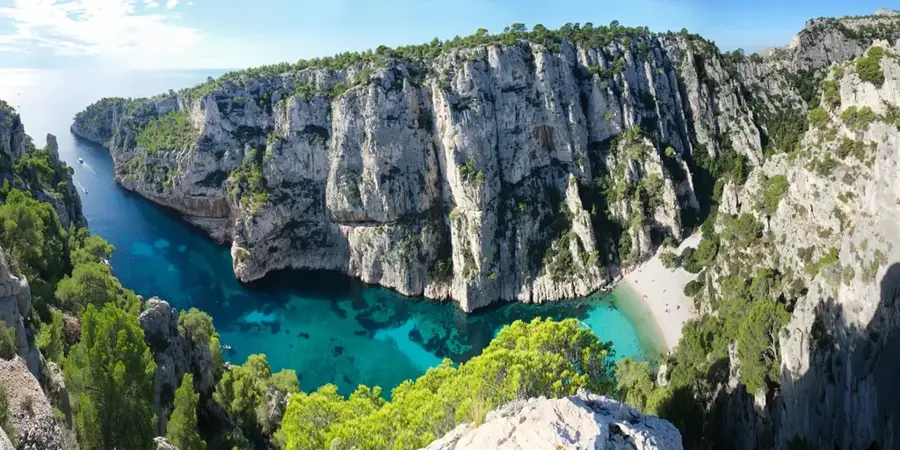
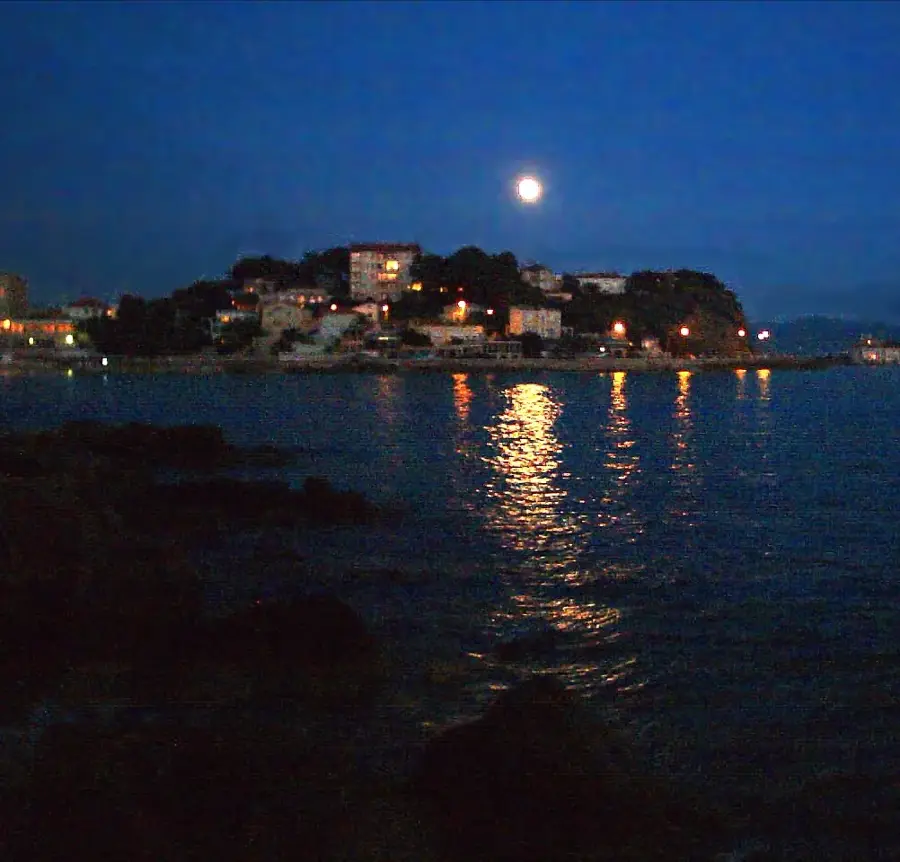
Tucked away in a sweeping Mediterranean bay, La Ciotat holds a unique place in history as the birthplace of both cinema and the popular ball game of pétanque. In 1895, the Lumière brothers filmed one of the world's very first motion pictures here, capturing the arrival of a train at the local station. The Eden-Théâtre, standing proudly on the seafront, is officially recognized as the oldest continuously operating cinema in the world, preserving this cultural legacy. The town is bordered by extraordinary natural formations, most notably the Parc du Mugel with its exotic botanical garden, and the Calanque de Figuerolles, famous for its dramatic red rock cliffs plunging straight into the turquoise sea. The skyline of La Ciotat is heavily defined by its massive shipyards; the monumental dry docks and towering cranes serve as constant reminders of the town's industrial maritime past. The old town, wrapping around the Old Port with its narrow alleys and pastel-colored facades, provides a traditional Southern French atmosphere. On Sunday mornings, the waterfront promenade becomes a hub of activity with a large market selling regional goods and fresh catches. Blending cinematic history and raw industrial heritage, the town features a distinct contrast to polished Riviera resorts.
Explore on the map
How well do you know France?
Find cities, landscapes and regions in 10 varied challenges on the interactive map.
Pick weather + travel mode, get a concrete day plan.
09:00→17:012.2 km walk5 places0/5
Day budget: ≈ 31–41 €Entries 36€ · Transport 0€
Morning begins at the historic Eden Théâtre. Midday is dedicated to maritime history. The afternoon explores the charming old port. The evening wraps up in the lush Mugel Park.
← swipe for more places →
📍
09:10 · 45'
Eden Théâtre
Explore the world's oldest operating cinema, an iconic cultural landmark where you should book tickets in advance for evening screenings.
The morning starts dry in the world's oldest cinema, followed by a museum visit that offers ideal protection from the first drops. At noon, explore shipbuilding history indoors while the harbor radiates a mystical calm in the rain. In the afternoon, Mugel Park's dense canopy provides some shelter before the evening ends in a cozy seaside spot, watching the rain dance on the Mediterranean.
← swipe for more places →
📍
09:10 · 45'
Eden Théâtre
Use the world's oldest cinema as a great dry sanctuary; tour the magnificent hall inside and wear waterproof gear for the short walk between stops.
Dive into local history while it rains outside; the heated rooms in the old town hall are handy for spending time dry and informatively in the city center.
Learn all about shipbuilding in this fully covered facility; it is the best place to wait out a heavy rain shower while surrounded by fascinating exhibits.
Enjoy the intense green colors of the plants in the rain; stick to the main paths as the rocks and steep trails can become extremely slippery when wet.
The winter morning starts refreshingly at the harbor, with Eden Théâtre providing welcoming warmth. At noon, museums offer a cultural escape from the cool sea breeze. In the afternoon, Mugel Park shines in the clear winter light, but be mindful as sunset occurs around 5 PM. The day ends during the blue hour by the shore, where city lights sparkle in the cold water.
← swipe for more places →
📍
09:10 · 45'
Eden Théâtre
Warm up in the heated cinema hall and enjoy the intimate atmosphere of this historic building without the summer tourist crowds, away from the winter wind.
Morning ride from Grande plage to the cinema. Midday lunch by the historic port. Afternoon explores the hidden Calanque de Figuerolles. Evening ends with chapel views.
← swipe for more places →
📍
09:10 · 45'
Grande plage
Enjoy a morning walk on this long stretch of sandy beach where you can safely swim before the midday crowds arrive.
The bike tour starts on the coast, where salt spray and rain create a rugged experience. We find dry shelter and culture at Eden Théâtre. At noon, we pedal carefully to the harbor, where arcades offer protection. The afternoon in the Calanques is wet but colorful, and the day ends peacefully under the protective roof of the chapel.
← swipe for more places →
📍
09:10 · 45'
Grande plage
Ride carefully on the promenade; the wet tiles can be very slippery. Enjoy the view of the stormy sea while wearing full waterproof cycling gear.
The winter morning at the beach is invigorating with a cool breeze. We warm up briefly at Eden Théâtre before cycling to the harbor, shining in clear light. In the afternoon, we explore Mugel Park and the Calanques in the winter sun. The tour peaks at the chapel for an early sunset around 5 PM, as the cold sets in.
← swipe for more places →
📍
09:10 · 45'
Grande plage
Wear windproof clothing and gloves against the sea breeze; enjoy the almost empty promenade for a free and easy ride in the crisp morning air.
Morning driving the dramatic Route des Crêtes. Midday explores the chapel and Villa Michel Simon. Afternoon at the old port and cultural center. Evening on Fontsainte beach.
← swipe for more places →
📍
09:10 · 60'
Route des Crêtes
Drive along one of Europe's highest coastal roads for dramatic views, but strictly avoid it on windy days when access is often restricted.
The morning is spent safely in the car on Route des Crêtes, where mist and rain provide dramatic cliff views. We visit the chapel and Villa Michel Simon as dry cultural stops. At noon, we park close to the harbor. The afternoon ends at the weather-independent Chaudronnerie, and the day finishes at Fontsainte beach, relaxing inside the car.
← swipe for more places →
📍
09:10 · 60'
Route des Crêtes
Enjoy the panorama from the comfort of your car; drive extra carefully in the rain as the winding road can become slippery near the cliff edges.
The winter morning starts with a scenic drive and clear views on Route des Crêtes. We visit the chapel and Villa Michel Simon without the summer heat. At noon, the harbor offers relaxed parking and winter sun. In the afternoon, we visit Chaudronnerie, finishing the day with the 5 PM sunset at Fontsainte beach from the warm car.
← swipe for more places →
📍
09:10 · 60'
Route des Crêtes
The long-distance visibility is often crystal clear in winter; stay in the warm car and use marked parking lots for quick photo stops if it's windy.
The world's oldest operating cinema where the Lumière brothers projected their first motion pictures.
Mugel Park🌿 nature
A remarkable botanical garden classified as a notable garden of France, located by the sea cliffs.
Calanque de Figuerolles🌿 nature
A pretty rocky cove known for its unique conglomerate stones and turquoise swimming waters.
Musée Ciotaden🏛 museum
A museum detailing the city's maritime history, shipping industry, and its cinematic heritage.
Old Port🏺 historical
The lively heart of La Ciotat, featuring traditional fishing boats, yachts, and numerous waterfront cafes.
Notre-Dame de la Garde Chapel⛪ religious
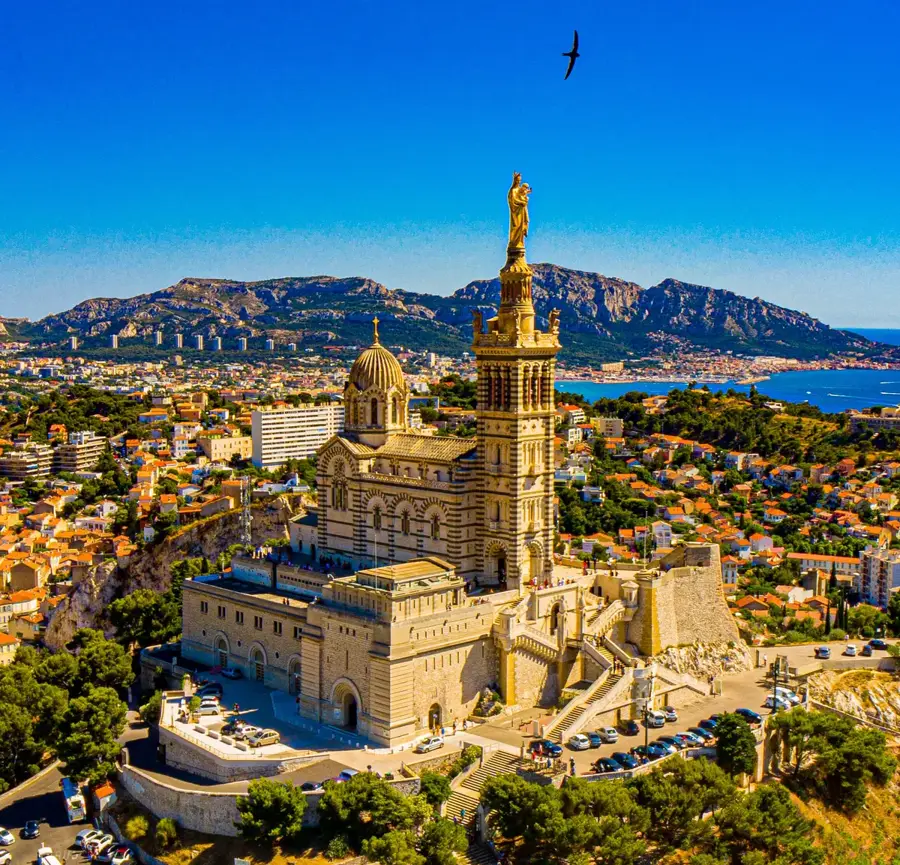
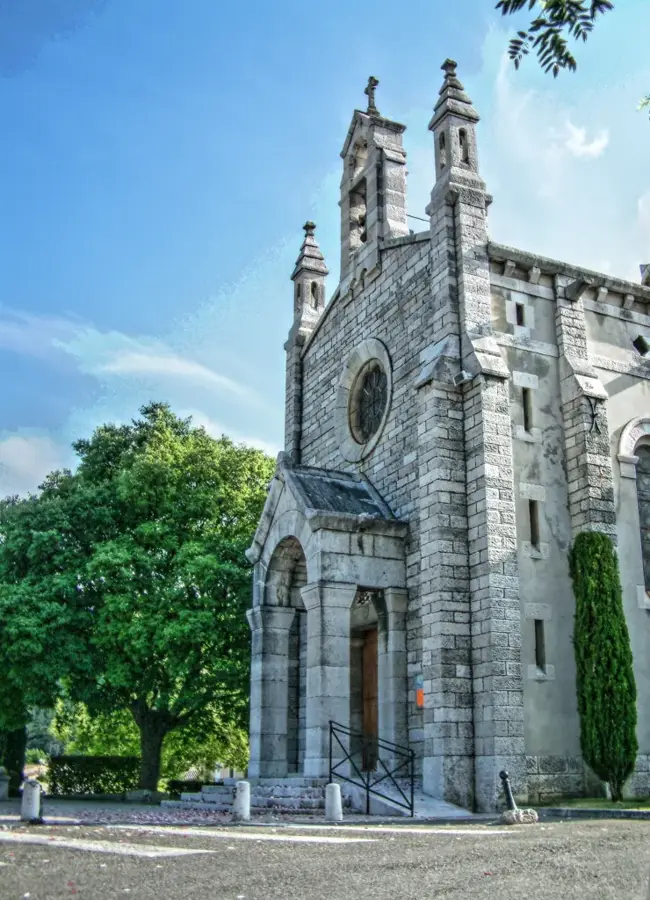
A 17th-century chapel perched high above the town, offering one of the best viewpoints of the Mediterranean.
Île Verte🌿 nature
The only wooded island in the region, accessible by a short boat ride from the historic harbor.
Grande plage🎡 recreation
Grande plage is the main sandy beach in La Ciotat, stretching for 1.5 km along the Bay of La Ciotat, handy for swimming and sunbathing.
La Chaudronnerie🎭 culture
A performing arts venue located in the port city of La Ciotat.
Maison de la Construction Navale🏛 museum
A museum dedicated to the history of shipbuilding in the city.
🌐 museeciotaden.org🕒 Jun 21-Jul 8, Aug 21-Sep 30: Mo-Sa 09:00-17:30; Jul 11-Aug 1🆓
Villa Michel Simon🏛 museum
The former home of actor Michel Simon, now serving as a museum.
Fontsainte Beach🎡 recreation
Fontsainte Beach in La Ciotat is a sandy beach with a rocky cove and clear water.
La plage de Saint-Pierre🎡 recreation
La plage de Saint-Pierre in La Ciotat is a pebble beach with a view of the port.
Frequently asked questions
Why is La Ciotat important for cinema history?
It is home to the Eden Théâtre, the world's oldest active cinema, where the Lumière brothers showed their first films.
Which Calanques should I visit?
The Calanque de Figuerolles with its reddish rocks and the Calanque du Mugel are must-sees.
What is the Parc du Mugel?
A beautiful botanical garden right by the sea, convenient for walks in the shade of exotic plants.
Was the game of Pétanque invented here?
Yes, Pétanque was officially invented in La Ciotat in 1907 at the 'Jules Lenoir' pitch.
How is the view from the Route des Crêtes?
Dramatic; the road leads over the highest sea cliffs in France (Cap Canaille) toward Cassis.
La Ciotat: where is it located?
La Ciotat is located in Provence-Alpes-Côte d'Azur, France.
La Ciotat: what is there to see?
Highlights include Eden Théâtre, Mugel Park, Calanque de Figuerolles.
La Ciotat: when is the best time to visit?
The most pleasant time to visit is Jun, Jul, Sep.
La Ciotat: why is it worth visiting?
Tucked away in a sweeping Mediterranean bay, La Ciotat holds a unique place in history as the birthplace of both cinema and the popular ball game of pétanque.