Plizio Visual Lab
Changchun
ℹ️Practical info — Changchun
▾
🌤 Weather — 5 days
📍 Nearby
Sights nearby
💡 Tips
- Winters are brutally cold; wear thermal layers and down jackets if visiting between November and March.
- Use the light rail system (Line 3 and 4) to easily reach major attractions like the Puppet Emperor's Palace.
- Have translation apps ready with offline Chinese packs, as English is not widely spoken.
- Try to visit South Lake Park in winter for ice skating and large snow sculptures.
🍽 Food
A Dongbei classic, try it in a traditional local restaurant in the city center.
Warm up with this nourishing dish in a specialized local diner.
Look for bustling dumpling houses near the railway station area.
🛍 Shopping · 🧘 Quiet spots
The main commercial street with a mix of modern malls and local shops.
Find specialty local medicine shops in the Guilin Road area.
A massive forest park well-suited for a quiet escape and long walks.
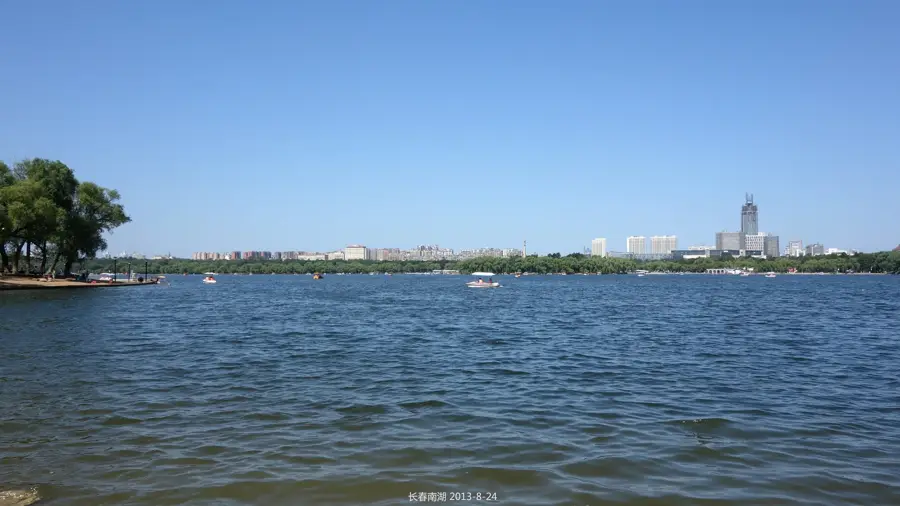
A vast park offering serene boat rides in summer and snowy walks in winter.
Water temperature…
Changchun, the capital of Jilin Province in Northeast China, is a city renowned for its historical significance, industrial prowess, and abundant green spaces. Historically, it rose to international prominence in the early 20th century as a key junction of the South Manchuria Railway. Its role expanded dramatically in 1932 when it became the capital of the puppet state of Manchukuo under the name Hsinking. During this period, the city underwent massive urban planning, featuring wide avenues and a sophisticated layout that integrated administrative clusters with expansive parks, earning it the nickname 'The City of the Forest.' The Museum of the Imperial Palace of the Manchu State remains a poignant reminder of this era, preserving the residence of Puyi, China's last emperor. Following the establishment of the People's Republic of China, Changchun was transformed into a cornerstone of the nation's heavy industry. It is the birthplace of China's automotive industry, home to the First Automotive Works (FAW) Group, which produced the country's first domestic trucks and luxury sedans. This industrial heritage is complemented by a rich cultural tradition in filmmaking; the Changchun Film Studio was the first of its kind in the PRC and continues to celebrate this legacy through film festivals and a major movie-themed park. The city is also a leading academic hub, with Jilin University being one of China's largest and most comprehensive educational institutions. Geographically, Changchun experiences a humid continental climate with four distinct seasons, including long, snowy winters that attract winter sports enthusiasts. The Jingyuetan National Forest Park, located on the city's outskirts, provides a sprawling natural retreat and is often called the 'sister lake' of Taiwan's Sun Moon Lake due to its similar beauty. Today, Changchun is diversifying its economy by investing in high-tech sectors such as aerospace, new energy vehicles, and biotechnology, ensuring its continued relevance in China's modern development.
Explore on the map
How well do you know China?
Find cities, landscapes and regions in 10 varied challenges on the interactive map.
Your journey, your memory
A postcard from Changchun
Turn your own photo into a personal postcard with a local stamp. Free and no sign-up required.
Create a postcard- Location: China
- Highlights: Site of the State Foundation Martyrs Shrine of the Illegitimate Manchukuo · Soviet Martyrs Monument · Bo're Temple
- Population: ~4.714.996 (2026)
Best time to visit & climate
The most pleasant time to visit is Jun, Aug, Sep.
| Jan | Feb | Mar | Apr | May | Jun | Jul | Aug | Sep | Oct | Nov | Dec | |
|---|---|---|---|---|---|---|---|---|---|---|---|---|
| Avg °C | -16 | -12 | -2 | 7 | 15 | 21 | 24 | 22 | 16 | 7 | -4 | -14 |
| Rain mm | 6 | 9 | 15 | 27 | 68 | 108 | 146 | 140 | 56 | 29 | 20 | 10 |
Geography
Facts
- Changchun was known as Hsinking, meaning 'New Capital', during the Manchukuo era (1932-1945).
- The city produces more than 2.5 million vehicles annually, making it a global automotive giant.
- Changchun Film Century City is China's first movie-themed park, inspired by Universal Studios.
- The city's metro system, Changchun Rail Transit, began operations in 2002 and is expanding rapidly.
- Jilin University resulted from a merger of six institutions in 2000, creating a massive academic entity.
- The Puppet Emperor's Palace reflects a mix of Japanese, Chinese, and European architectural styles.
- Changchun's high-tech zone is home to over 400 research institutes and specialized laboratories.
- The city's name 'Changchun' translates to 'Long Spring', despite its long and harsh winters.
Route planner — Car & Motorhome
Where do you start? We build the route here, with stops and country notes along the way.
© OpenStreetMap contributors · OpenRouteService
Sights in the town Changchun (9)
Frequently asked questions
What is the historical highlight of Changchun?
Is it worth visiting in winter?
Why is Changchun called the "Film City"?
Are there large parks?
What should you eat in Changchun?
Changchun: where is it located?
Changchun: what is there to see?
Changchun: when is the best time to visit?
Changchun: why is it worth visiting?