Plizio Visual Lab

Marco Polo Bridge

Plizio editorial teamData Sources
battlefield
—°12
Marco Polo Bridge (China)

Weather…

The Marco Polo Bridge (Lugou Bridge), spanning the Yongding River southwest of Beijing, is a masterpiece of Chinese engineering built between 1189 and 1192 during the Jin Dynasty. It gained worldwide fame through the writings of the 13th-century Venetian traveler Marco Polo, who praised it as one of the most beautiful bridges in existence. Constructed of white marble and granite, the bridge features 11 arches and is most famous for the hundreds of individually carved stone lions lining its balustrades. Each of the more than 500 lions is unique, with varying poses and facial expressions, showcasing the exceptional skill of medieval Chinese stone carvers. Beyond its artistic value, the bridge holds immense historical weight as the site of the 'Marco Polo Bridge Incident' on July 7, 1937, which triggered the start of the Second Sino-Japanese War. Nearby, the Museum of the War of Chinese People's Resistance Against Japanese Aggression provides extensive context on this conflict. Today, the bridge remains a protected national monument, serving as a symbol of peace and a testament to eight centuries of architectural durability.

Best time to visit & climate

The most pleasant time to visit is May, Jun, Sep.

JanFebMarAprMayJunJulAugSepOctNovDec
Avg °C-5-25132125272520123-4
Rain mm2692438841511096430142

📋 Practical info

🚪
Visiting
Open directly to pedestrians, this iconic bridge allows visitors to walk across its historic stone surface at their own pace. You can closely inspect the hundreds of unique lion carvings that have fascinated travelers for centuries.
🕒
Typical hours
Access is typically permitted during standard daylight hours throughout the week. It is always wise to check current local regulations around major Chinese national holidays when accessibility might be temporarily altered.
📷
Photography
Photographers will find endless inspiration in the intricate details of the stone lions arrayed along the balustrades. The sweeping view over the Yongding River is particularly striking when captured during the golden hour at sunset.
⏱️
Time needed
Plan to spend about an hour leisurely walking the entire length of the bridge and taking in the architectural details. If you also wish to visit the nearby historical memorial sites, allocate an additional two hours to your itinerary.
Combine with
Pair your visit with an educational stop at the nearby Museum of the War of Chinese People's Resistance Against Japanese Aggression. The historically significant Wanping Fortress is also situated right adjacent to the eastern end of the bridge.
🧭
Getting there
Located in the southwestern Fengtai District, it can be reached efficiently via the comprehensive Beijing subway system. From the nearest station, it is just a short local bus ride or a brisk walk to the historical bridge entrance.
💡
Insider tip
Look very closely at the stone lion statues arrayed along both balustrades as you walk across. Local lore famously insists that no two lions are exactly alike in posture, expression, or the smaller cubs hiding around their paws.

Geography

Coordinates
39.84900, 116.20800

Facts

  • The bridge was constructed between 1189 and 1192 AD.
  • It measures 266 meters in length and features 11 stone arches.
  • There are 501 uniquely carved stone lions on the balustrades.
  • The Marco Polo Bridge Incident occurred here on July 7, 1937.
  • The bridge underwent a major reconstruction in 1698 during the Qing Dynasty.
  • It was famously described by Marco Polo in his 13th-century travelogue.

Explore nearby

Notable places around
Route planner — Car & Motorhome

Where do you start? We build the route here, with stops and country notes along the way.

Vehicle
Only stops with (optional):

© OpenStreetMap contributors · OpenRouteService

Sights in the town Marco Polo Bridge (12)

Museum of the Chinese People Resistance Against Japanese Aggression🏛 museum

Located inside the historic Wanping Fortress, this museum displays extensive military artifacts from the resistance against the Japanese invasion.

Beijing Auto Museum🏛 museum

This futuristic museum displays over 80 classic cars, including rare early Chinese models and historic international vehicles.

Wanping City📍 landmark

This 17th-century walled fortress still bears bullet marks from the 1937 Marco Polo Bridge Incident.

Beijing Garden Expo Park🌳 park

This expansive riverside park showcases various Chinese garden styles and features a prominent landmark tower on a hill.

Beijing International Sculpture Park🌳 park

This green space houses over 180 sculptures by artists from around the world, arranged along its walking paths.

Beijing Winter Olympic Park🌳 park

Developed for the 2022 Games, this park along the Yongding River provides views of the impressive Shougang Big Air ramp.

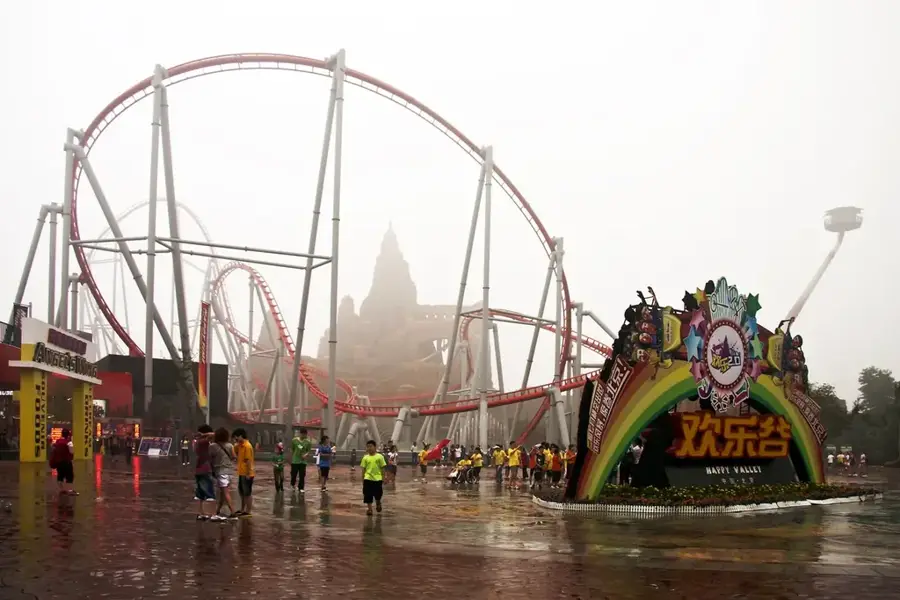
Beijing Shijingshan Amusement Park🎡 recreation

This classic amusement park is known for its fairy-tale castle and extensive range of roller coasters and rides.

World Park🎡 recreation

This theme park features over 100 scale replicas of world-famous landmarks, organized by their geographical location.

Hot air balloon museum🏛 museum

This specialized museum is dedicated to the history of hot air ballooning and the early beginnings of aeronautics.

Think squarely but act roundly🏺 historical

This philosophical sculpture embodies traditional Chinese values of integrity and flexibility in conduct.

Lincoln Memorial📍 landmark

This replica in World Park recreates the Washington D.C. landmark, including the seated statue of the American president.

Red Square📍 landmark

This miniature version of Moscow's central square includes the colorful domes of St. Basil's Cathedral.

Sights nearby

Frequently asked questions

Why is it called the Marco Polo Bridge?
Because it was praised by Marco Polo in his travel accounts.
What is special about the railings?
They are decorated with hundreds of artistically carved stone lions.
Where is the bridge located?
Across the Yongding River in the Fengtai district, southwest of Beijing.
What event took place here in 1937?
The Marco Polo Bridge Incident marked the beginning of the Second Sino-Japanese War.
Can you visit the bridge?
Yes, it is accessible to pedestrians as a historical monument.
Marco Polo Bridge: where is it located?
Marco Polo Bridge is located in China.
Marco Polo Bridge: what is there to see?
Highlights include Museum of the Chinese People Resistance Against Japanese Aggression, Beijing Auto Museum, Wanping City.
Marco Polo Bridge: when is the best time to visit?
The most pleasant time to visit is May, Jun, Sep.
Marco Polo Bridge: why is it worth visiting?

The Marco Polo Bridge (Lugou Bridge), spanning the Yongding River southwest of Beijing, is a masterpiece of Chinese engineering built between 1189 and 1192 during the Jin Dynasty.
View on map → The Top 50 Attractions → OpenStreetMap →
Asia
Explore with Plizio Discover more places in Asia
More places in China →

History & landmarks

More places