Plizio Visual Lab
Macapá
ℹ️Practical info — Macapá
▾
🌤 Weather — 5 days
📍 Nearby
Sights nearby
💡 Tips
- Visit the Marco Zero monument to stand with one foot in each hemisphere.
- The best time to visit the Fortaleza de São José de Macapá is late afternoon to avoid the intense equatorial heat.
- Macapá is isolated by road; flying or taking a boat from Belém are your main options.
- Watch the Pororoca (tidal bore) if visiting during the right lunar phases, typically early in the year.
🍽 Food
A hot shrimp and tucupi soup, first-rate from street stalls in the late afternoon.
Enjoy authentic, unsweetened açaí often served with fried fish or tapioca flakes.
Try local Amazonian fish like Filhote or Tambaqui at riverside restaurants.
🛍 Shopping · 🧘 Quiet spots
The best place to find indigenous crafts and regional souvenirs made from seeds and wood.
A lively spot for local fruits, spices, and regional ingredients.
An appealing and peaceful square in the city center with a lake and large trees.
A river beach first-rate for a relaxing afternoon, though be cautious with swimming.
Water temperature…
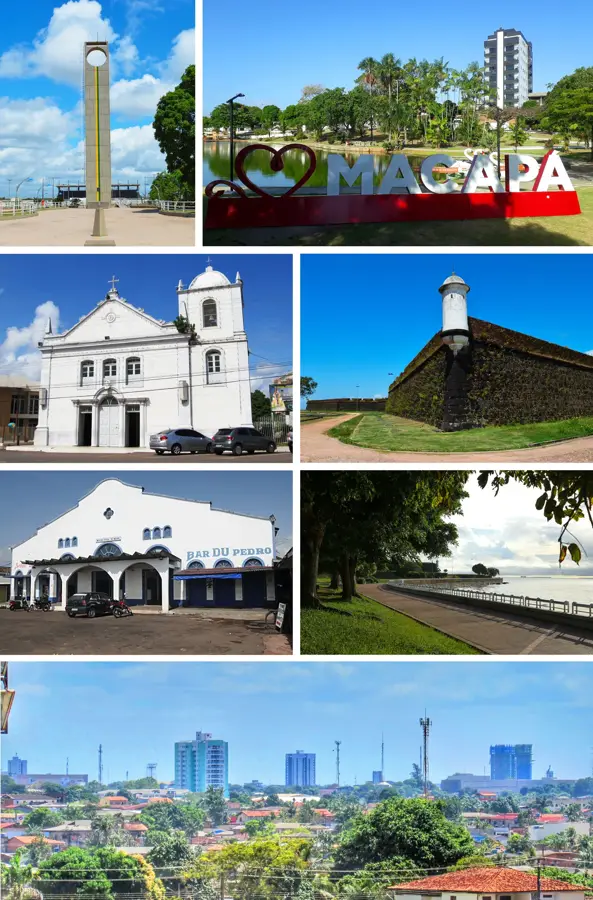
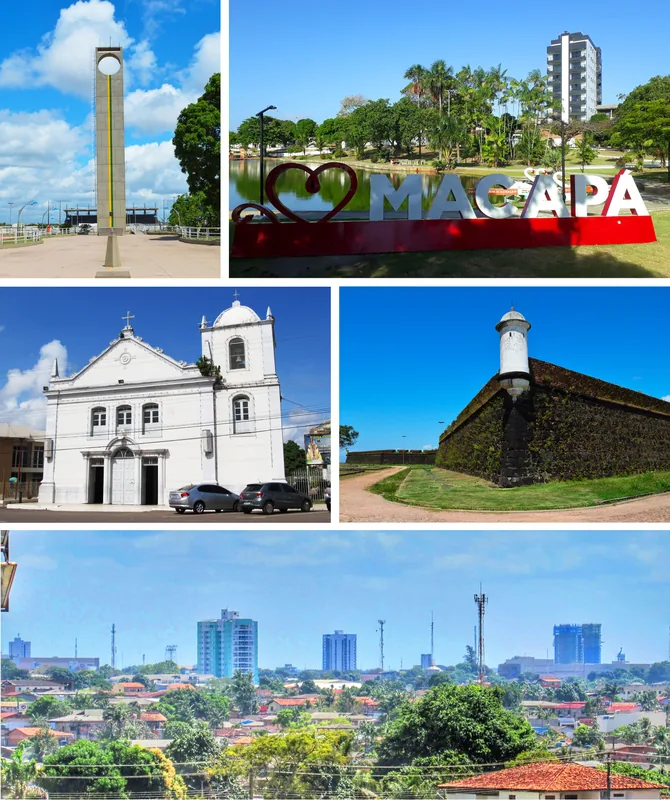
Macapá, the intriguing capital of Amapá state in Northern Brazil, is a city of unique geographical distinctions. It is the only Brazilian state capital located directly on the Equator line and situated on the northern banks of the Amazon River, near its mouth. Remarkably, Macapá is the only state capital in the country with no highway connection to any other capital; it remains a virtual island in the rainforest, accessible only by air or sea. This isolation has fostered a distinct sense of community and preserved its natural surroundings. The city's landmark monument, 'Marco Zero,' marks the exact center of the world, allowing visitors to straddle the Northern and Southern Hemispheres. The climate is tropical monsoon, with heavy rainfall for much of the year and consistently warm temperatures. The city's origins are deeply military, centered around the 18th-century Fortress of São José de Macapá. Completed in 1782, this star-shaped fortress was built to defend the Amazon entrance from French expansionists and remains one of the best-preserved military fortifications in South America. Economically, Macapá serves as the administrative and commercial heart of the state, with its wealth tied to mining (manganese and iron ore) and timber, processed through the nearby Port of Santana. The city also benefits from its proximity to French Guiana, acting as a gateway for cross-border trade. Culturally, Macapá is home to the 'Marabaixo' tradition, an African-influenced rhythm and dance that is recognized as a National Intangible Cultural Heritage. The local diet is a fascinating study of Amazonian biodiversity, featuring acai pulp, manioc flour, and an array of freshwater fish like the pirarucu. Despite its remote location, Macapá is a modernizing city with an expanding university sector and a growing importance in Amazonian environmental research, offering a rare perspective on life at the junction of the world's greatest river and the Equator.
Explore on the map
How well do you know Brazil?
Find cities, landscapes and regions in 10 varied challenges on the interactive map.
Your journey, your memory
A postcard from Macapá
Turn your own photo into a personal postcard with a local stamp. Free and no sign-up required.
Create a postcard- Location: Brazil
- Highlights: Fortaleza de São José de Macapá · Museu Sacaca · Teatro das Bacabeiras
- Population: ~512.902 (2026)
Best time to visit & climate
The most pleasant time to visit is Aug–Oct.
| Jan | Feb | Mar | Apr | May | Jun | Jul | Aug | Sep | Oct | Nov | Dec | |
|---|---|---|---|---|---|---|---|---|---|---|---|---|
| Avg °C | 26 | 26 | 26 | 26 | 26 | 26 | 26 | 26 | 27 | 28 | 29 | 28 |
| Rain mm | 206 | 296 | 290 | 312 | 263 | 202 | 160 | 77 | 40 | 38 | 46 | 139 |
Geography
Facts
- Macapá is the only city in the world where you can watch a soccer match with the pitch split between hemispheres.
- The Fortress of São José de Macapá was never used in an actual battle.
- The city's name comes from the Tupi word 'macapaba', meaning 'place of many bacaba' (a palm fruit).
- Macapá experiences an average annual rainfall of 2,500 mm.
- The solar equinox in March and September is the city's biggest astronomical event.
- The journey by boat from Belém to Macapá takes approximately 24 hours.
- Macapá serves as the main logistical point for the manganese mines of the Serra do Navio.
- The city's International Airport (Alberto Alcolumbre) connects it to major Brazilian hubs.
Route planner — Car & Motorhome
Where do you start? We build the route here, with stops and country notes along the way.
© OpenStreetMap contributors · OpenRouteService
Sights in the town Macapá (13)
Frequently asked questions
What is special about Macapá?
How to get to Macapá?
What is the Fortaleza de São José de Macapá?
What should you try in Macapá?
Are there river beaches in the city?
Macapá: where is it located?
Macapá: what is there to see?
Macapá: when is the best time to visit?
Macapá: why is it worth visiting?